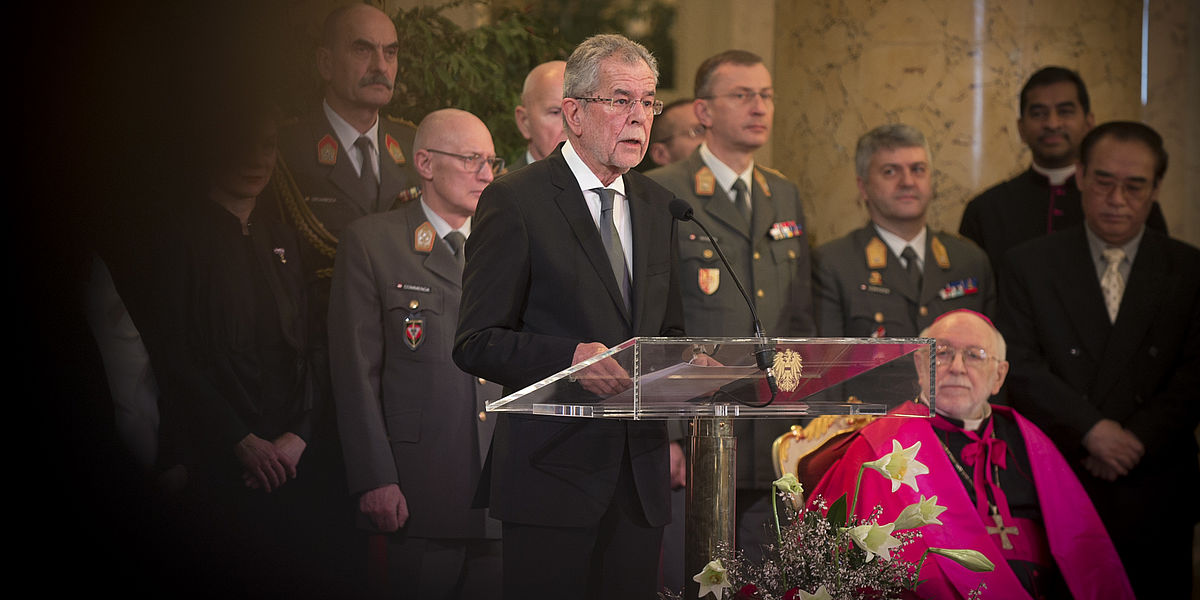
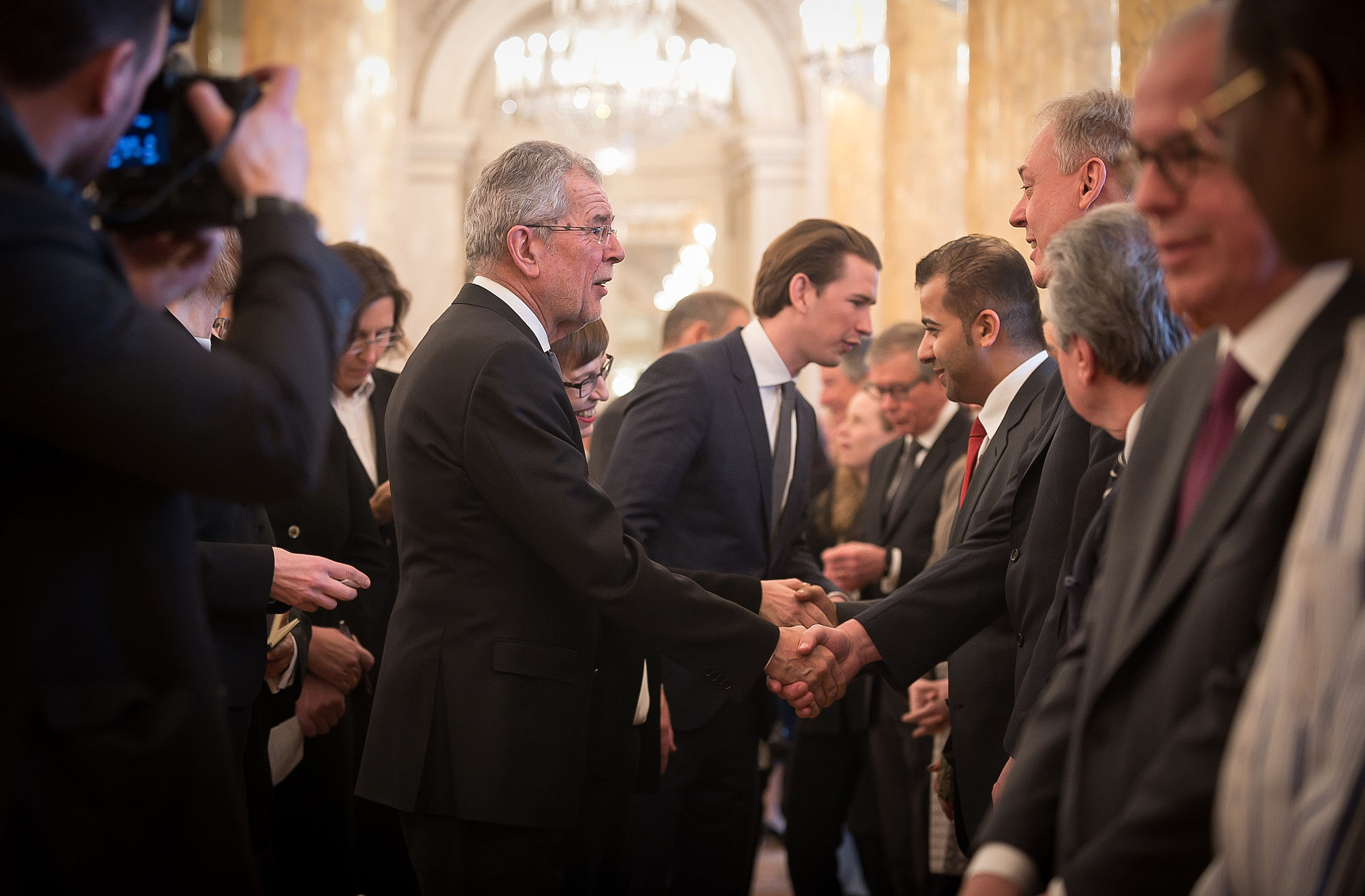
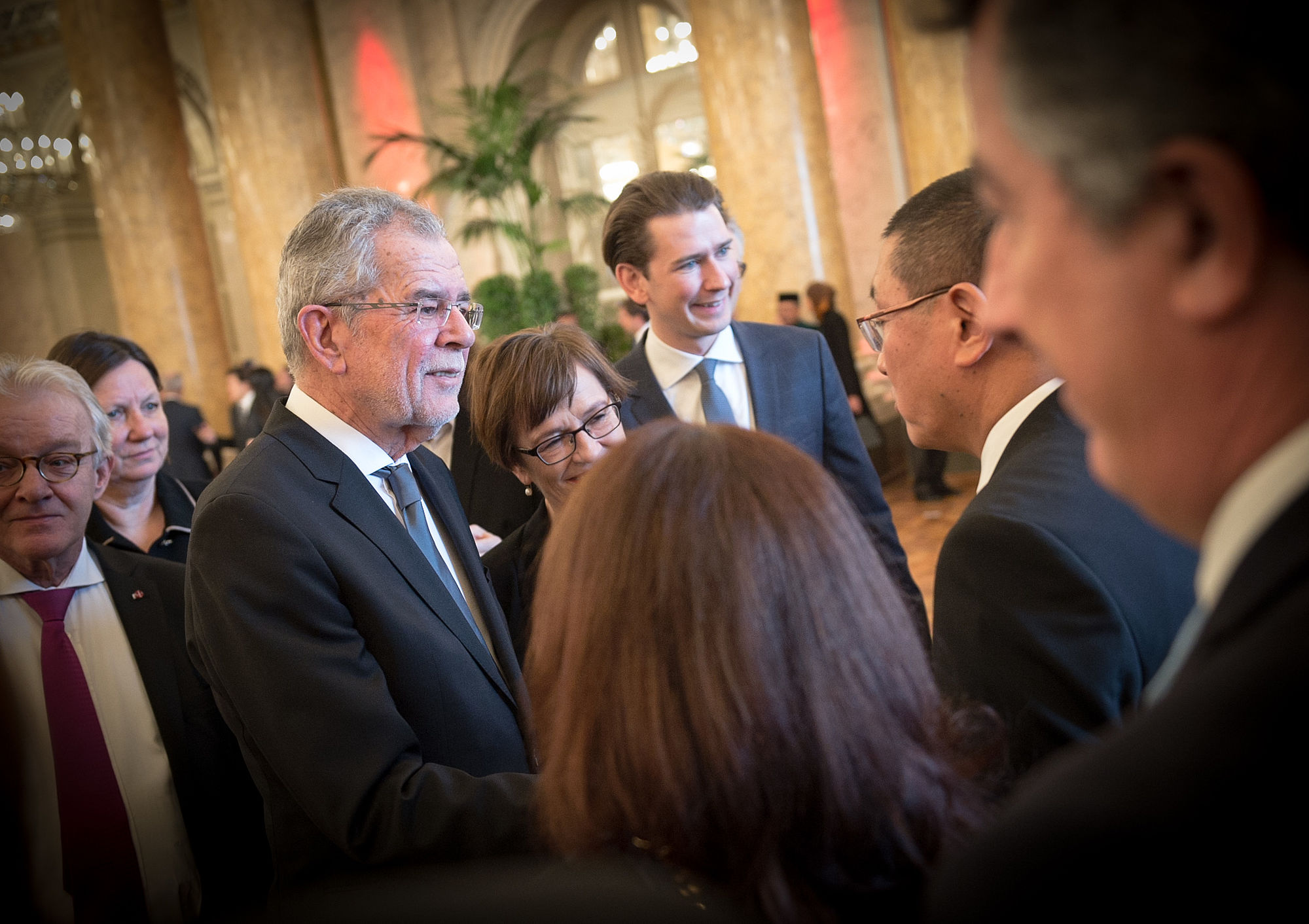
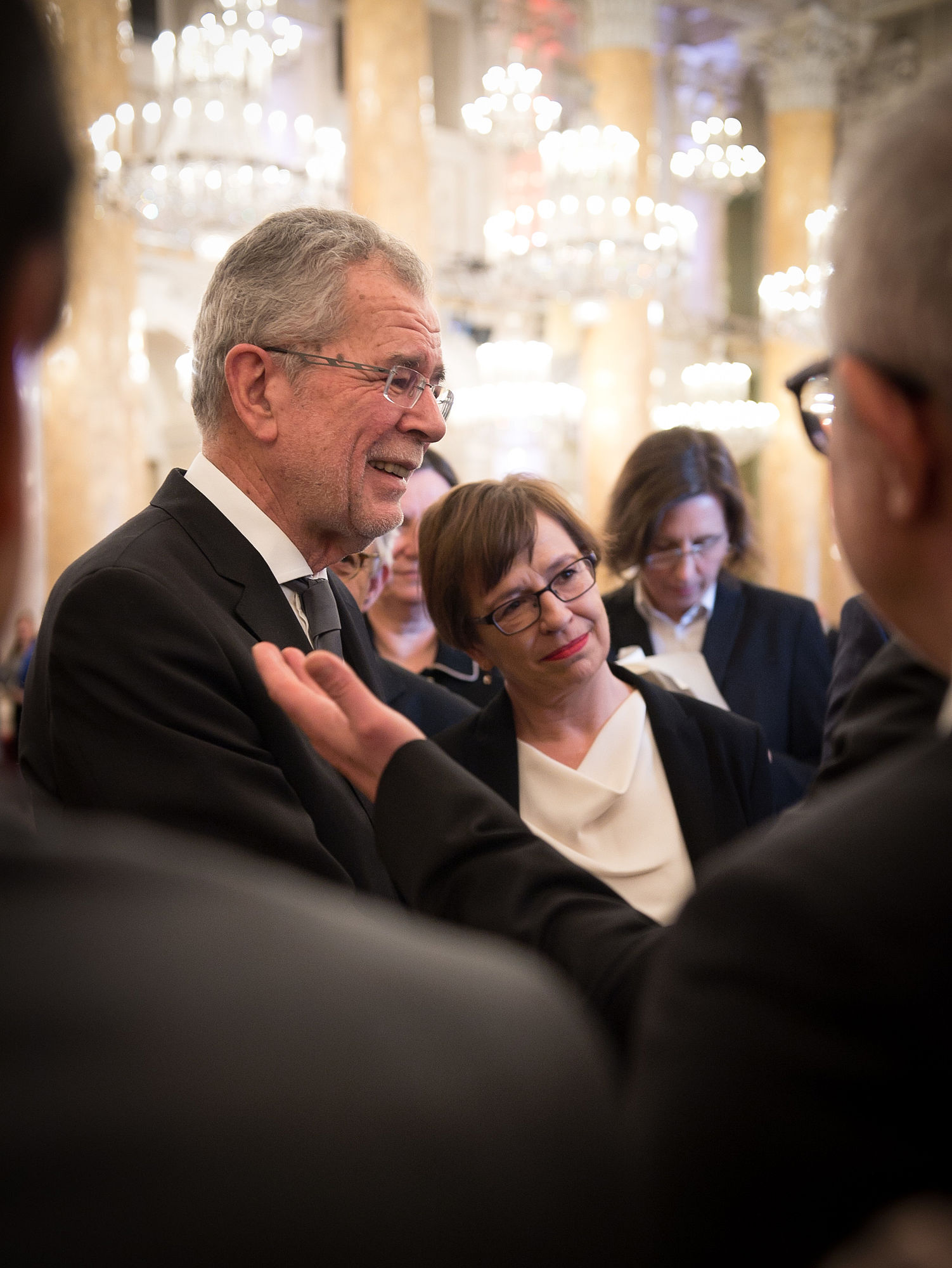
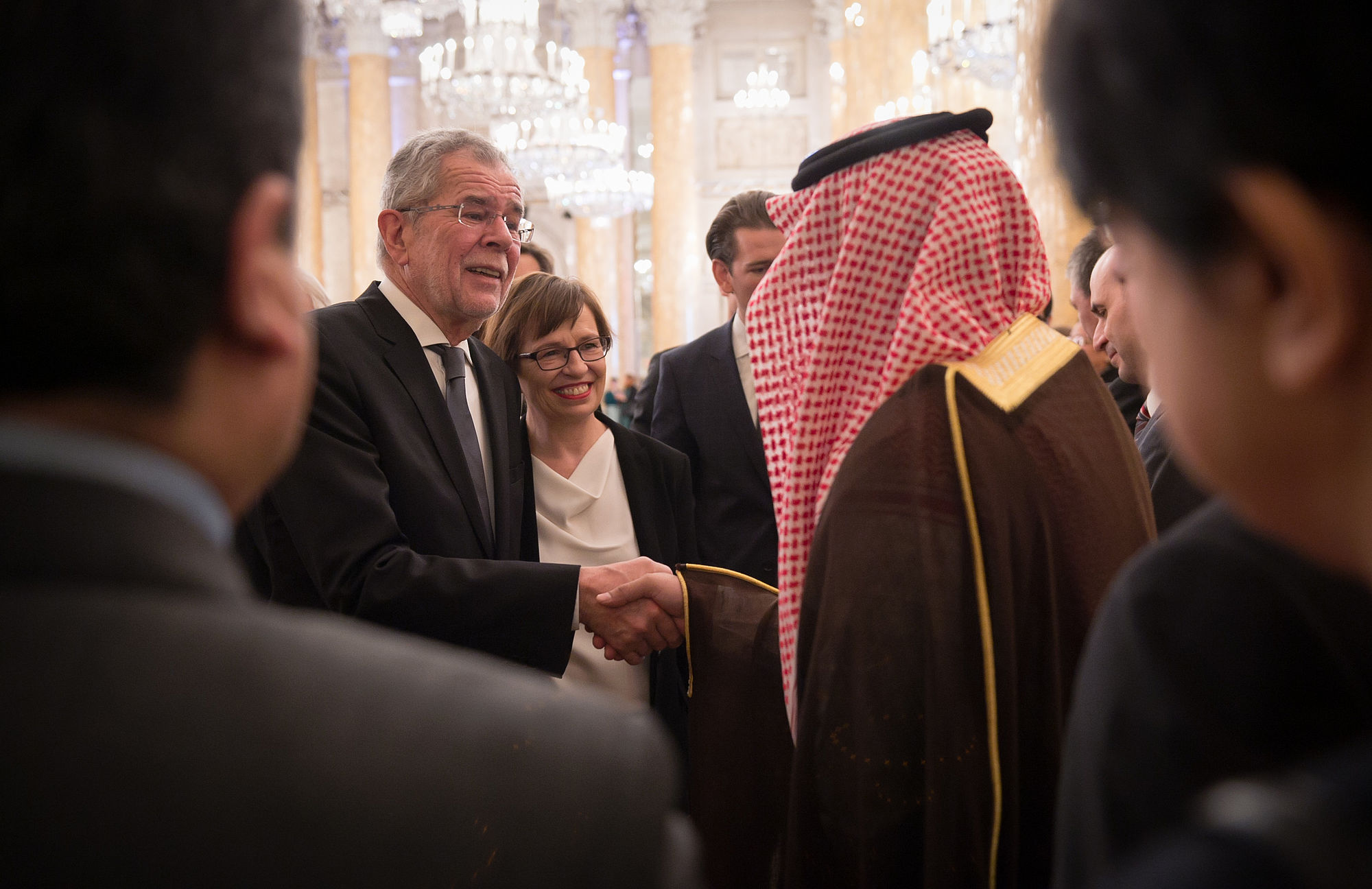
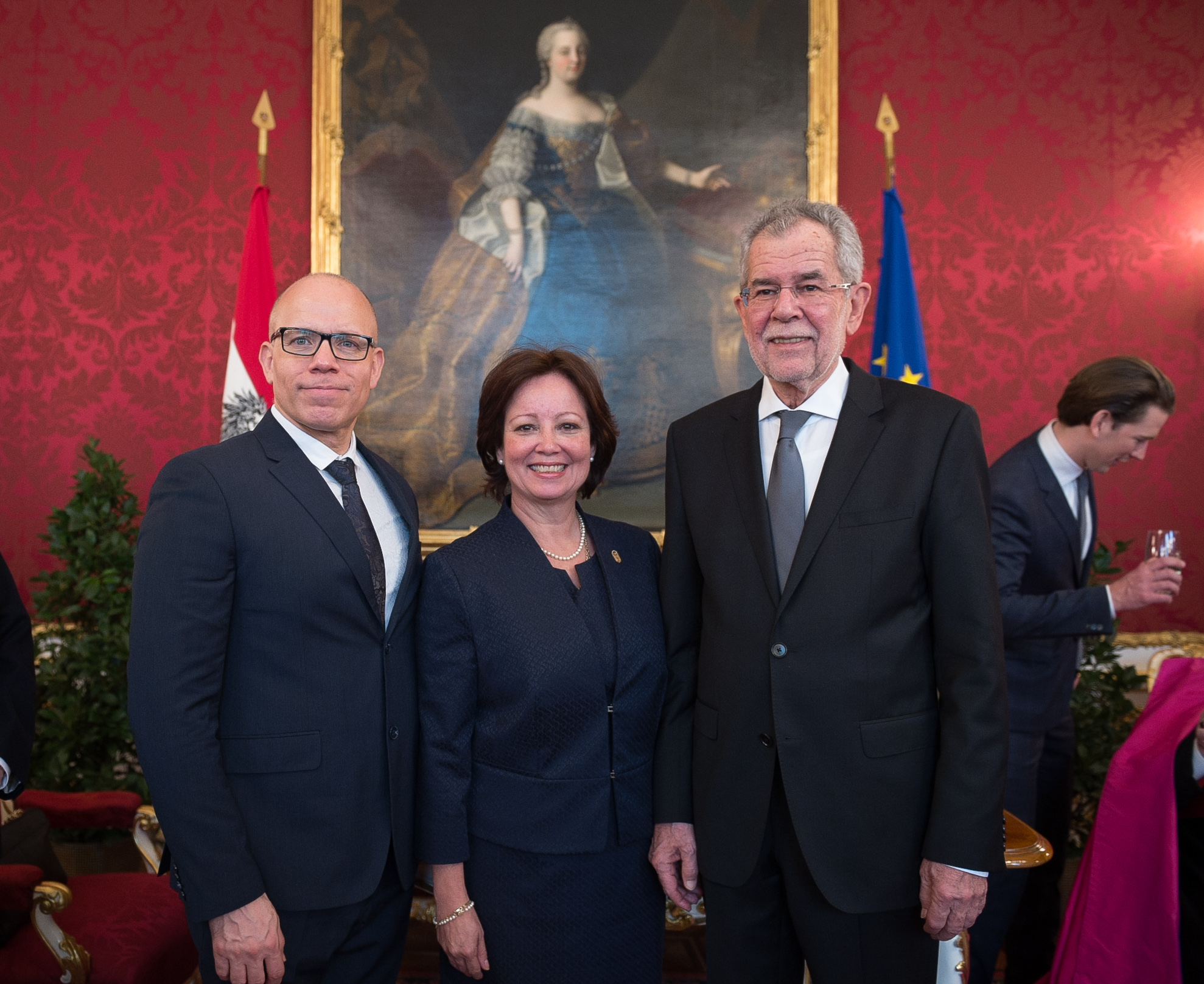
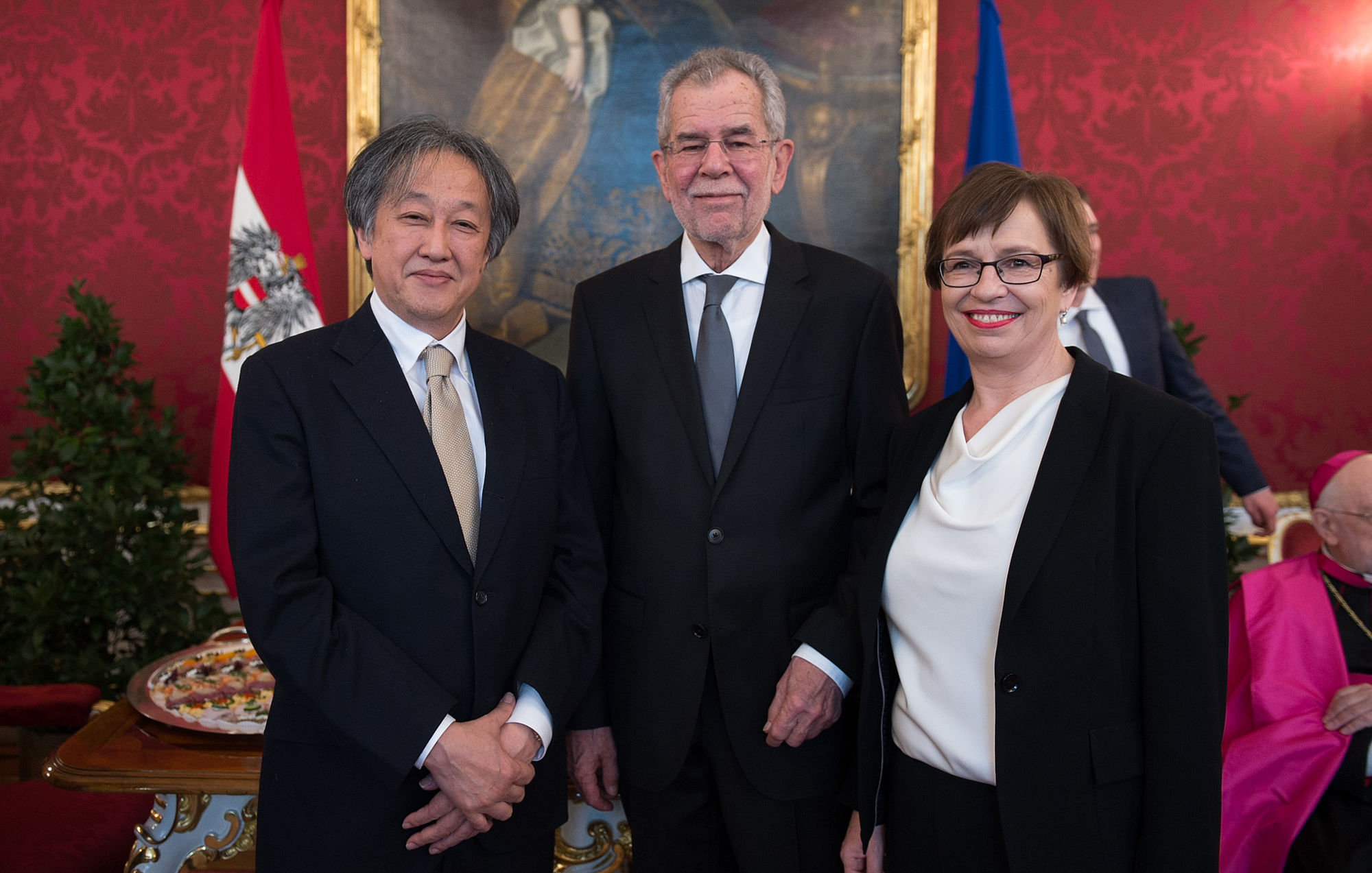
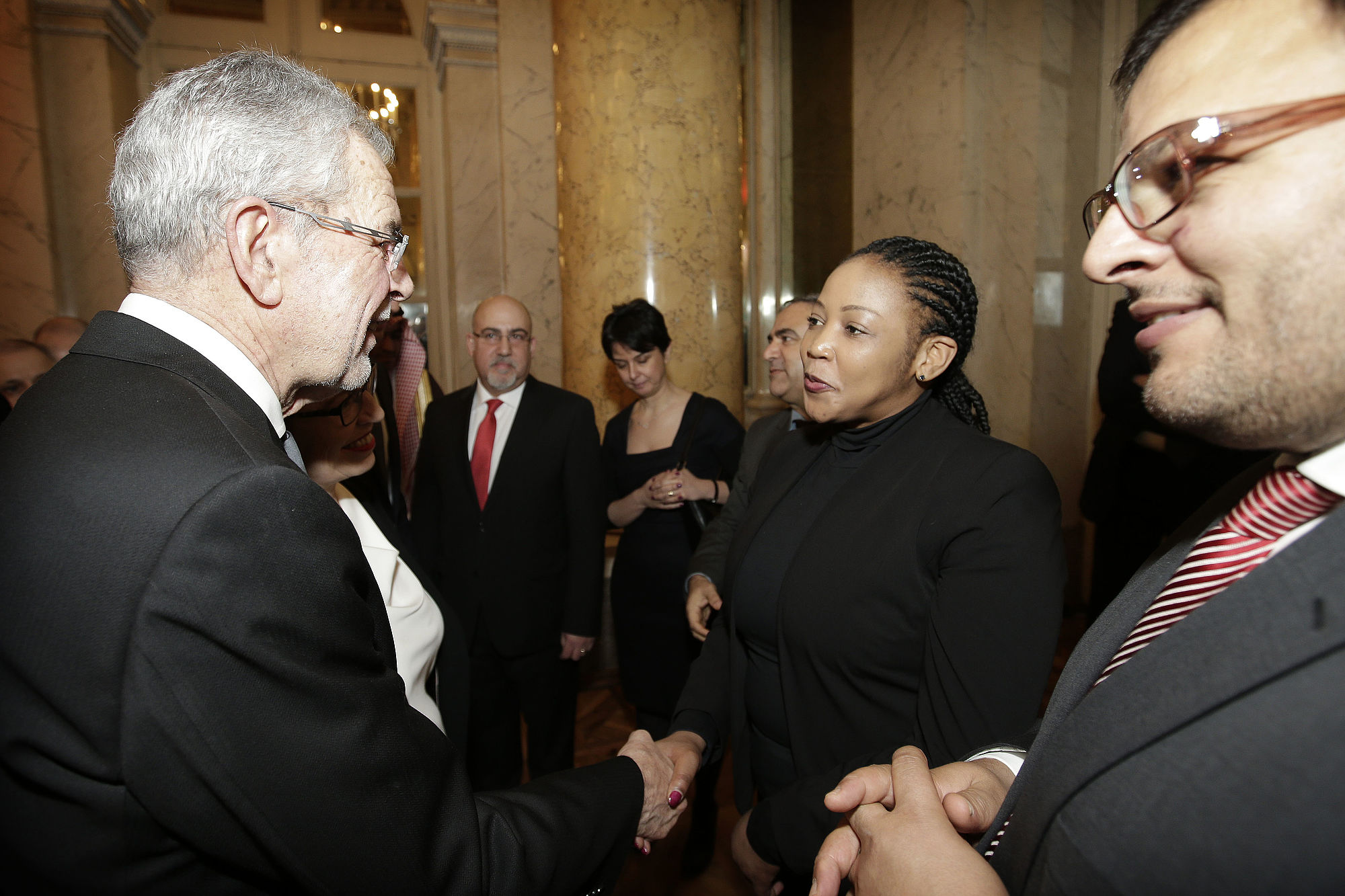
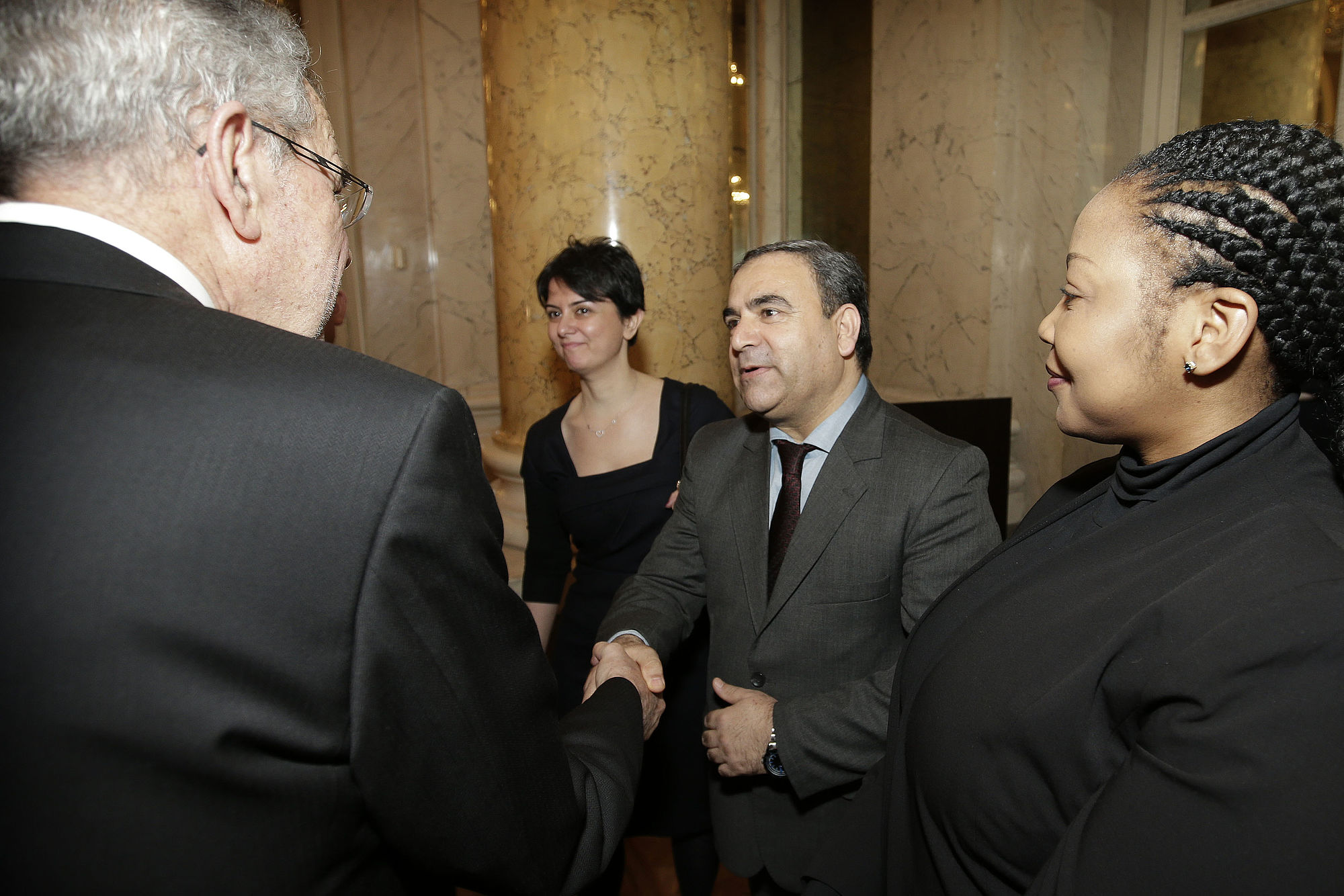
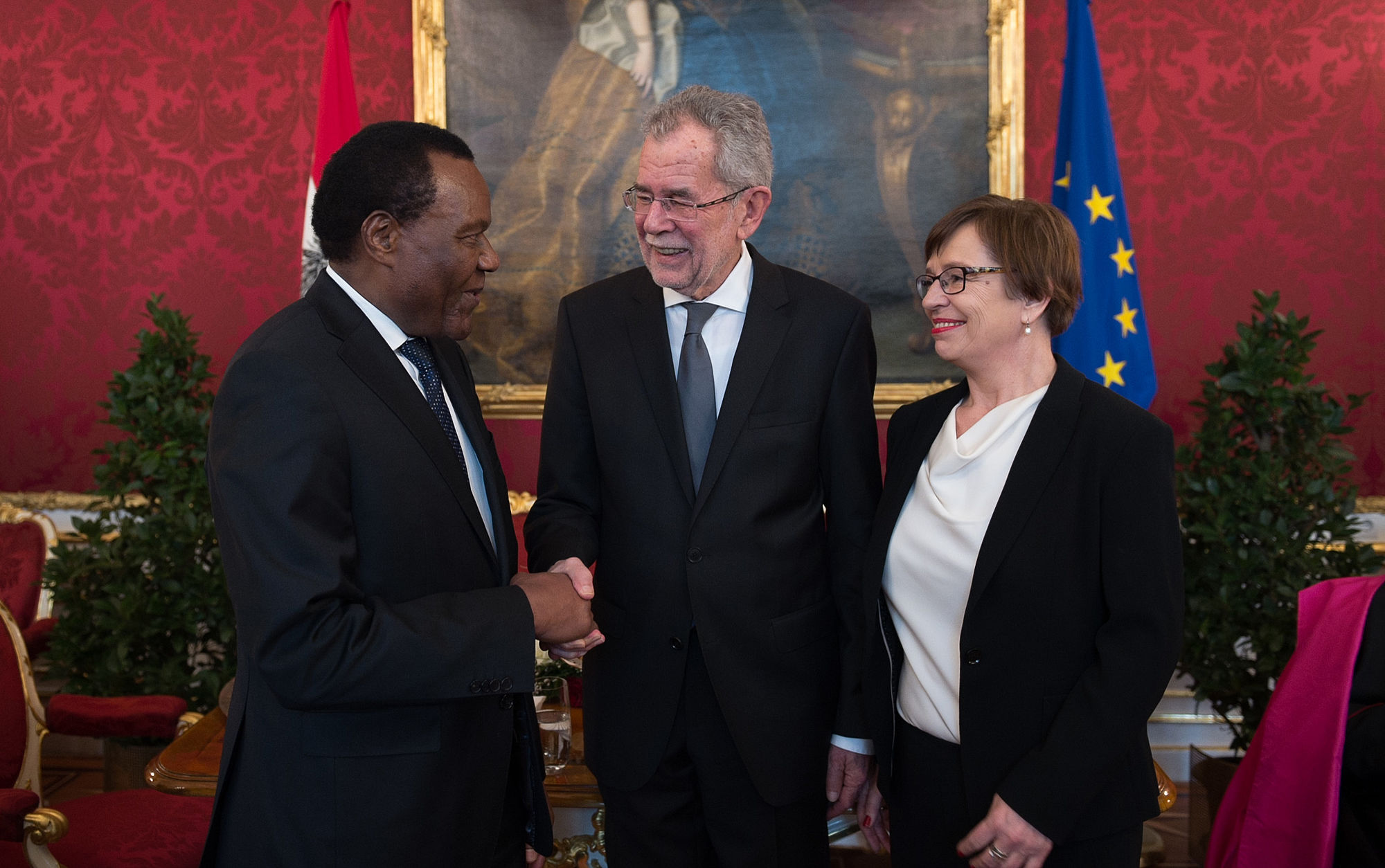
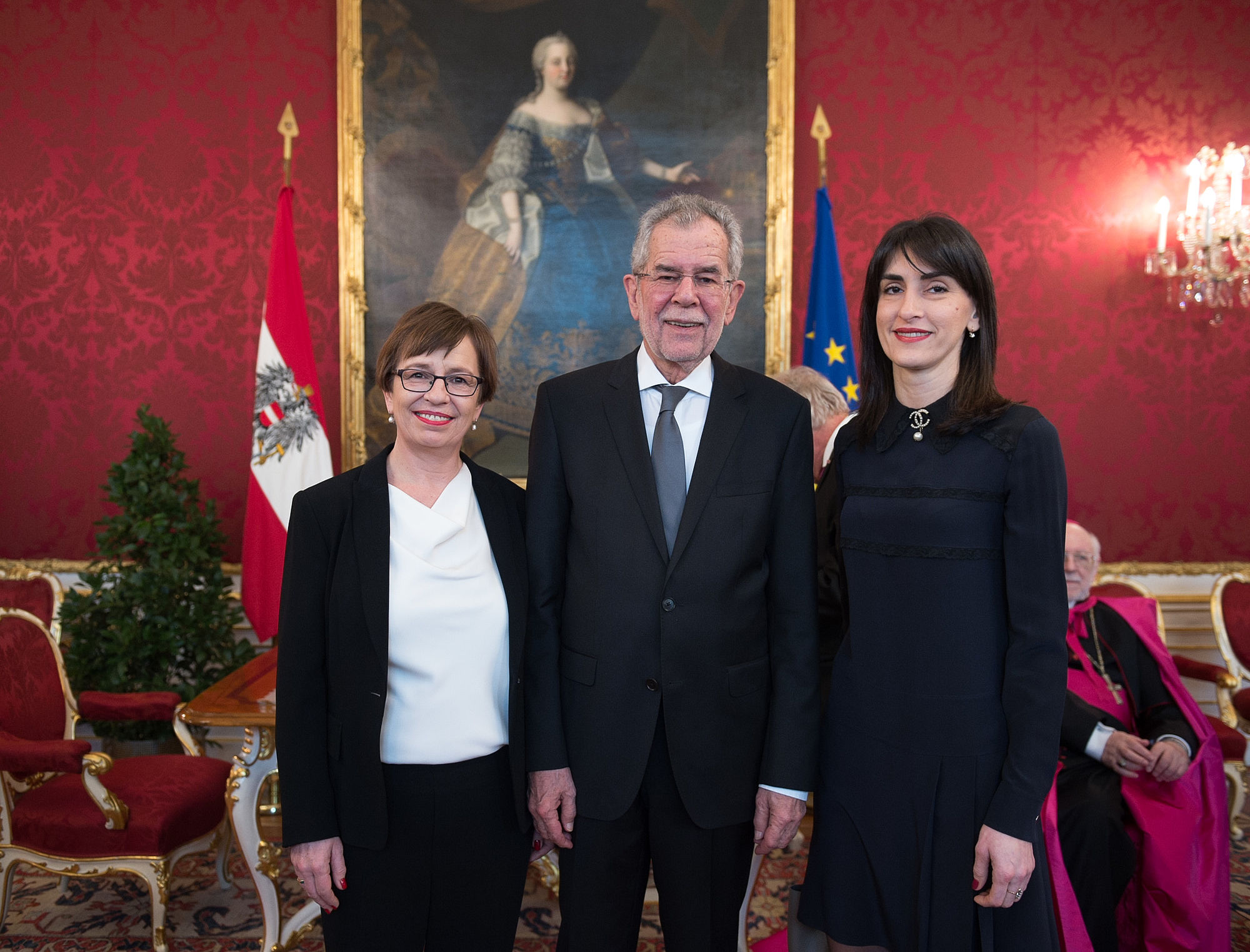
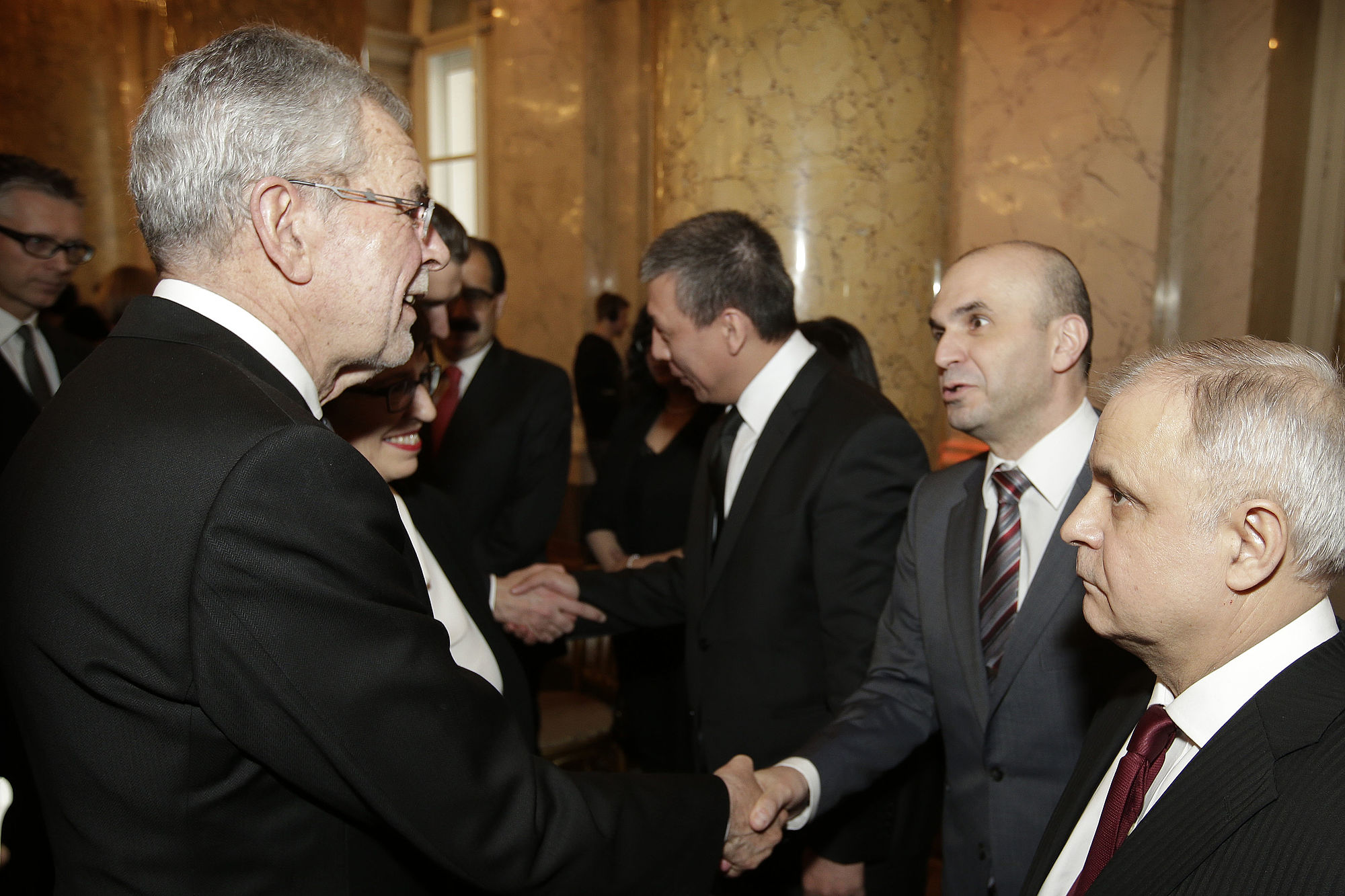
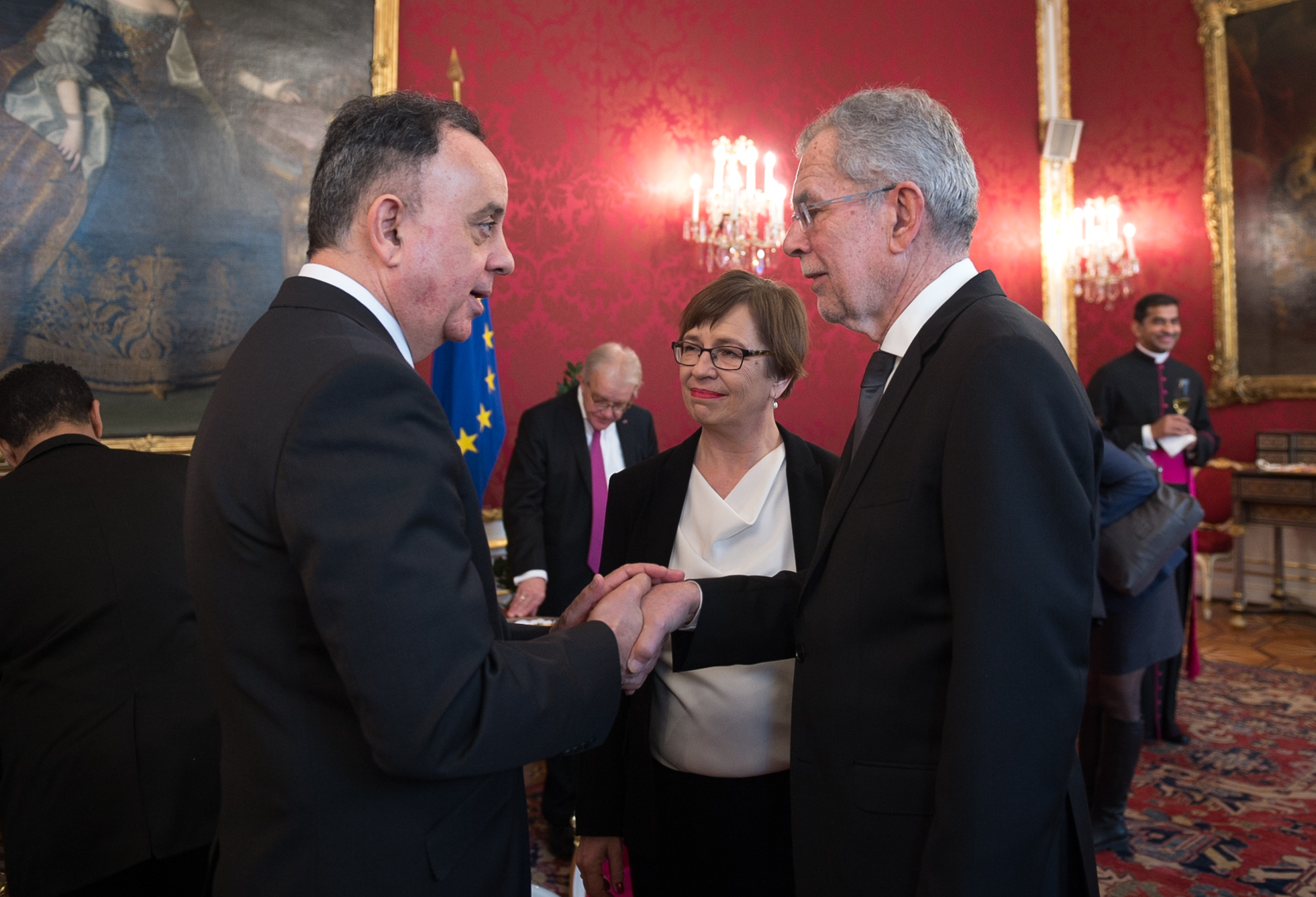
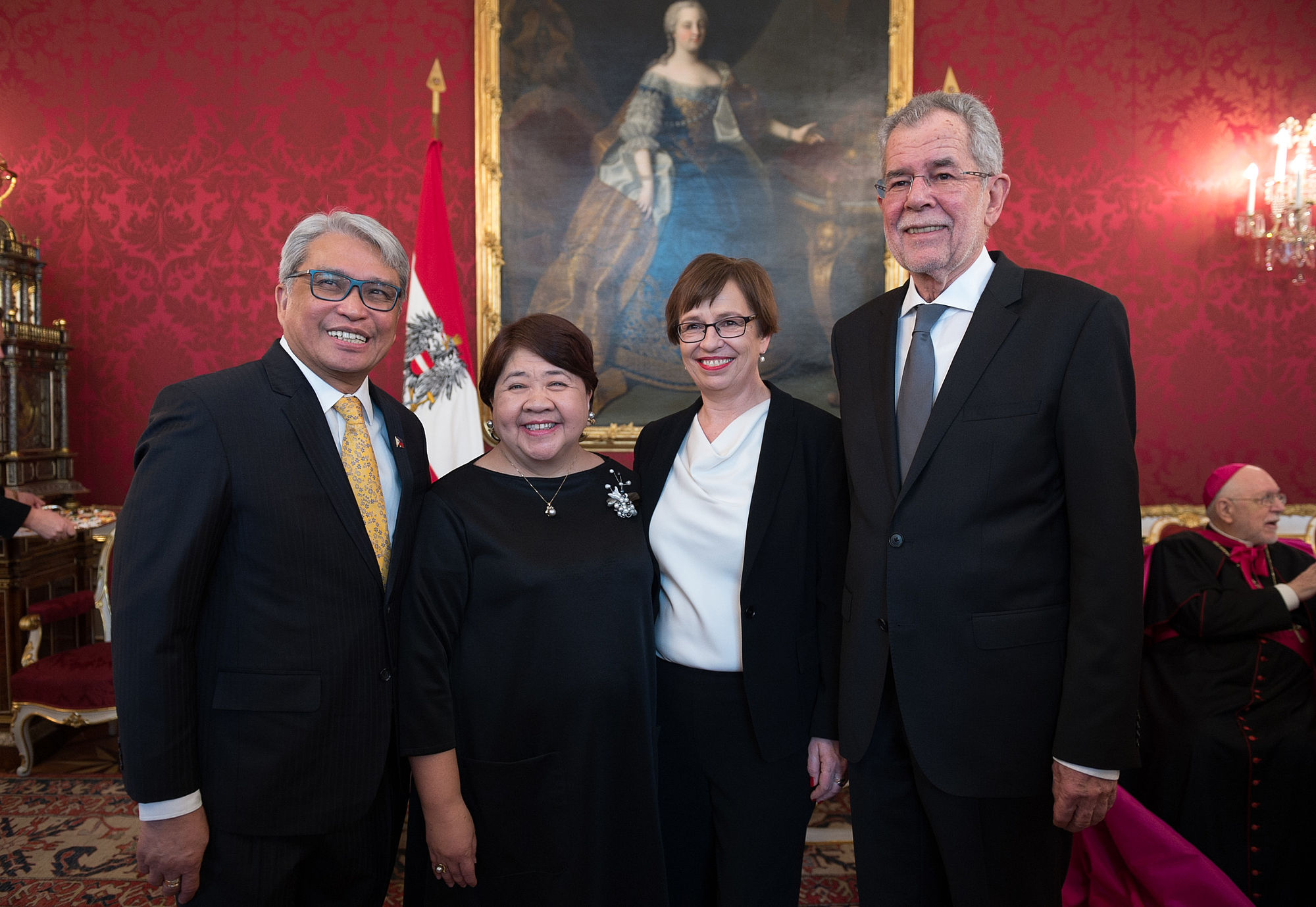
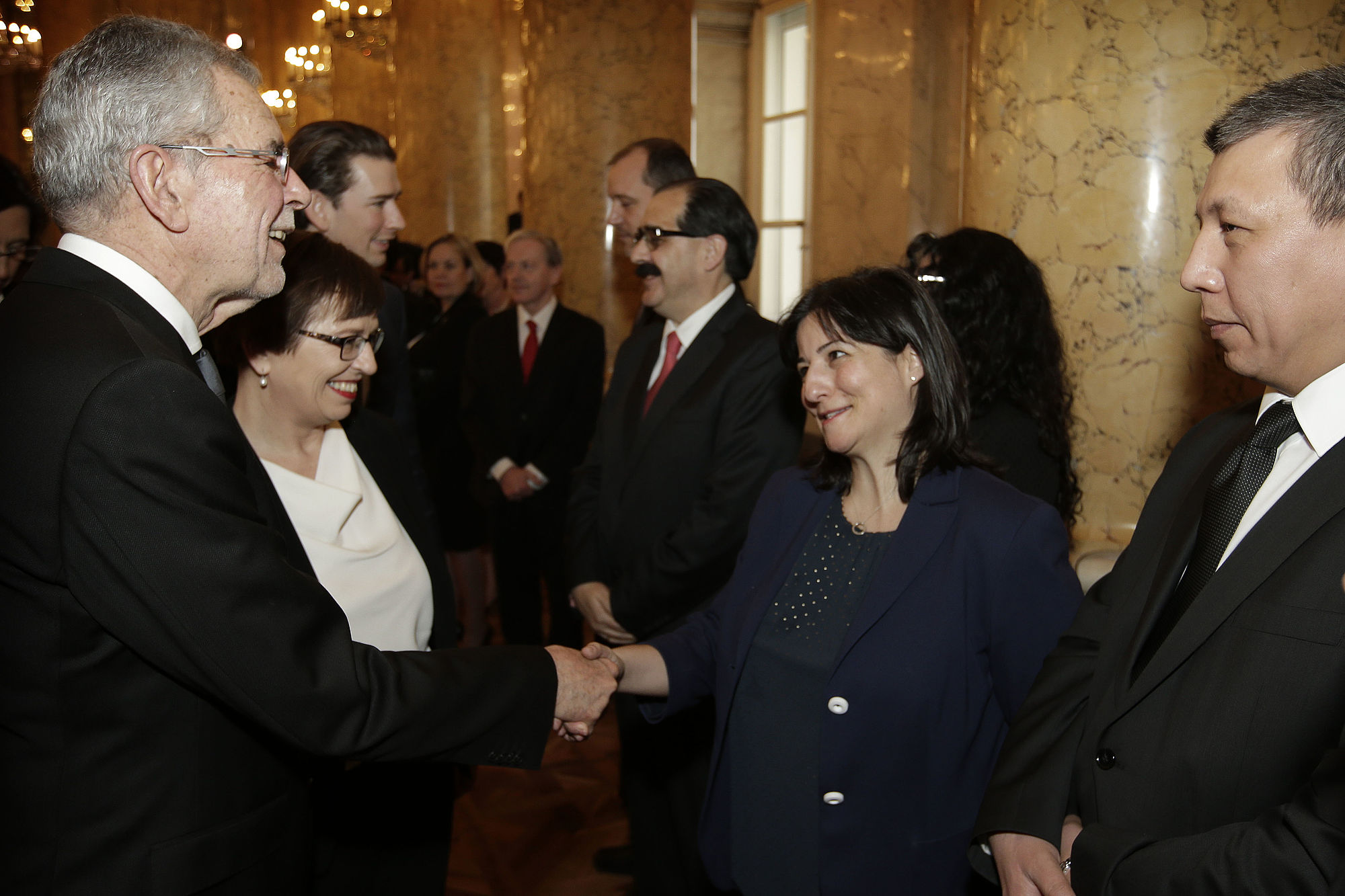
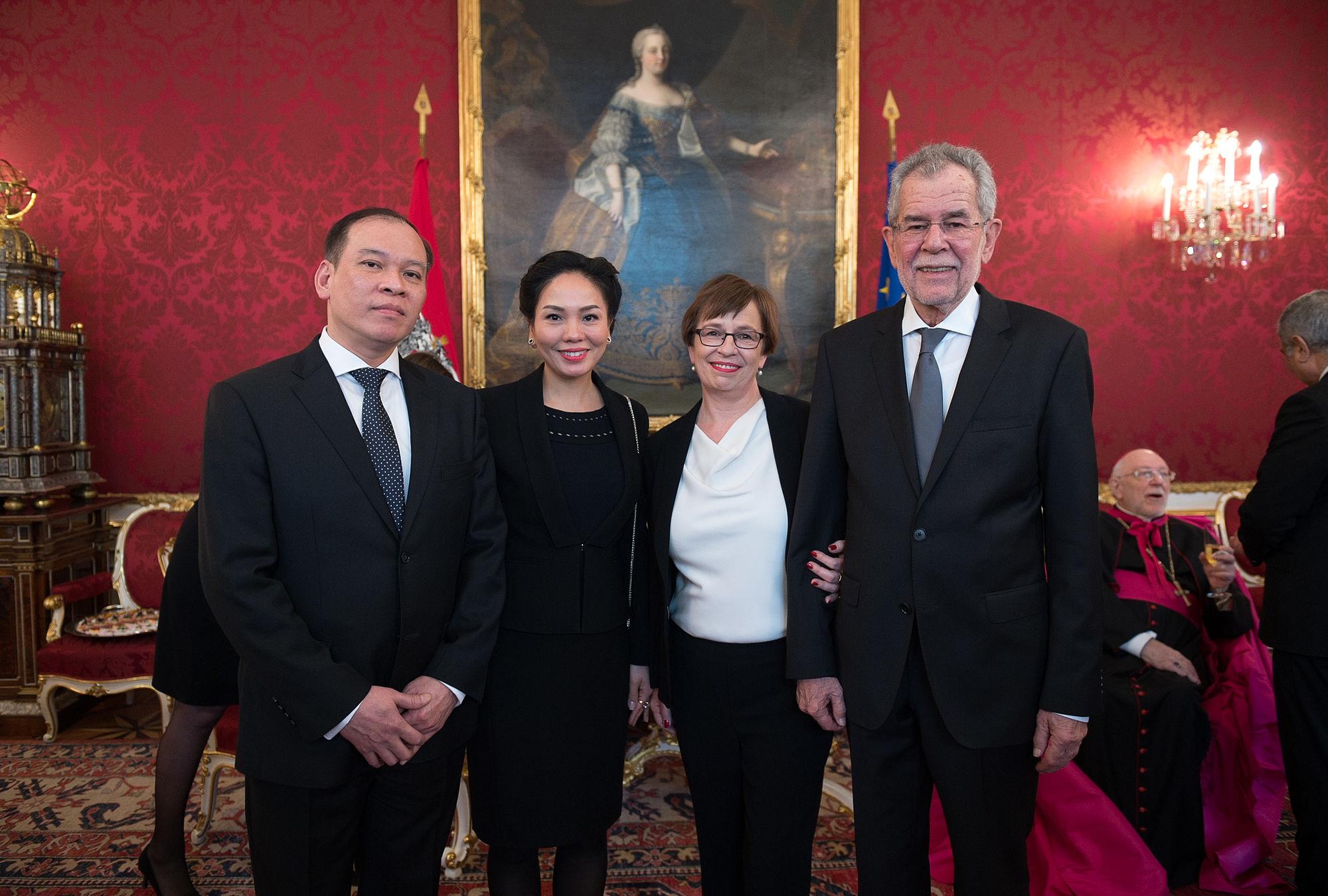
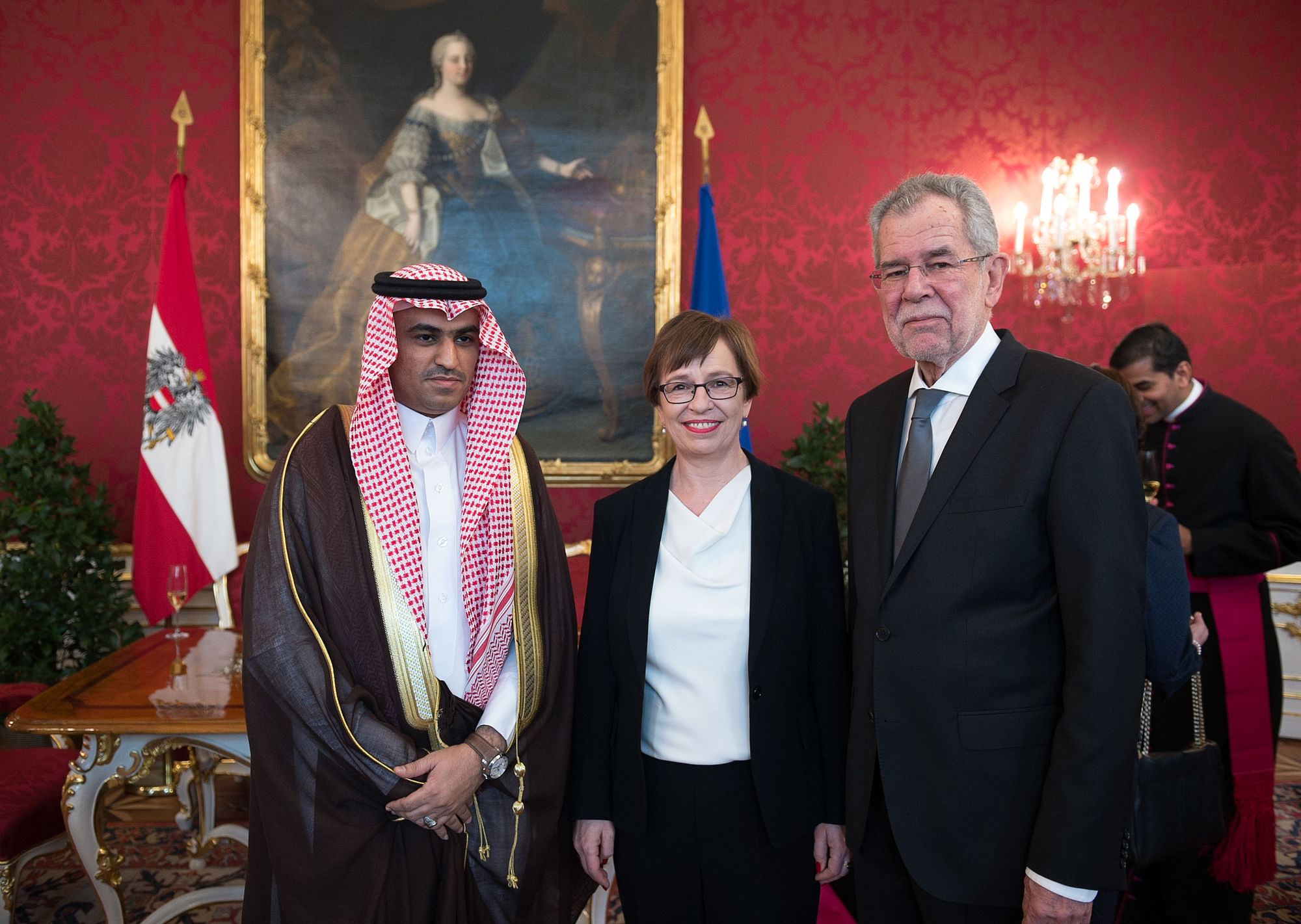
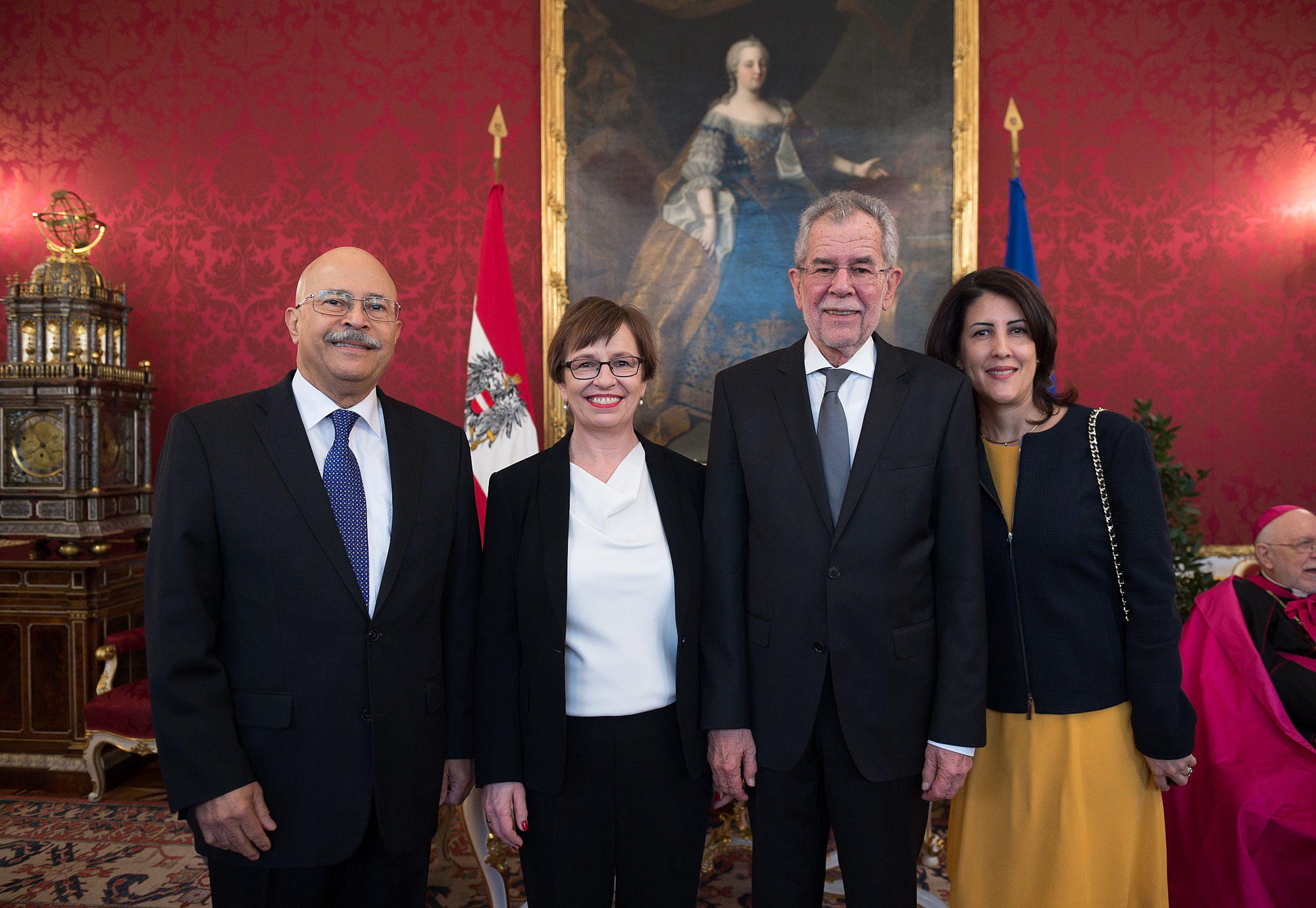
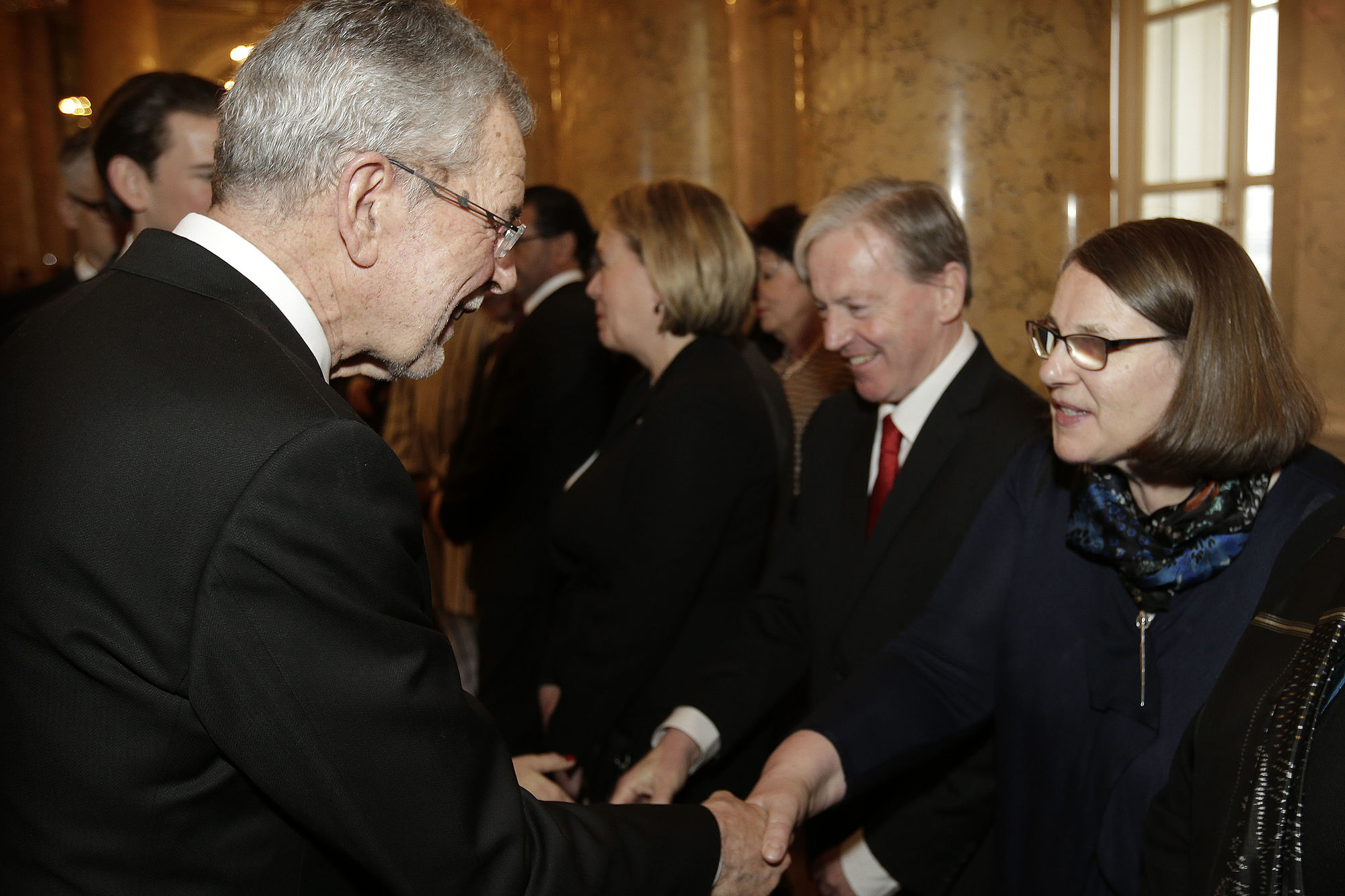
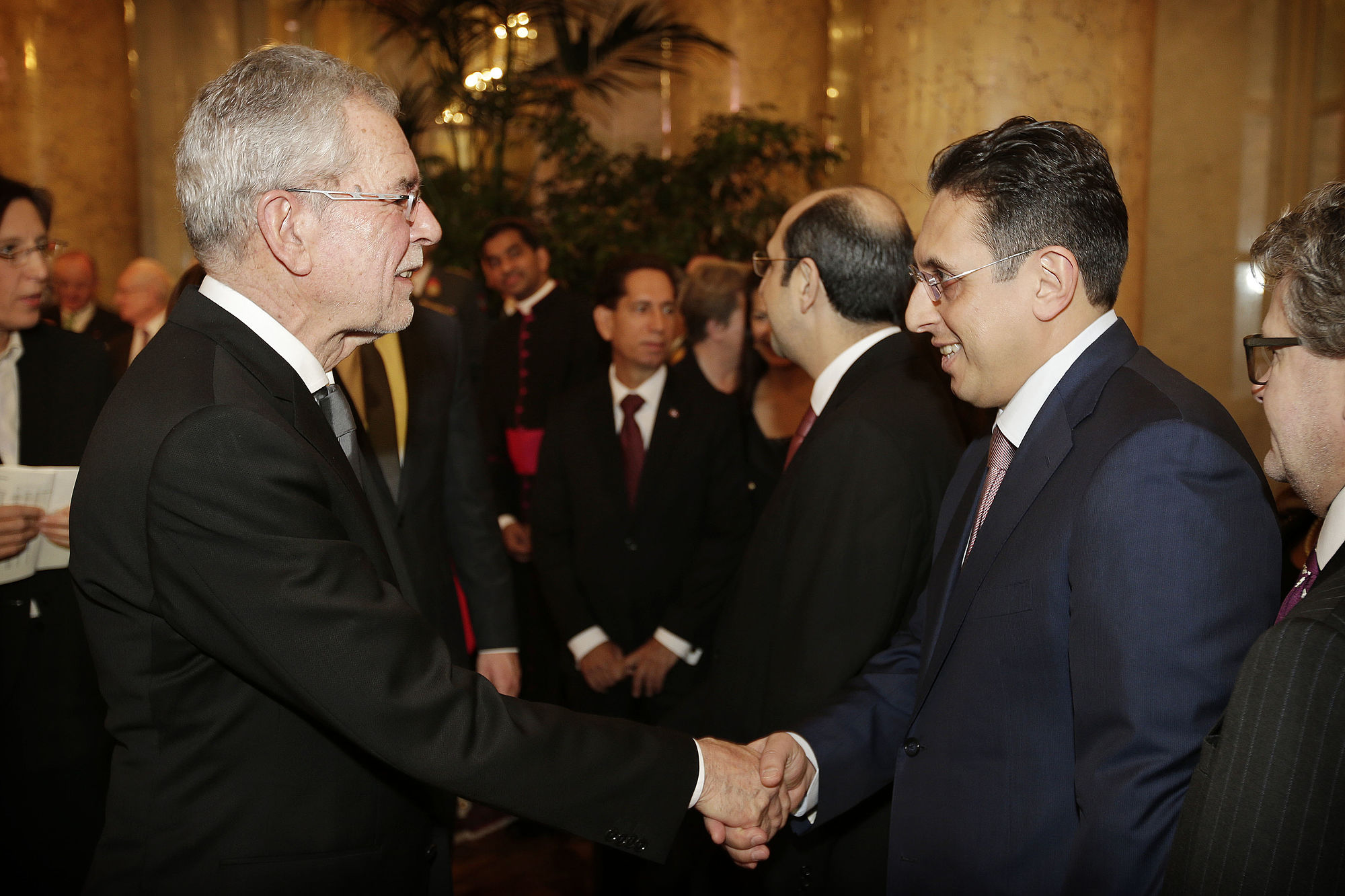
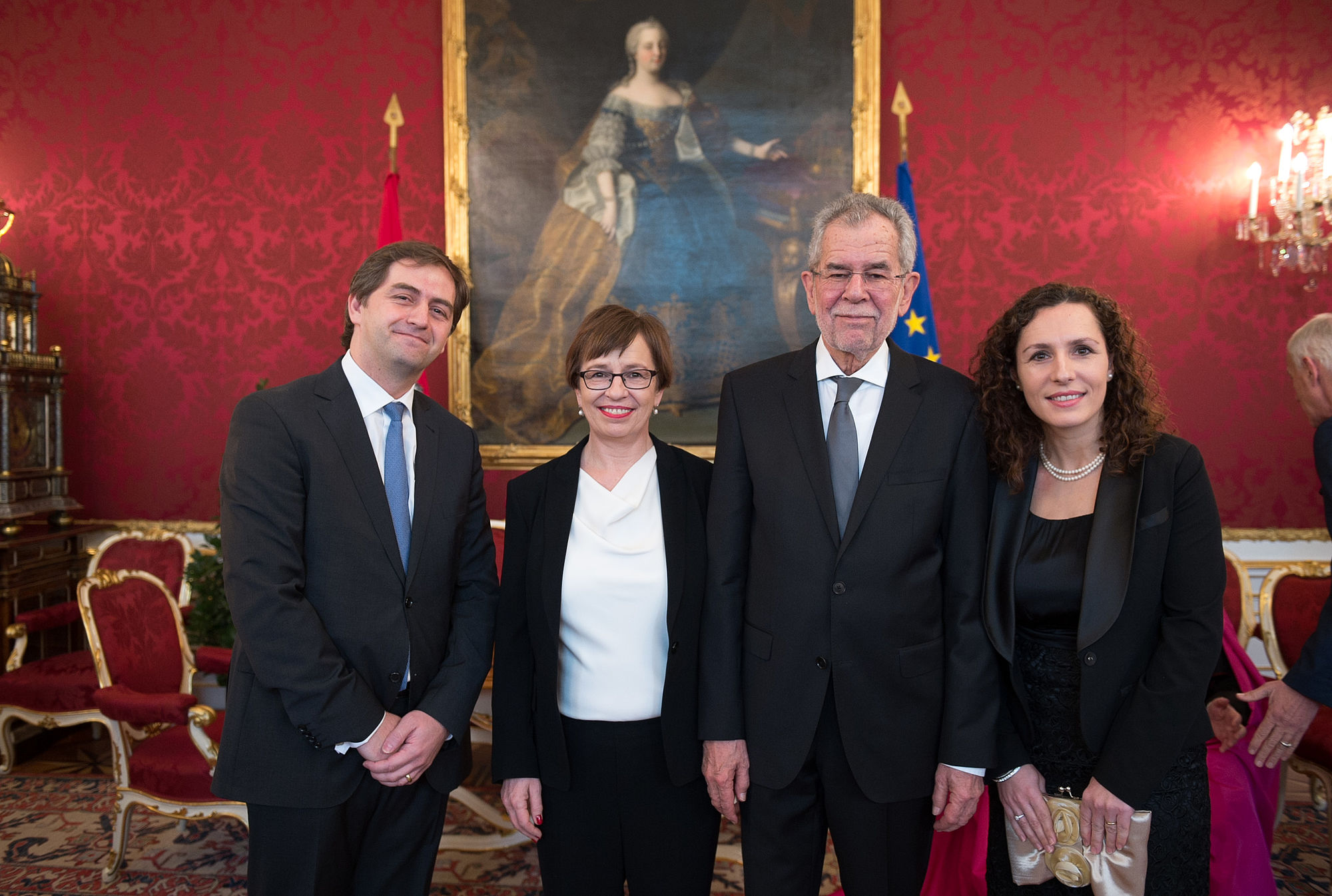
Hochwürdigster Herr Apostolischer Nuntius,
sehr geehrter Herr Bundesminister Kurz,
Exzellenzen!
Meine Damen und Herren!
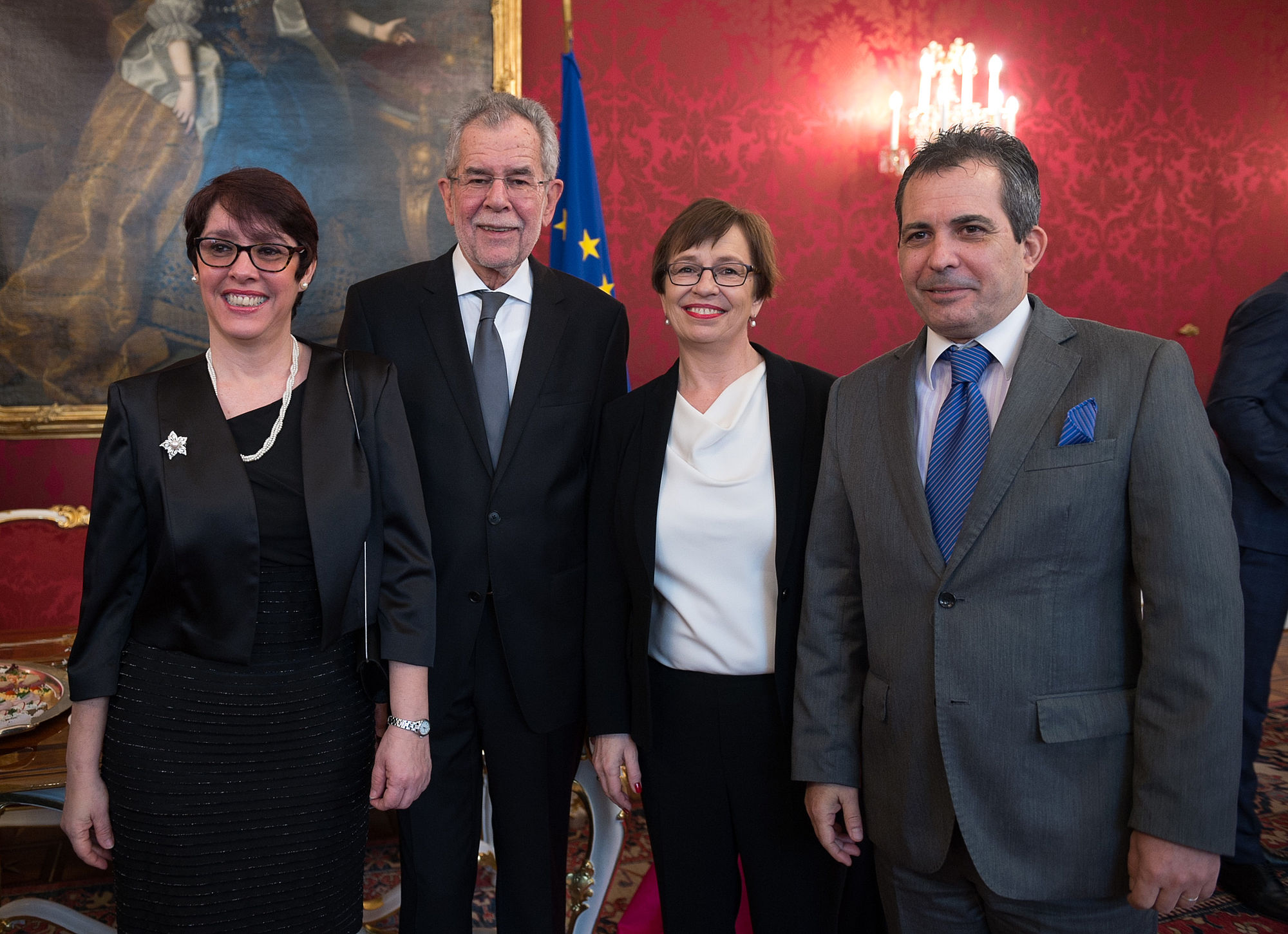
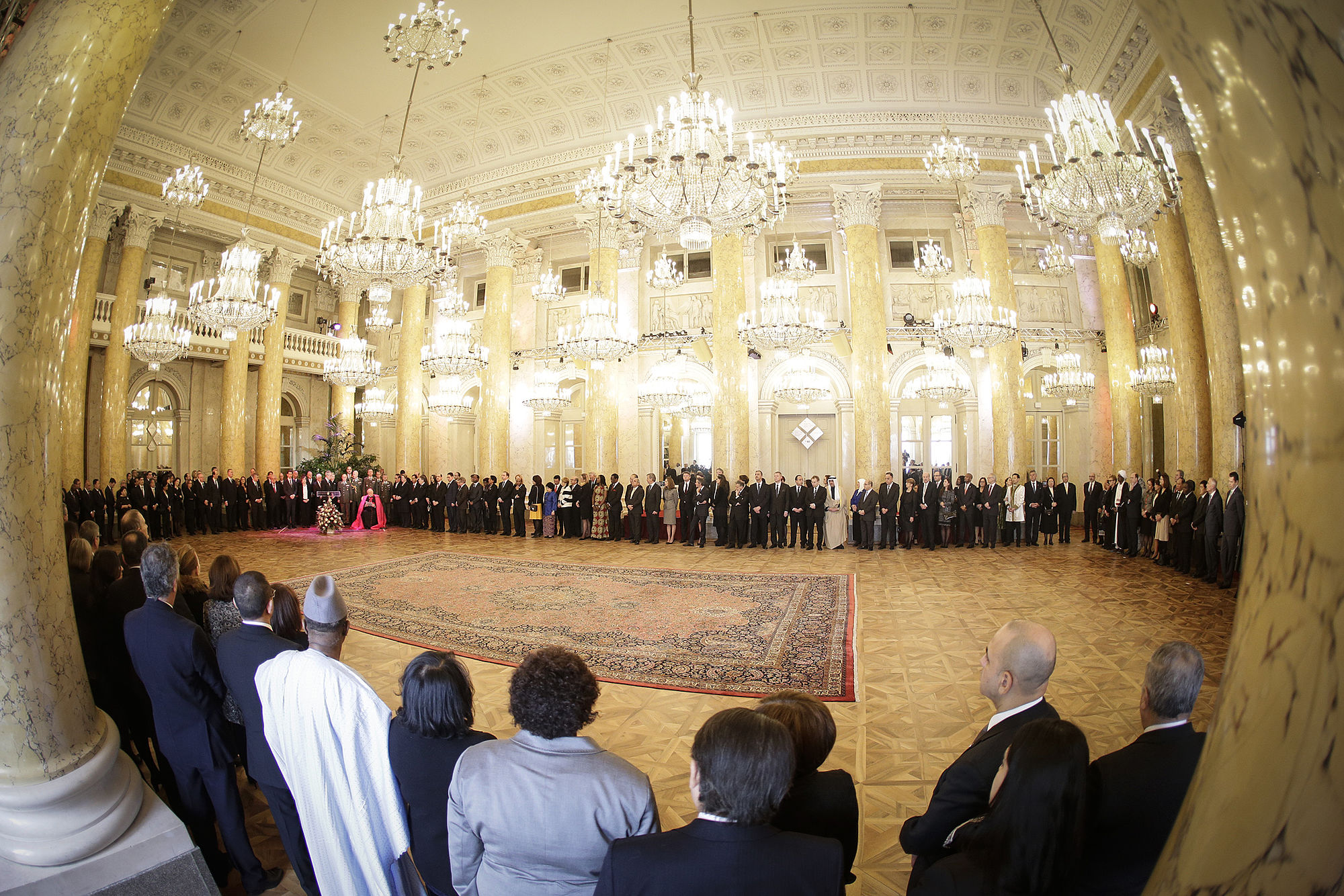
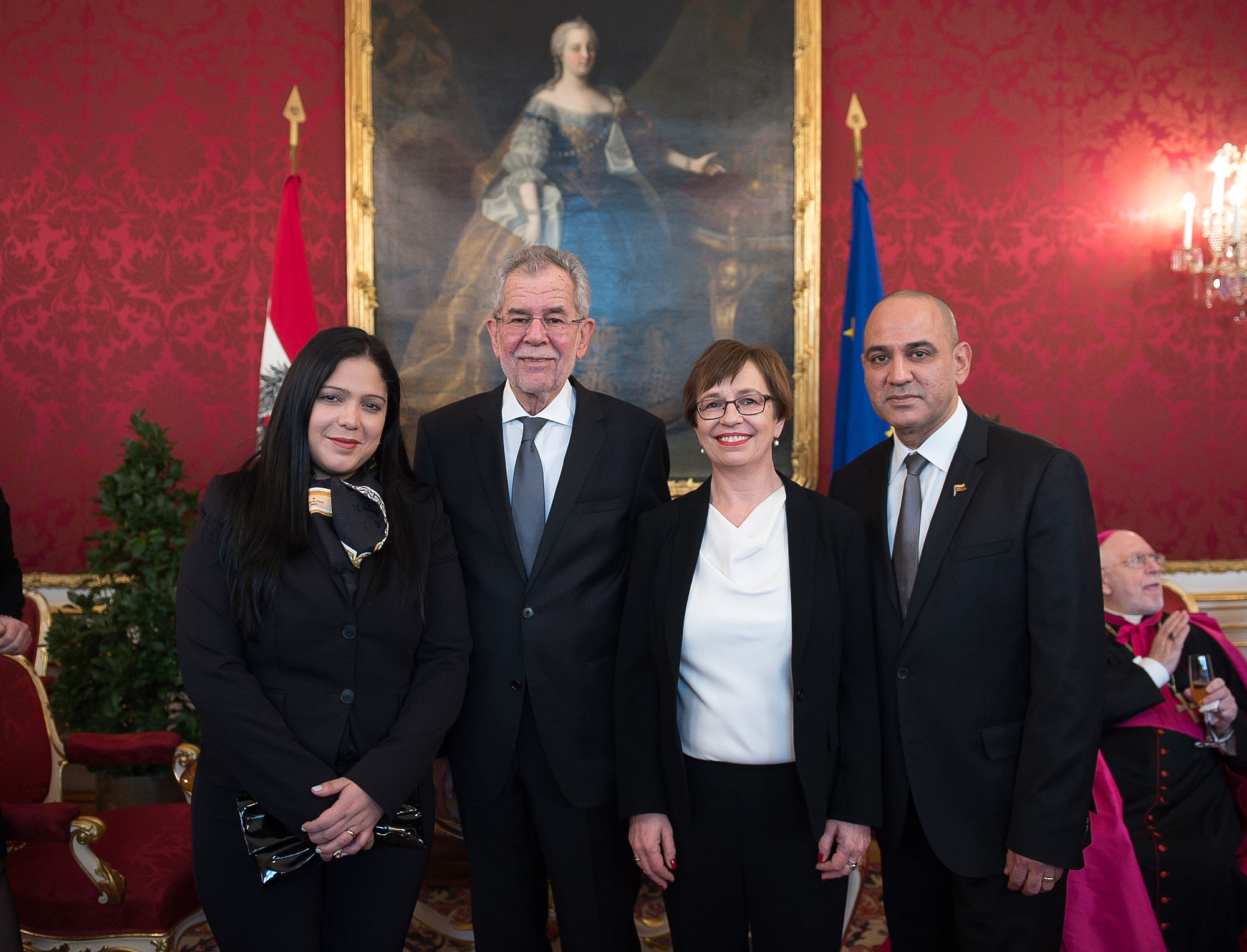
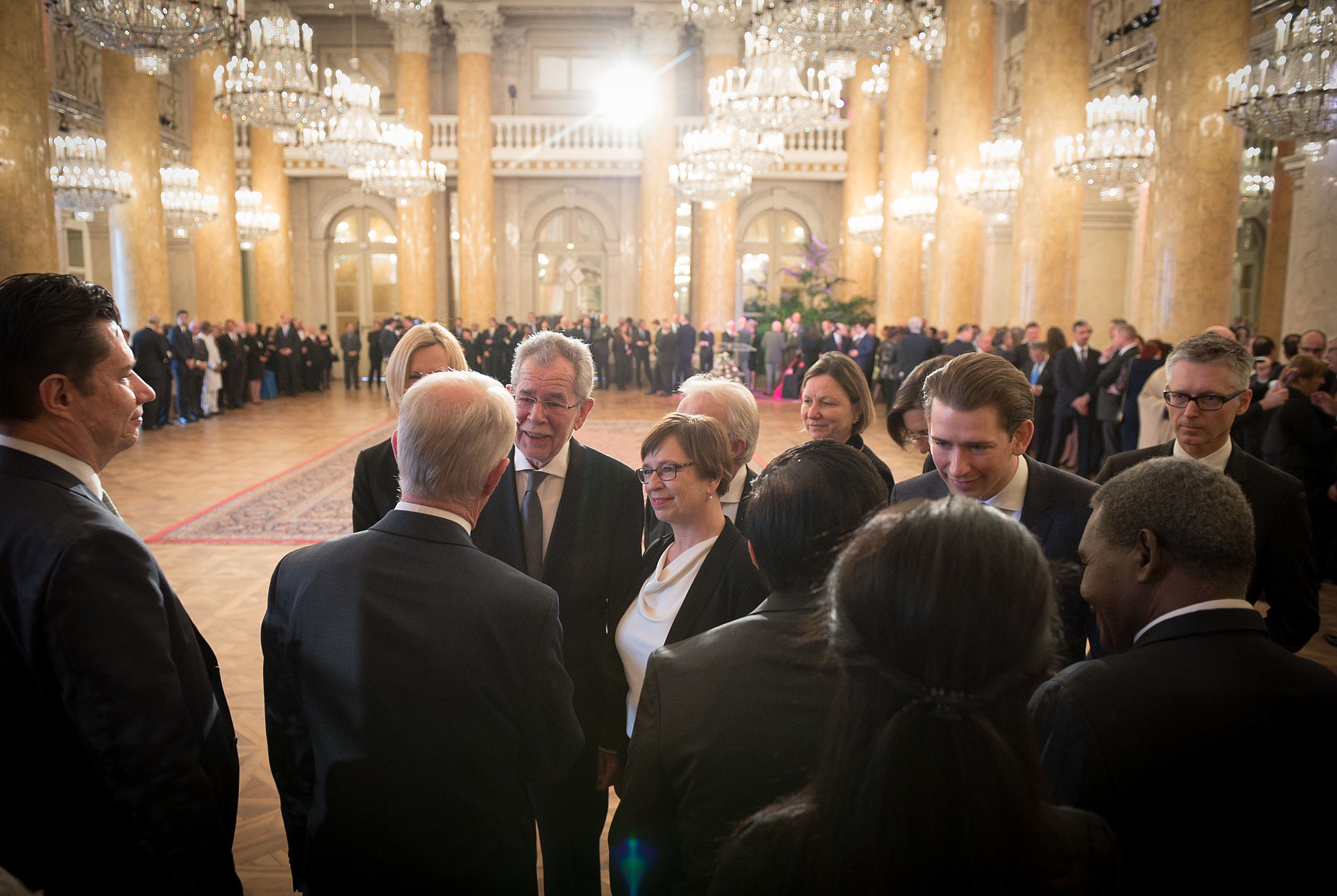
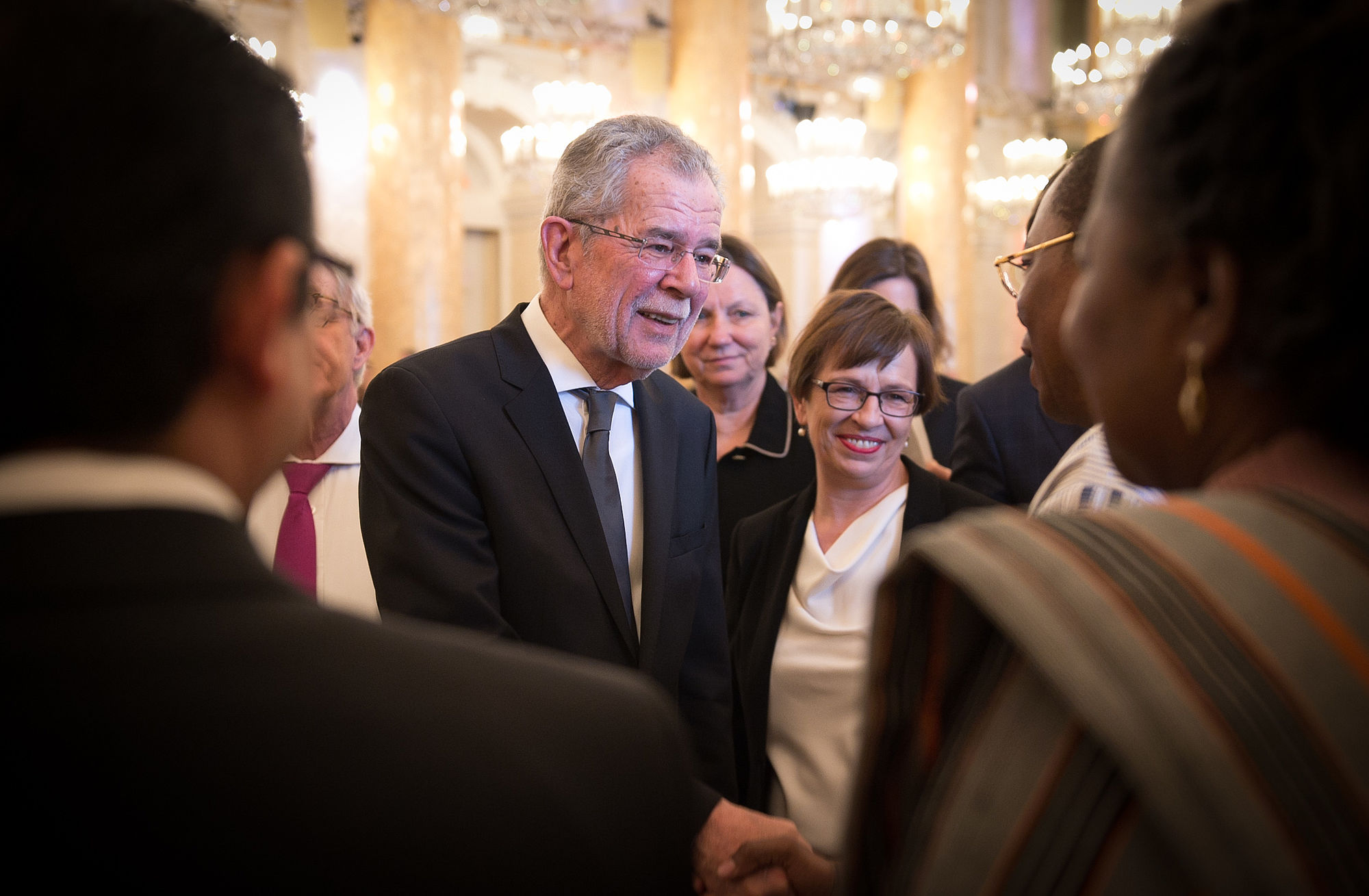
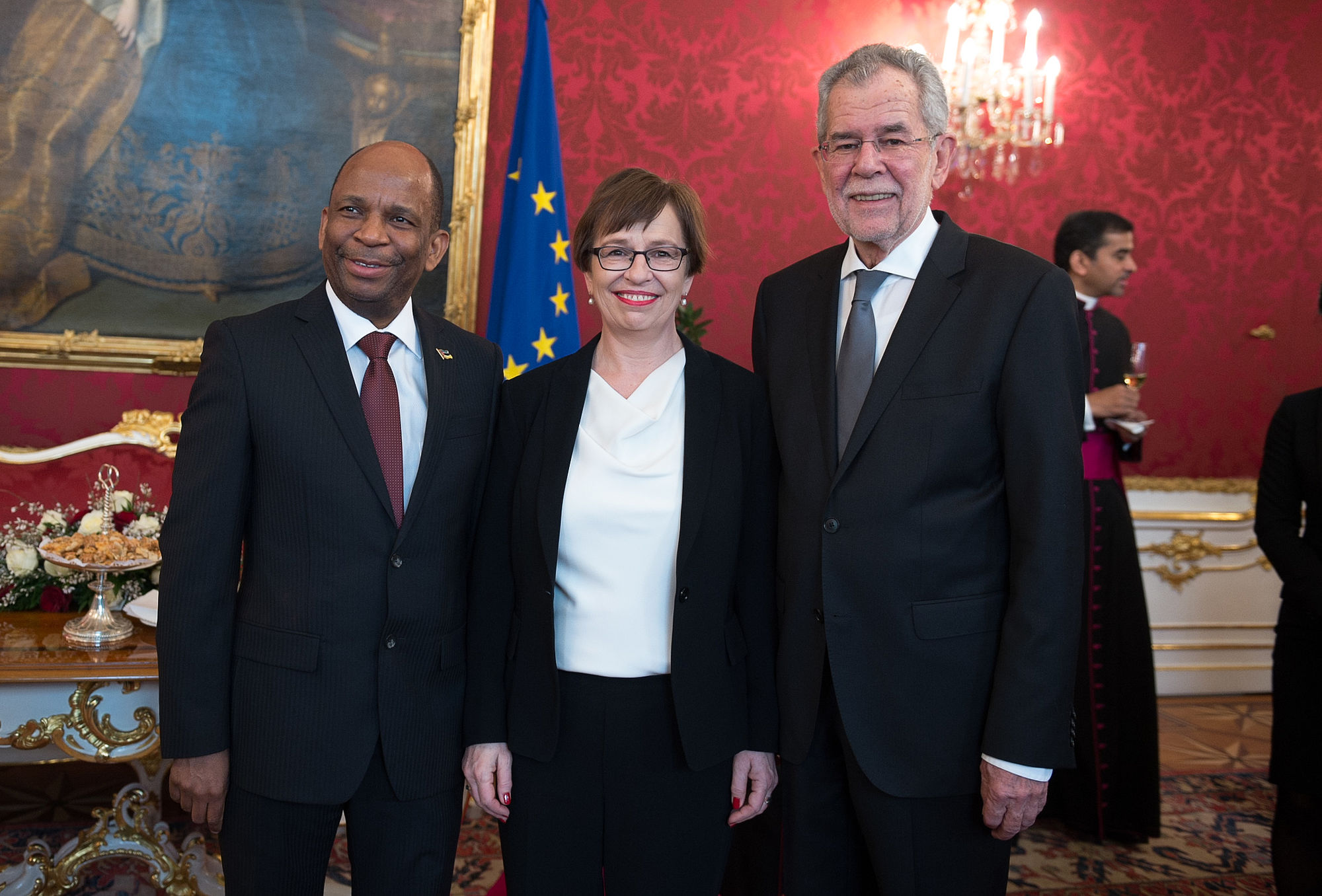
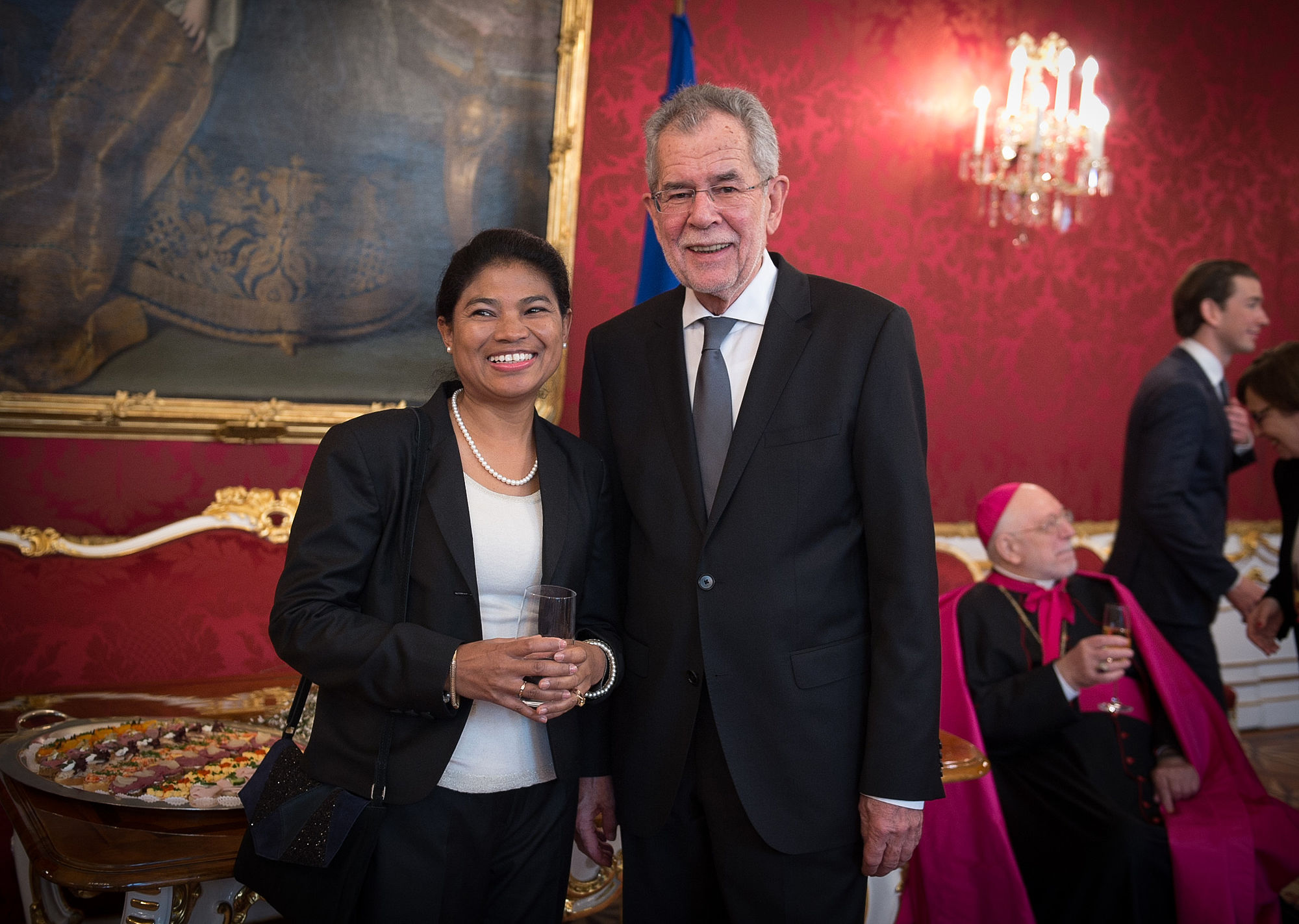
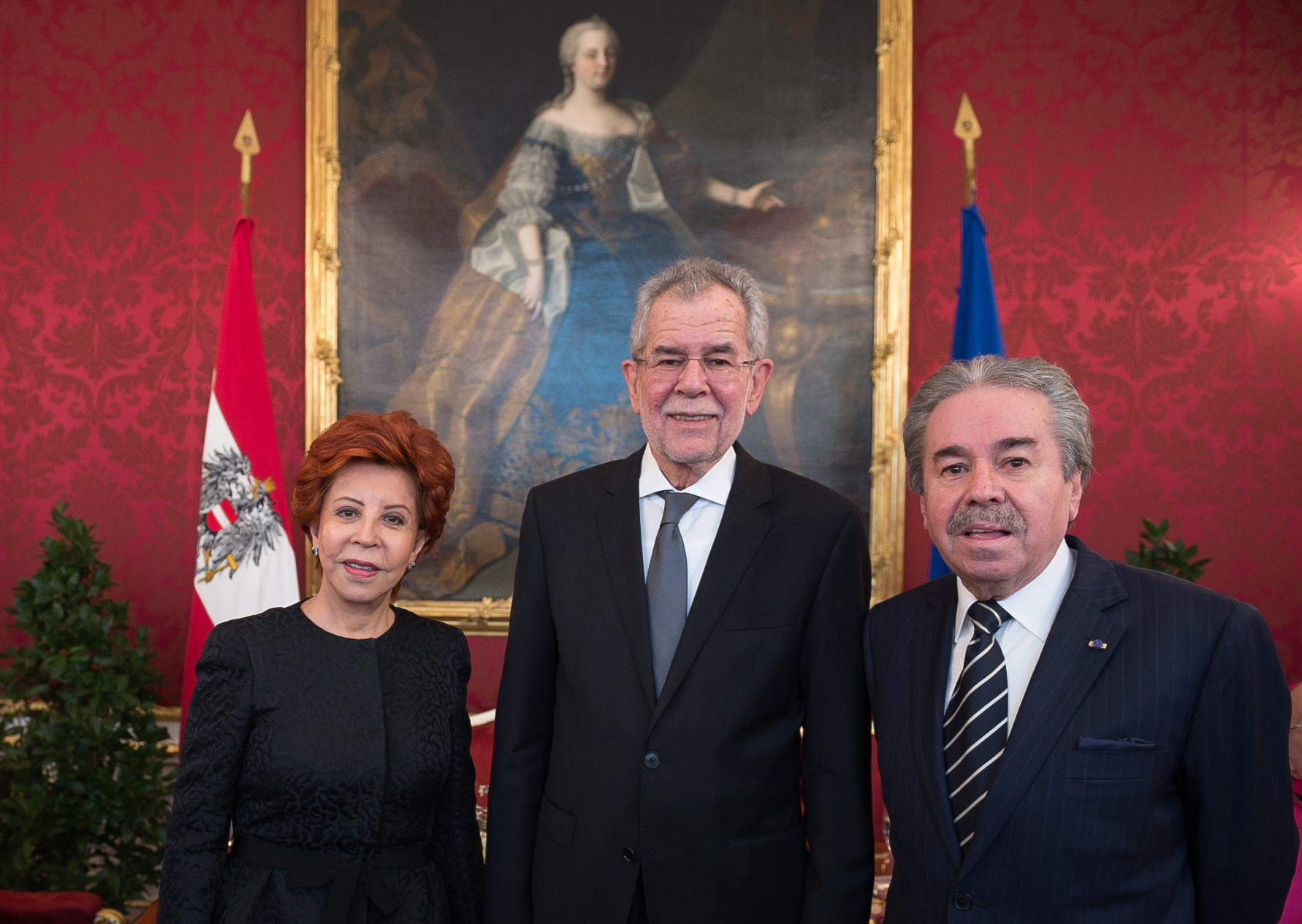
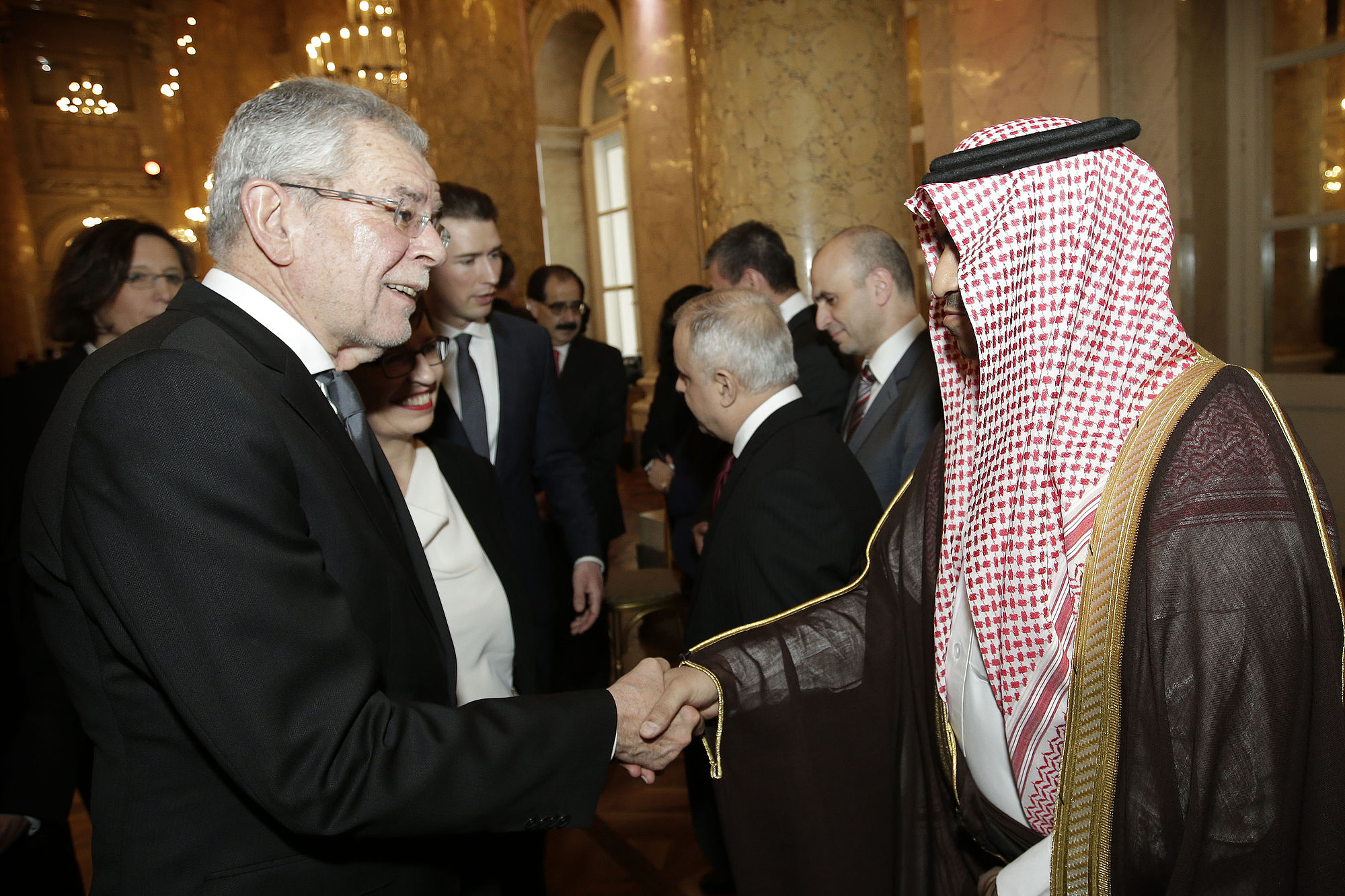
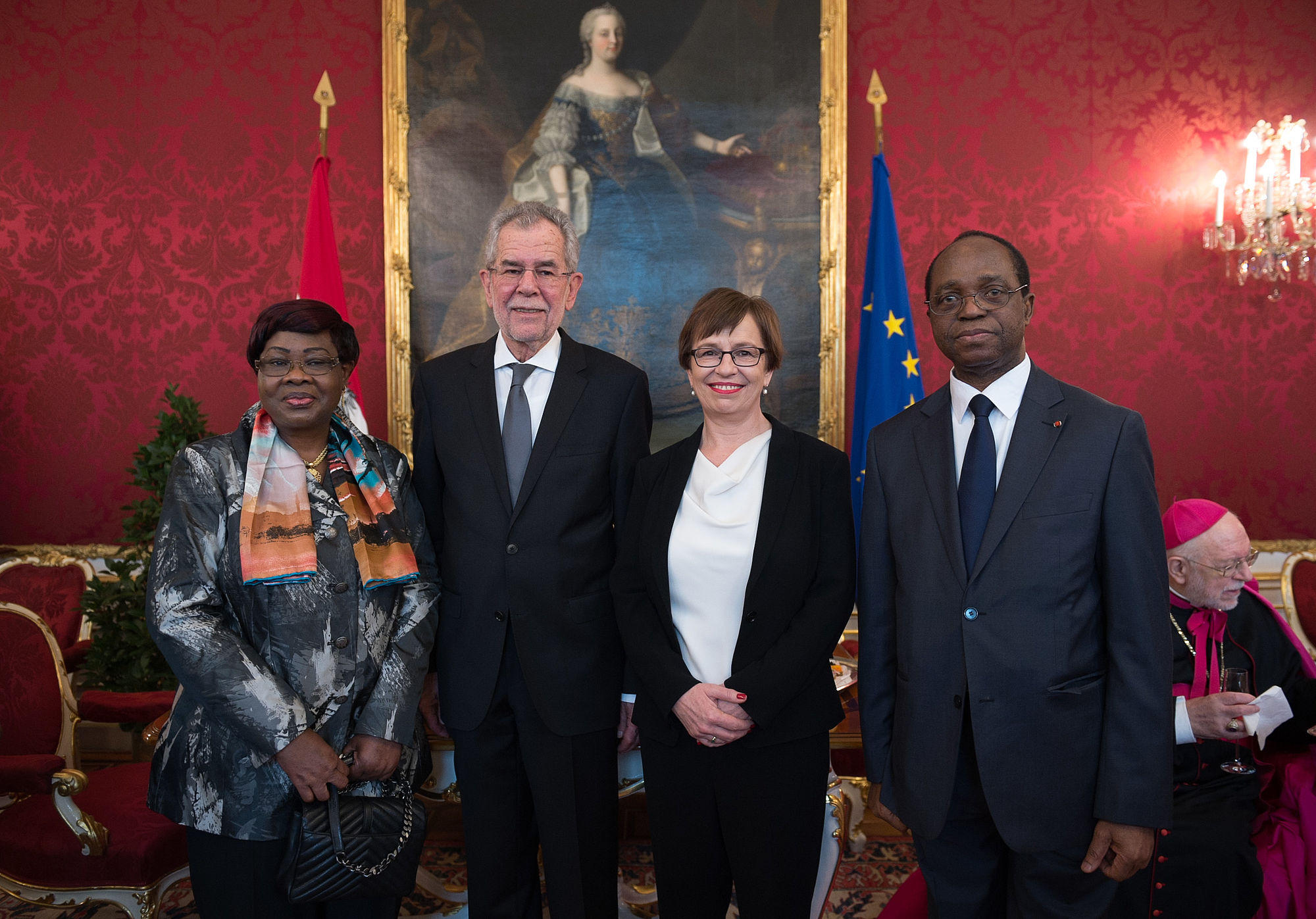
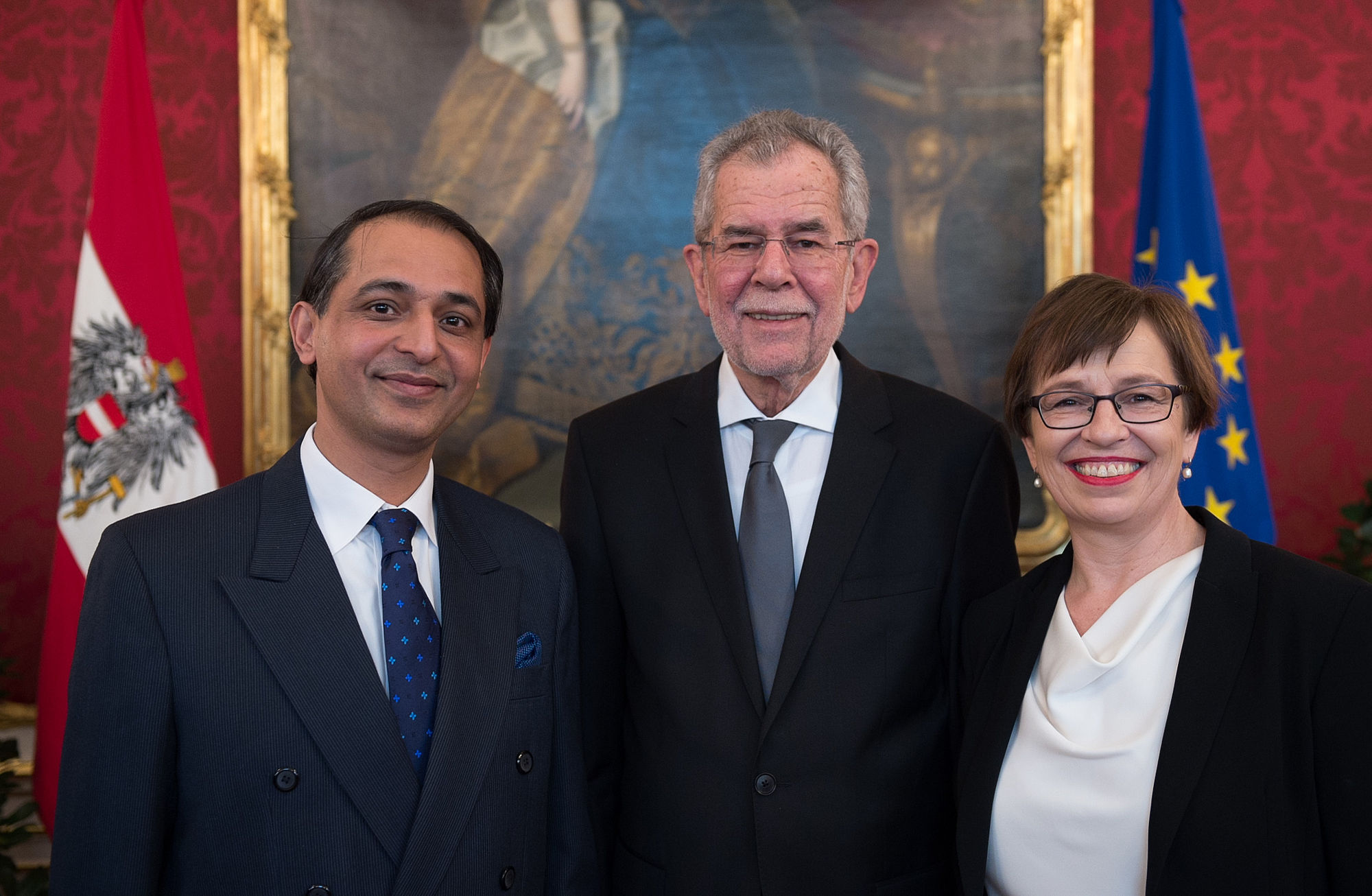
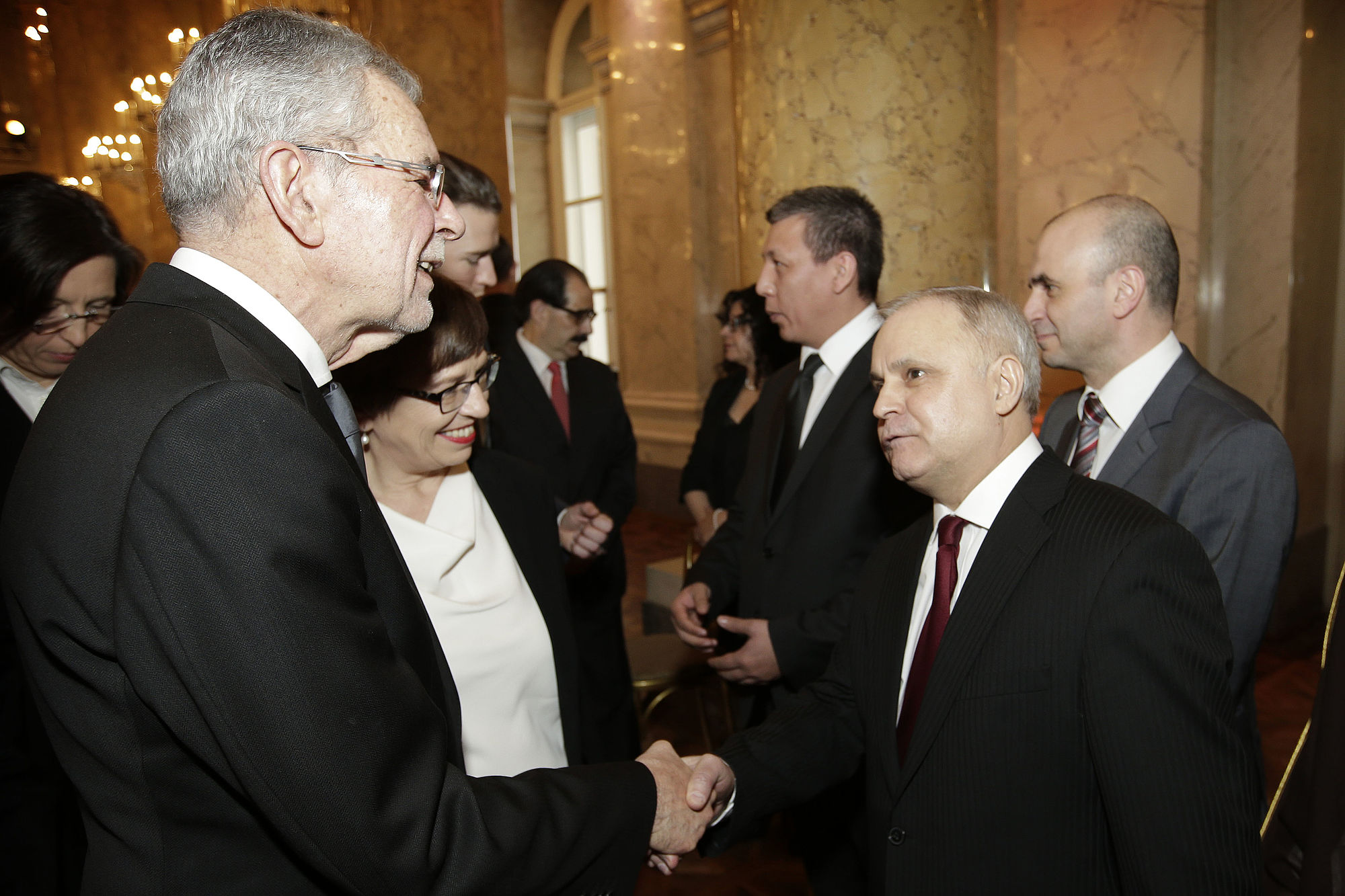
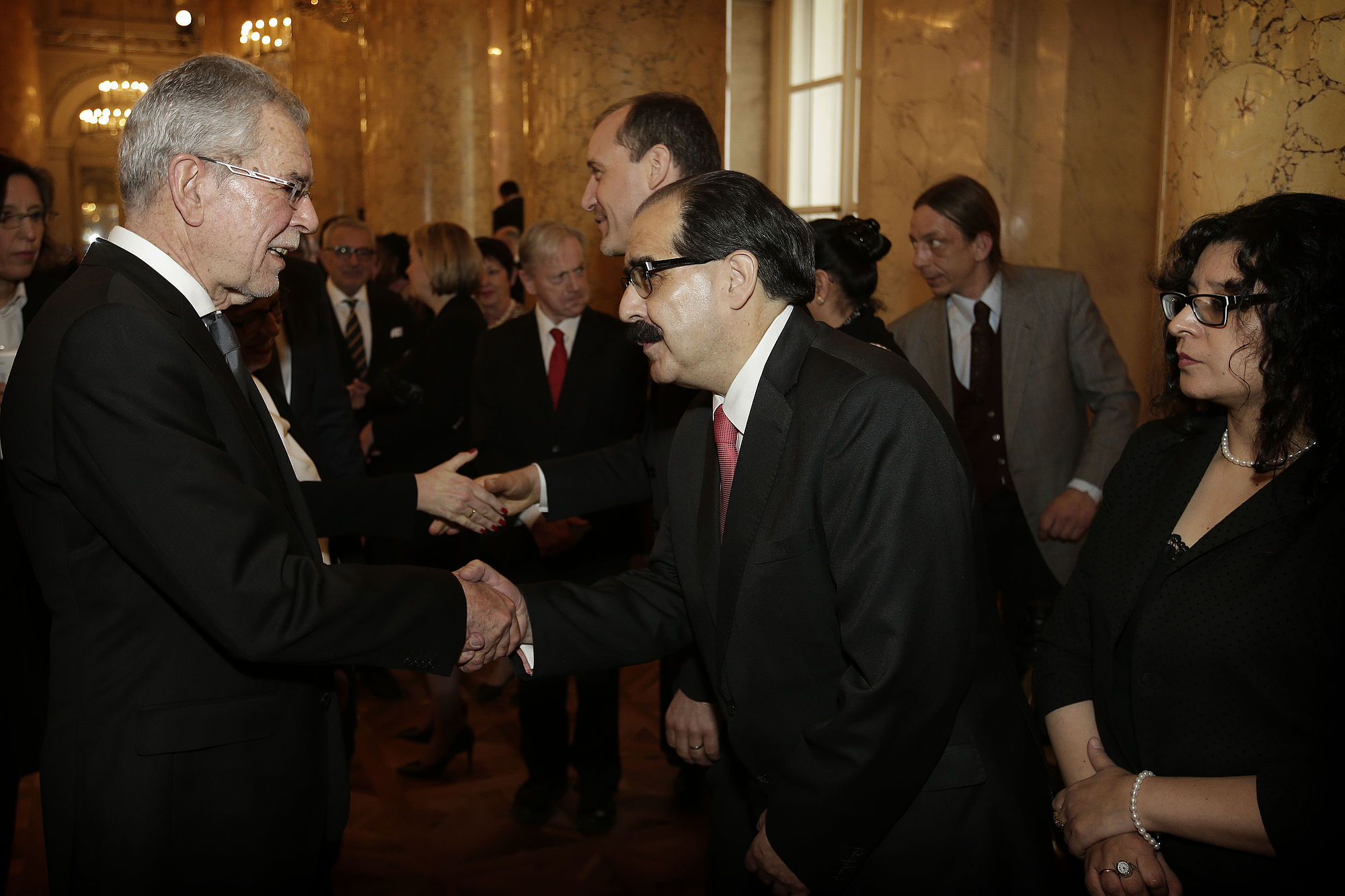
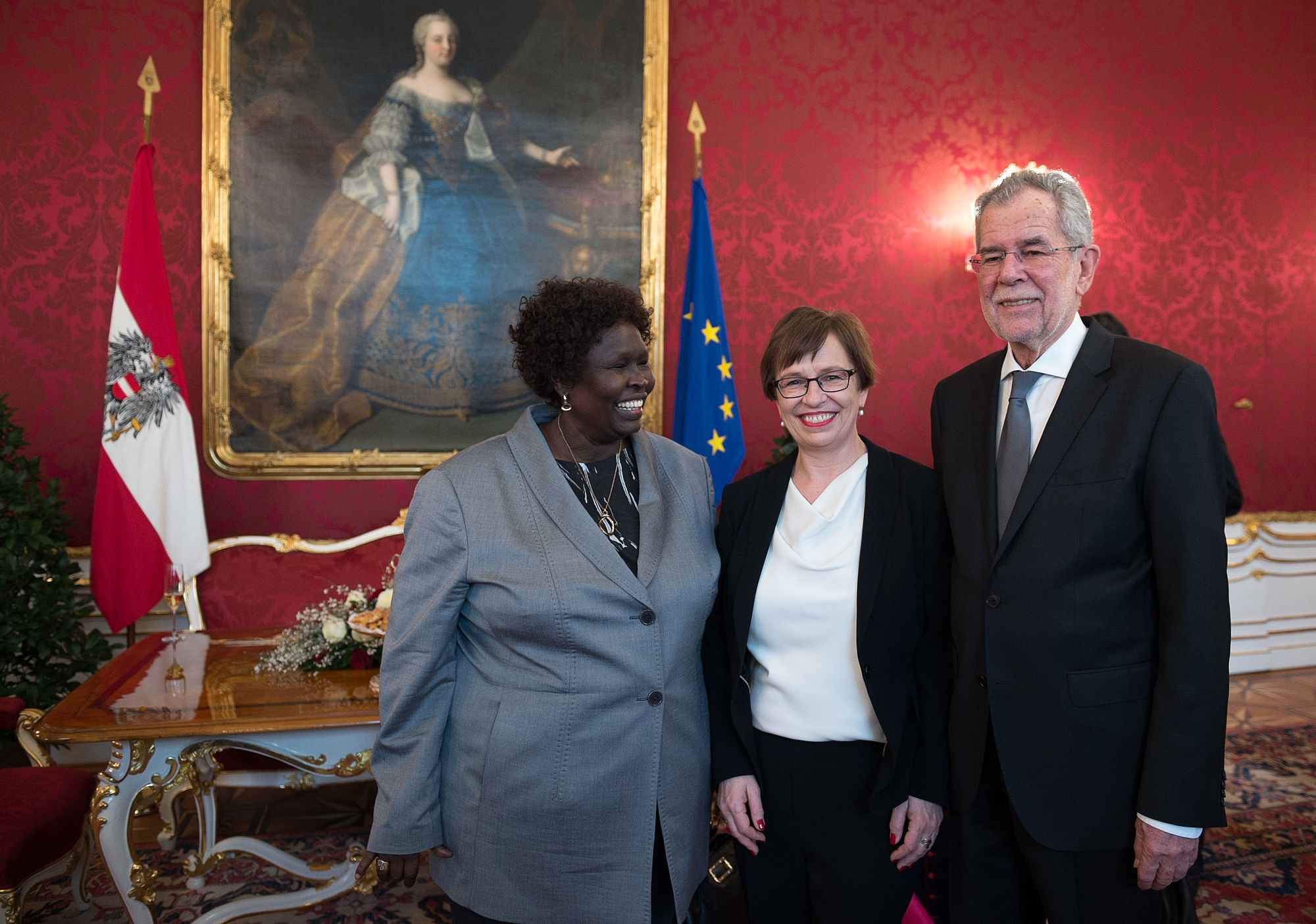
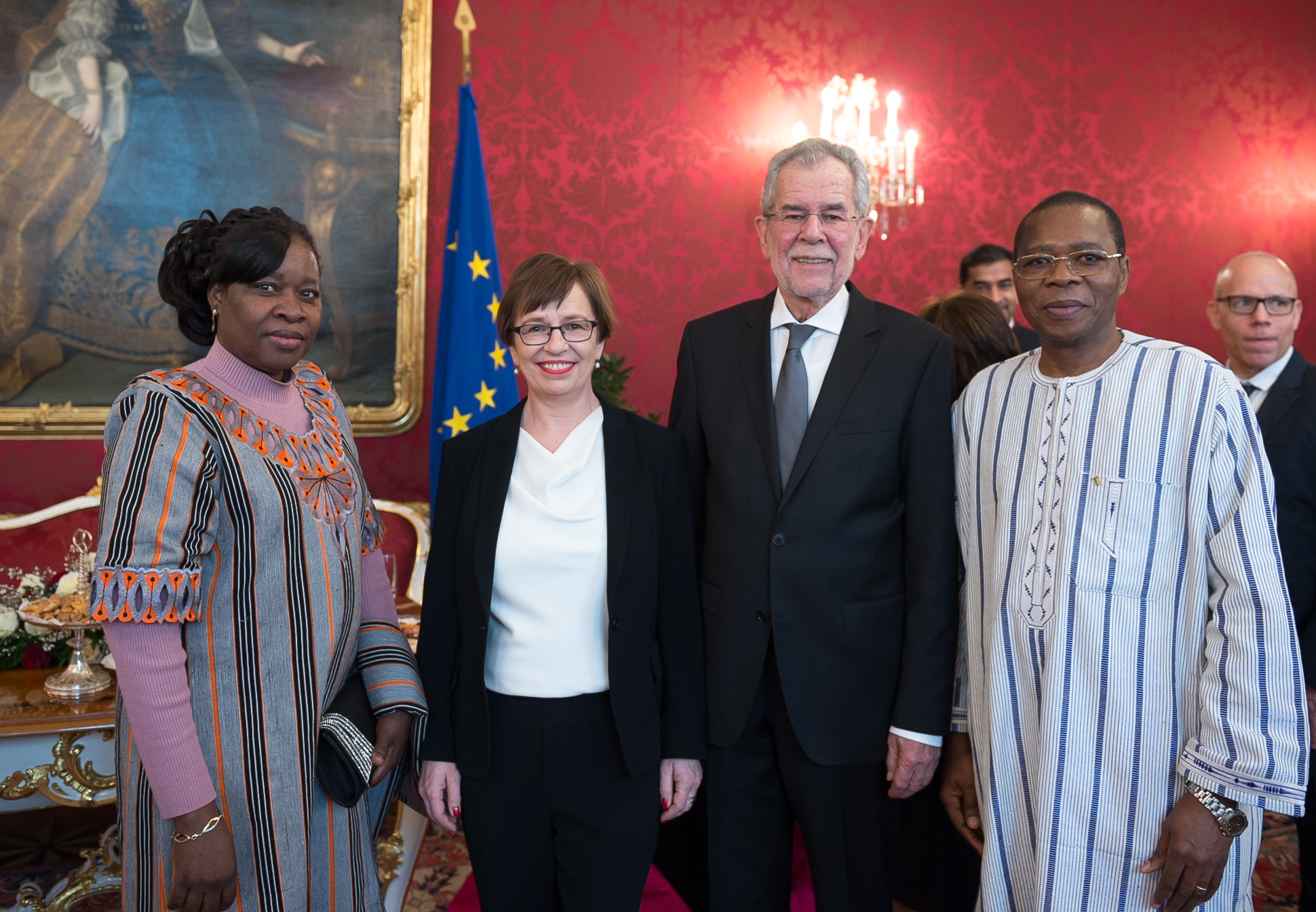
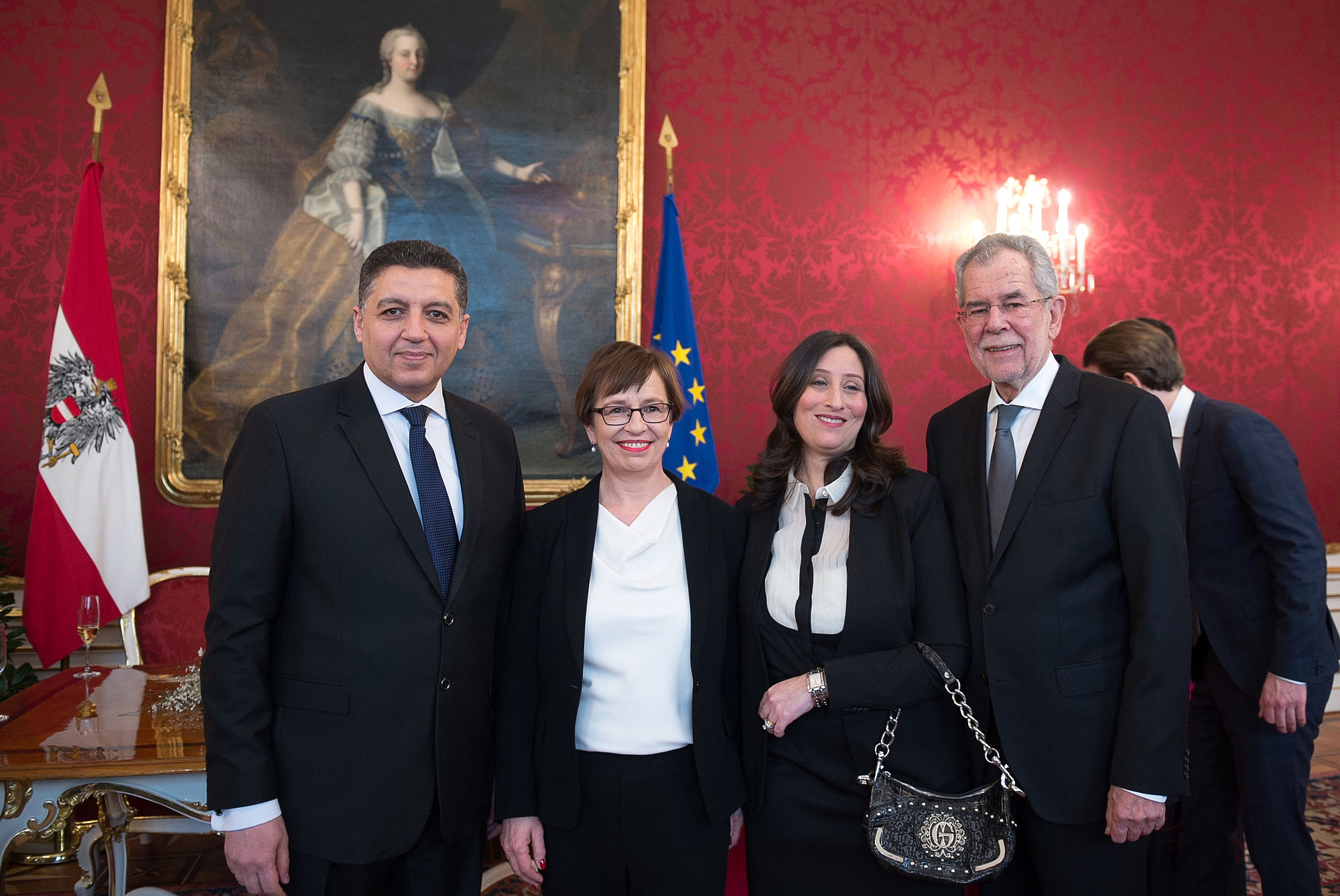
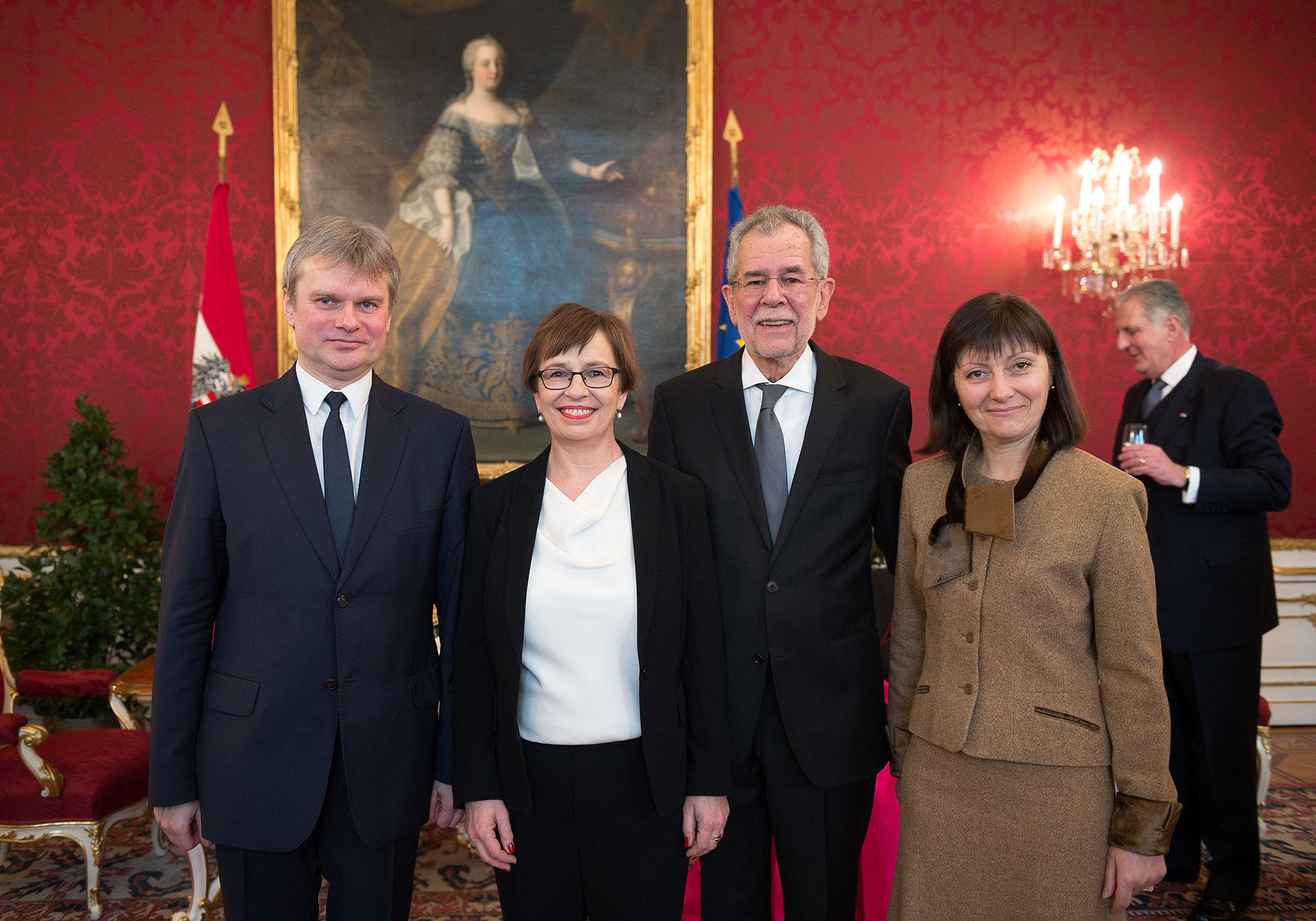
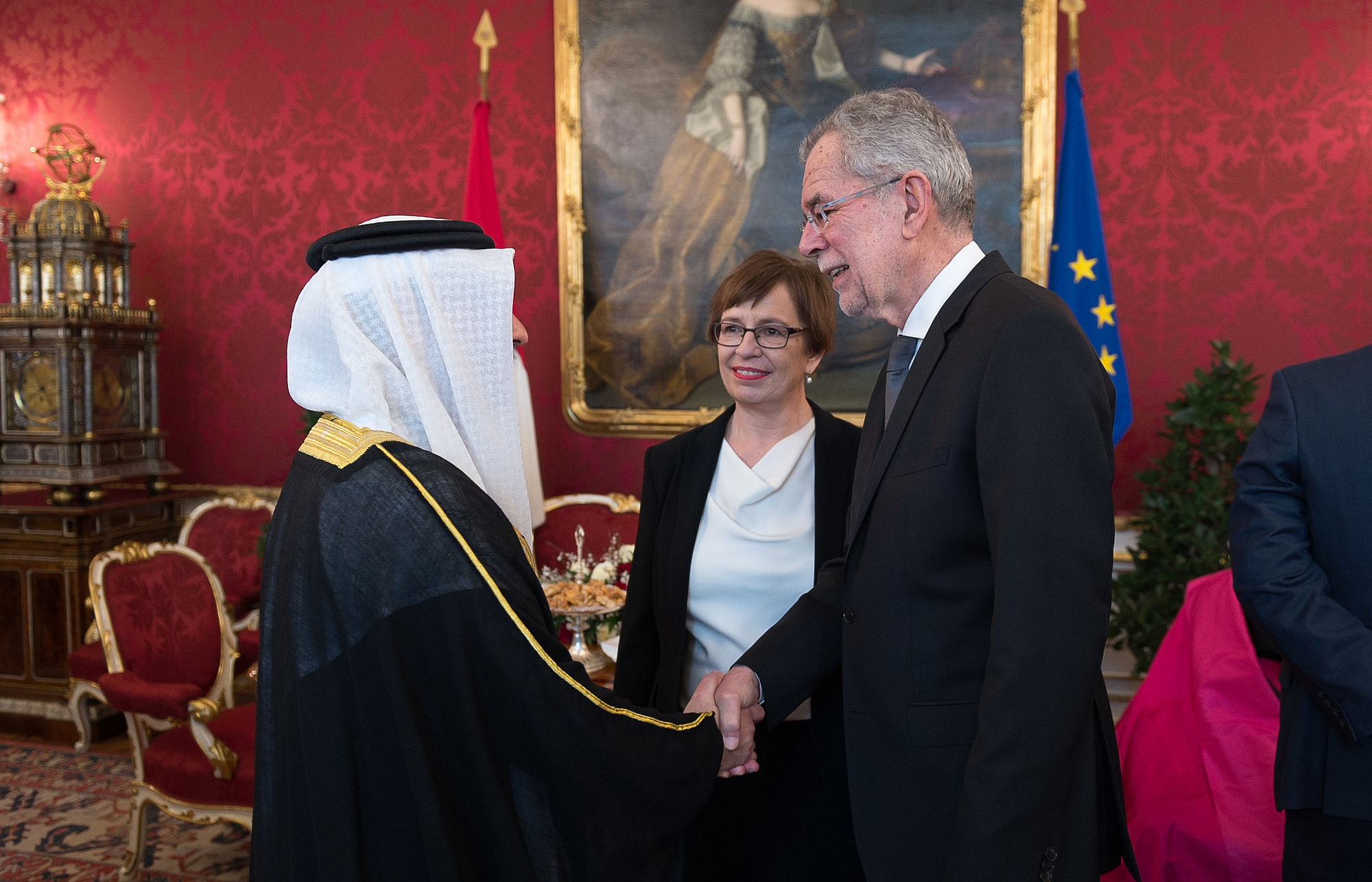
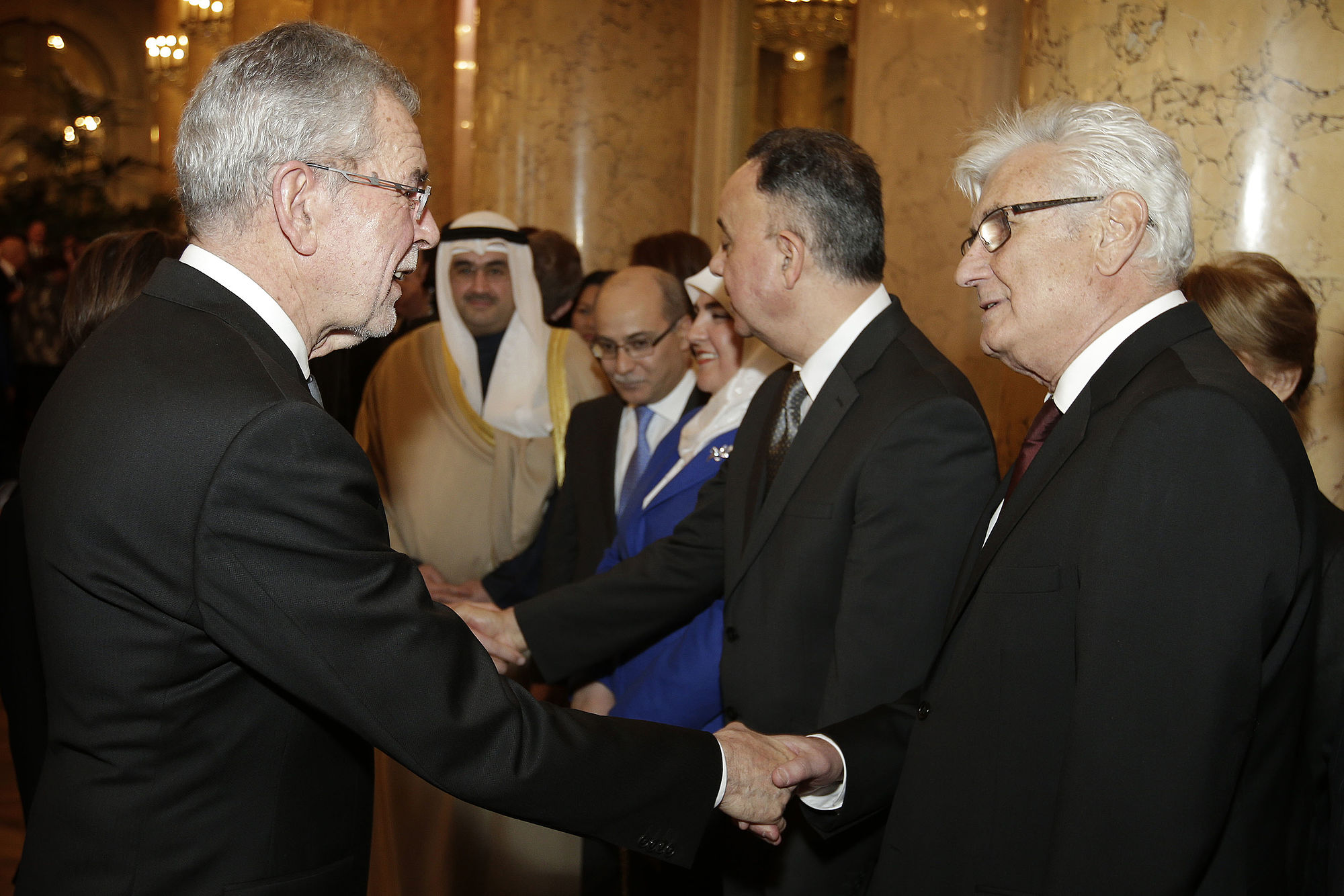
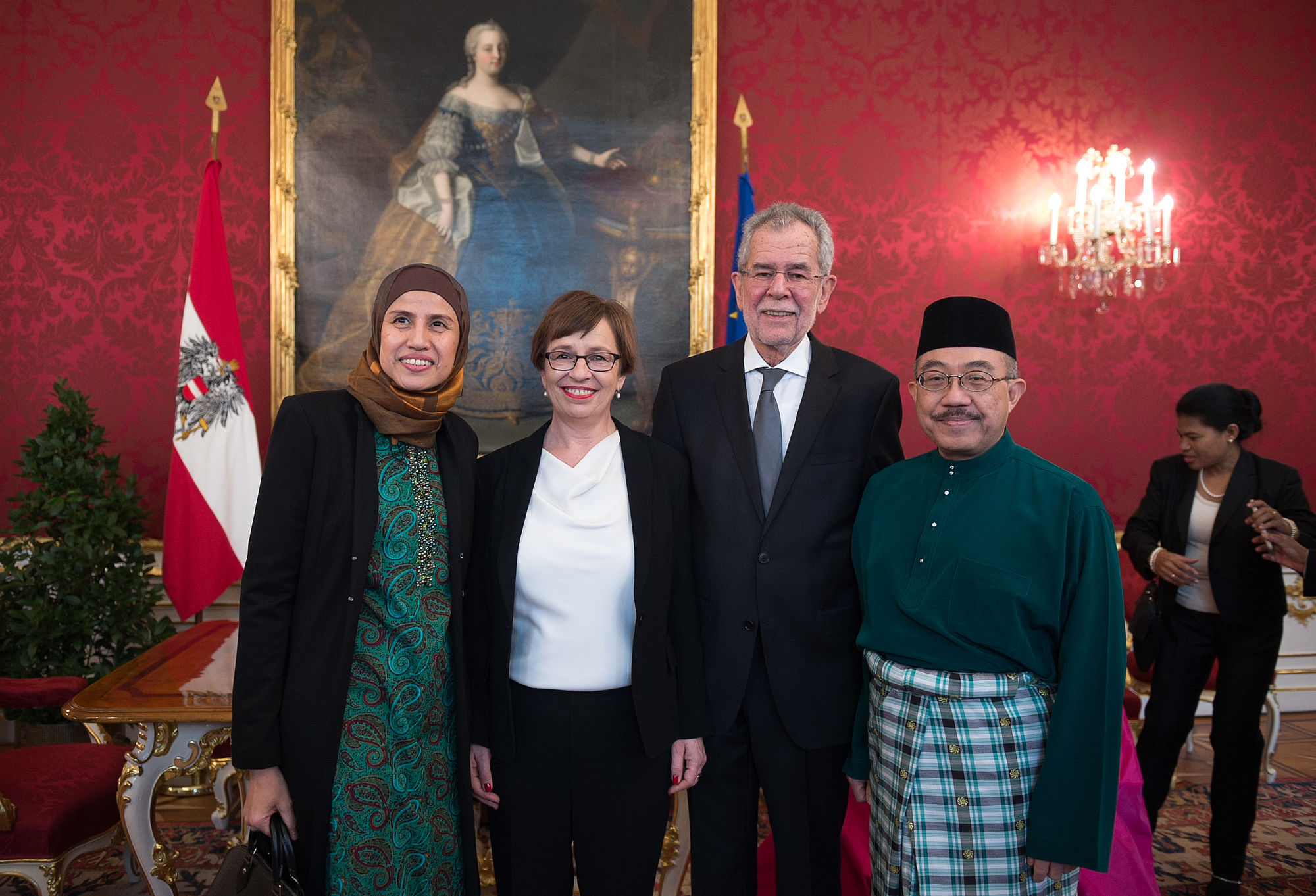
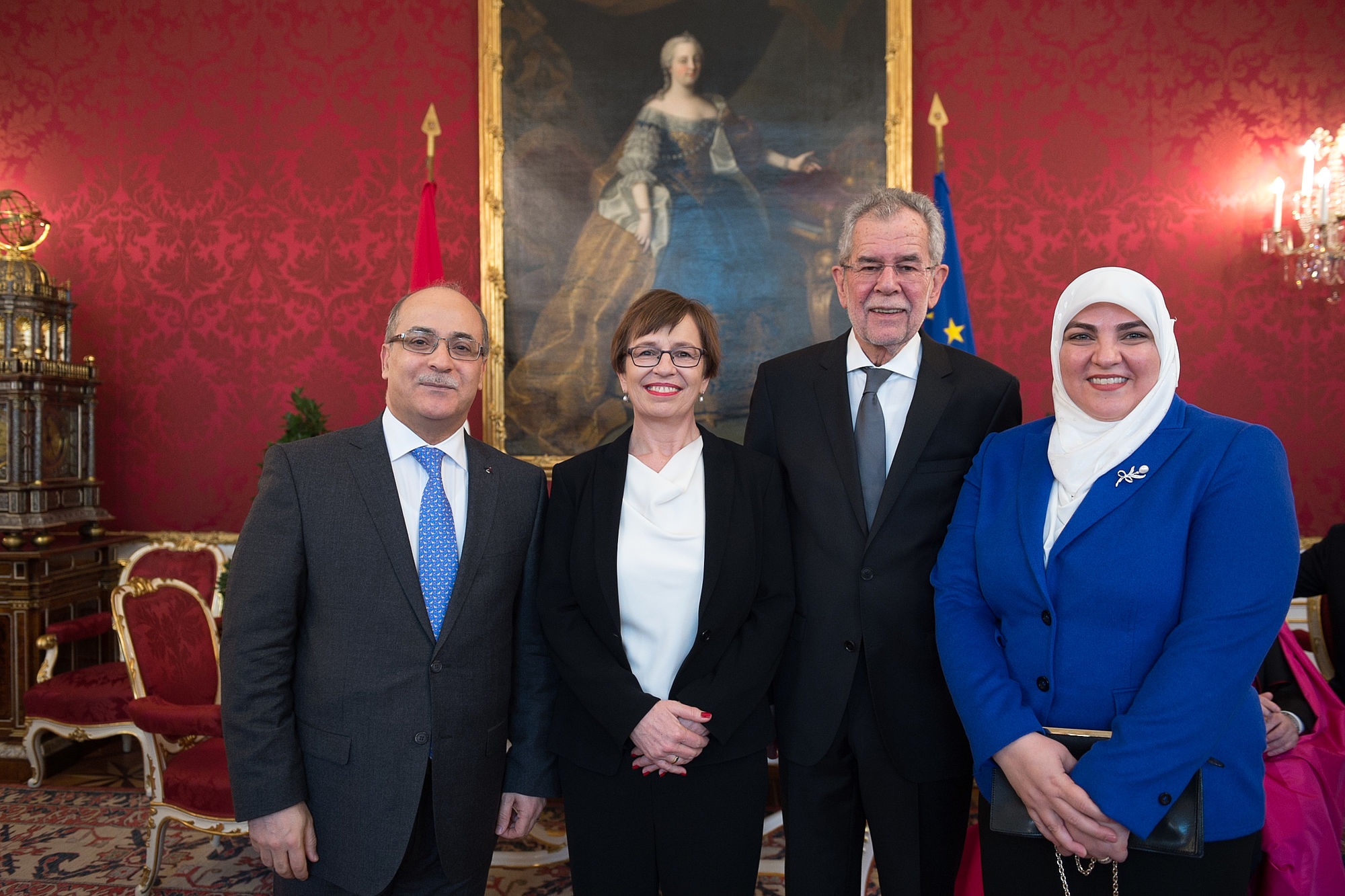
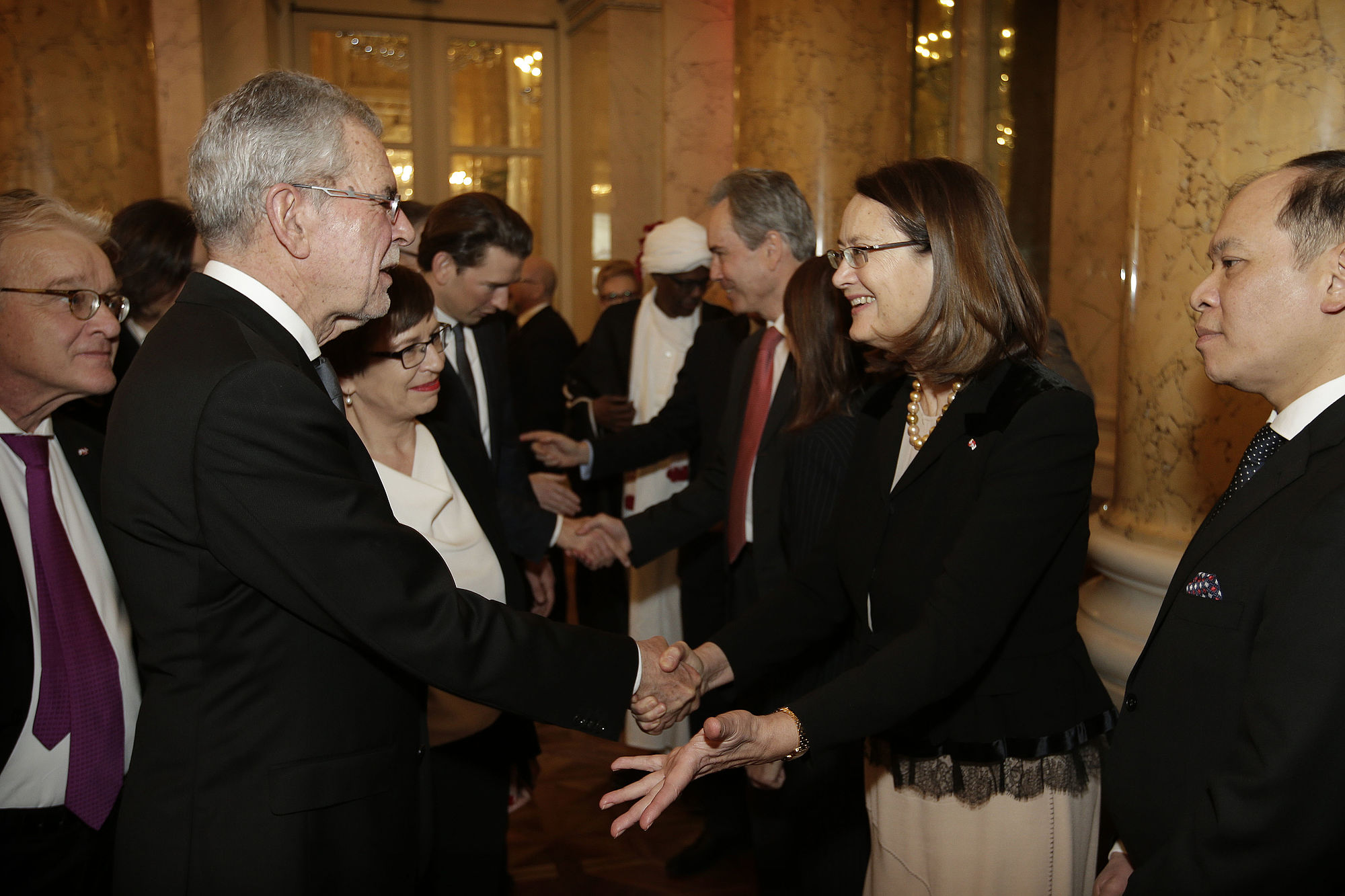
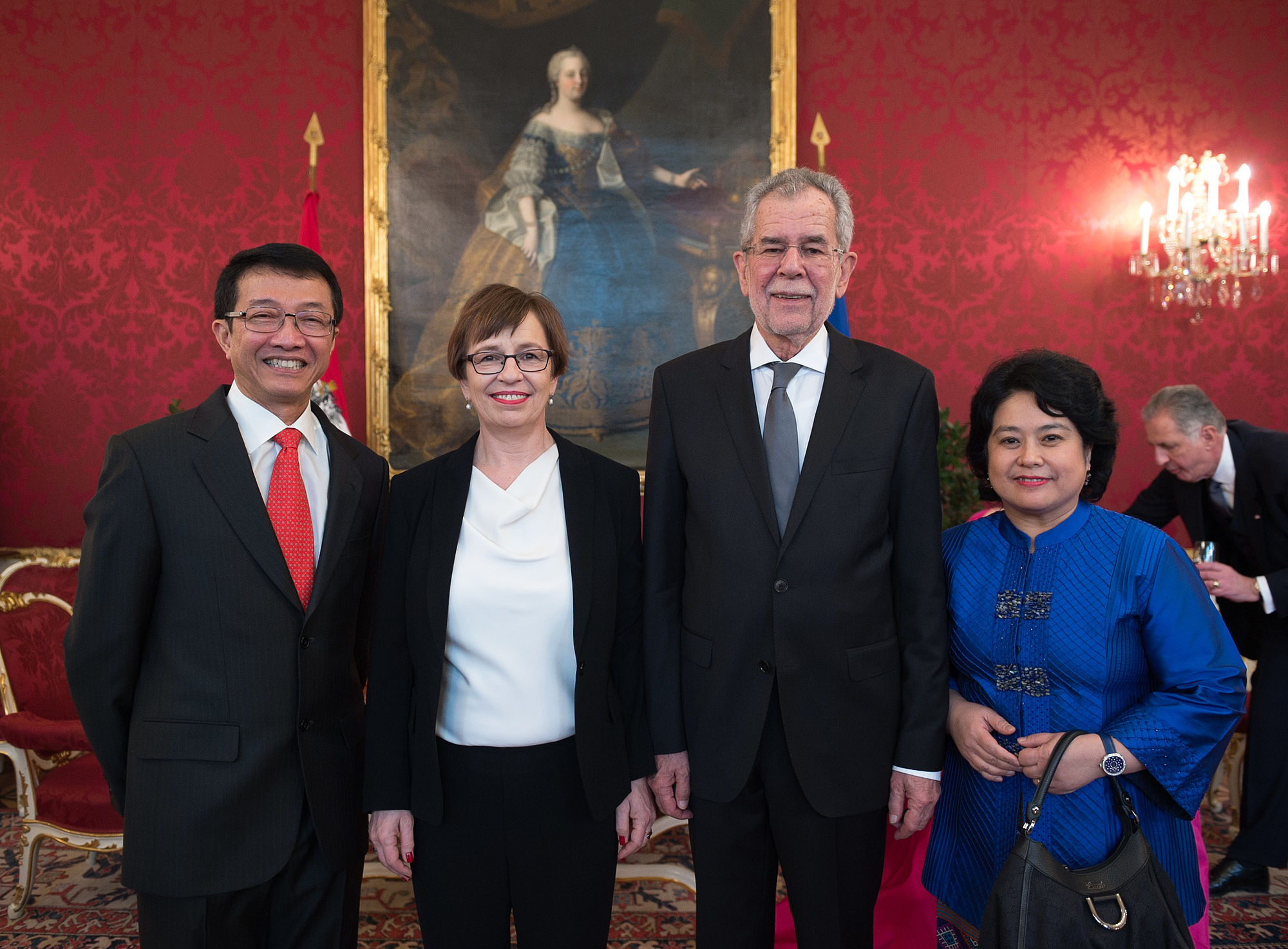
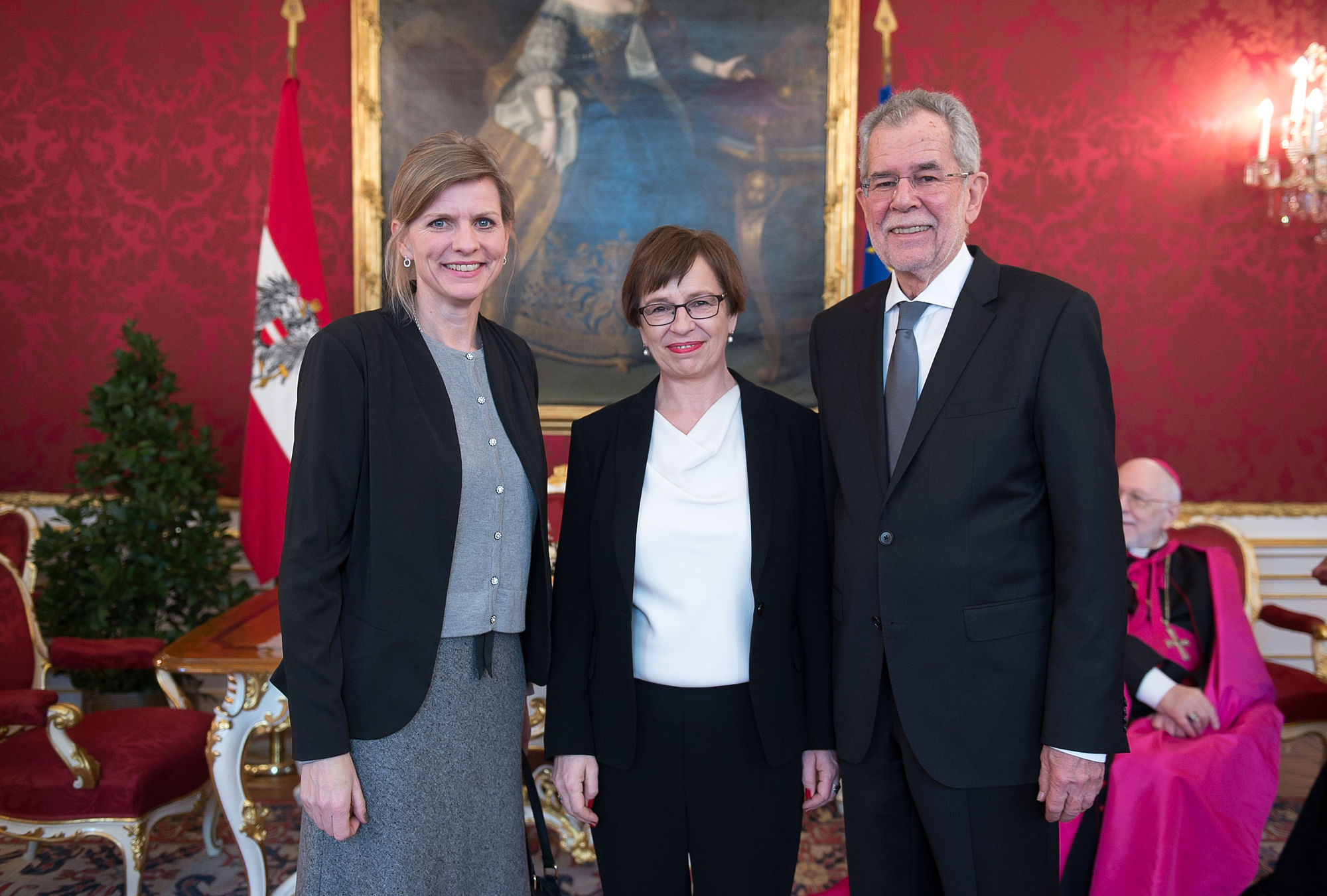
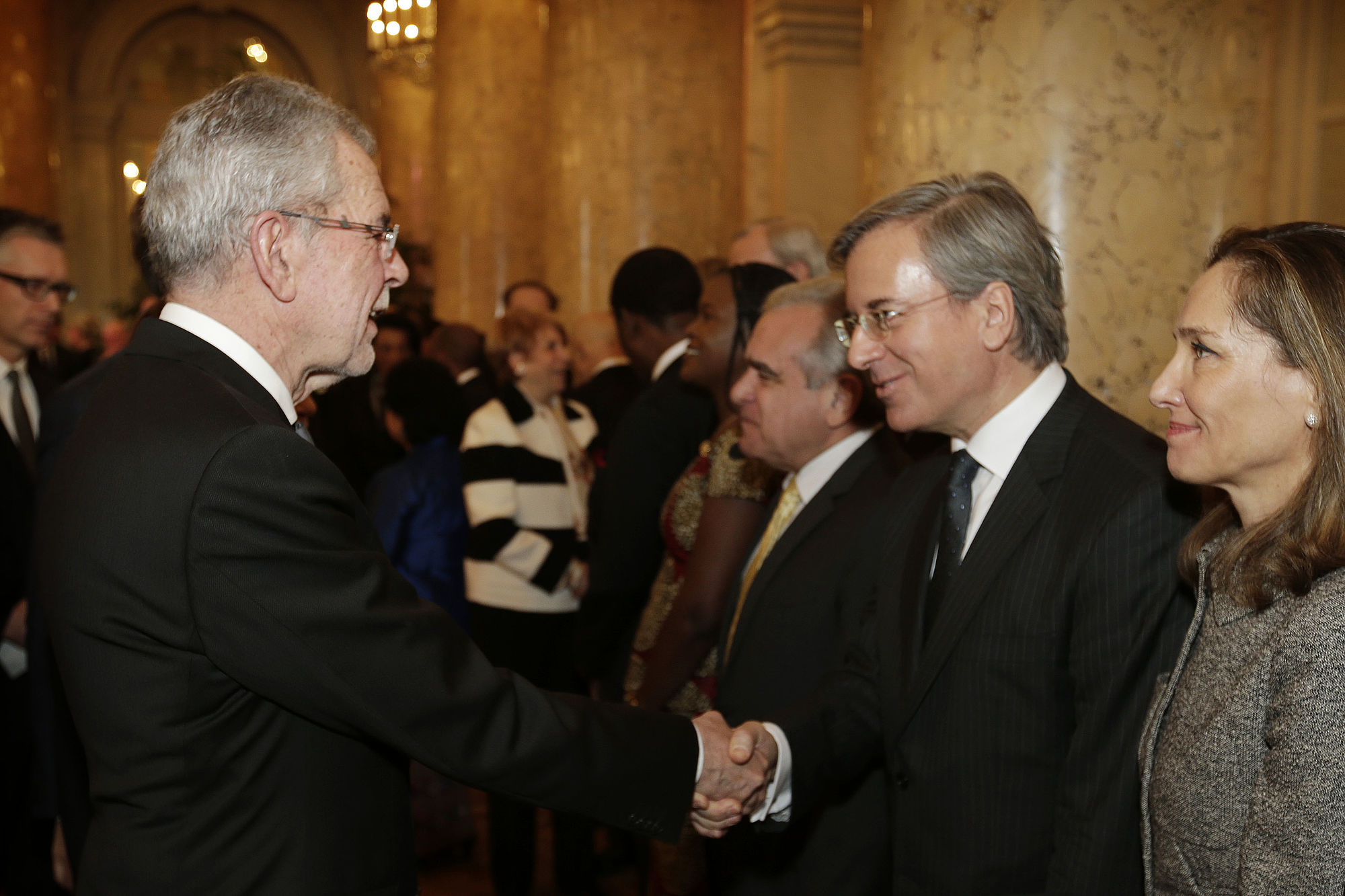
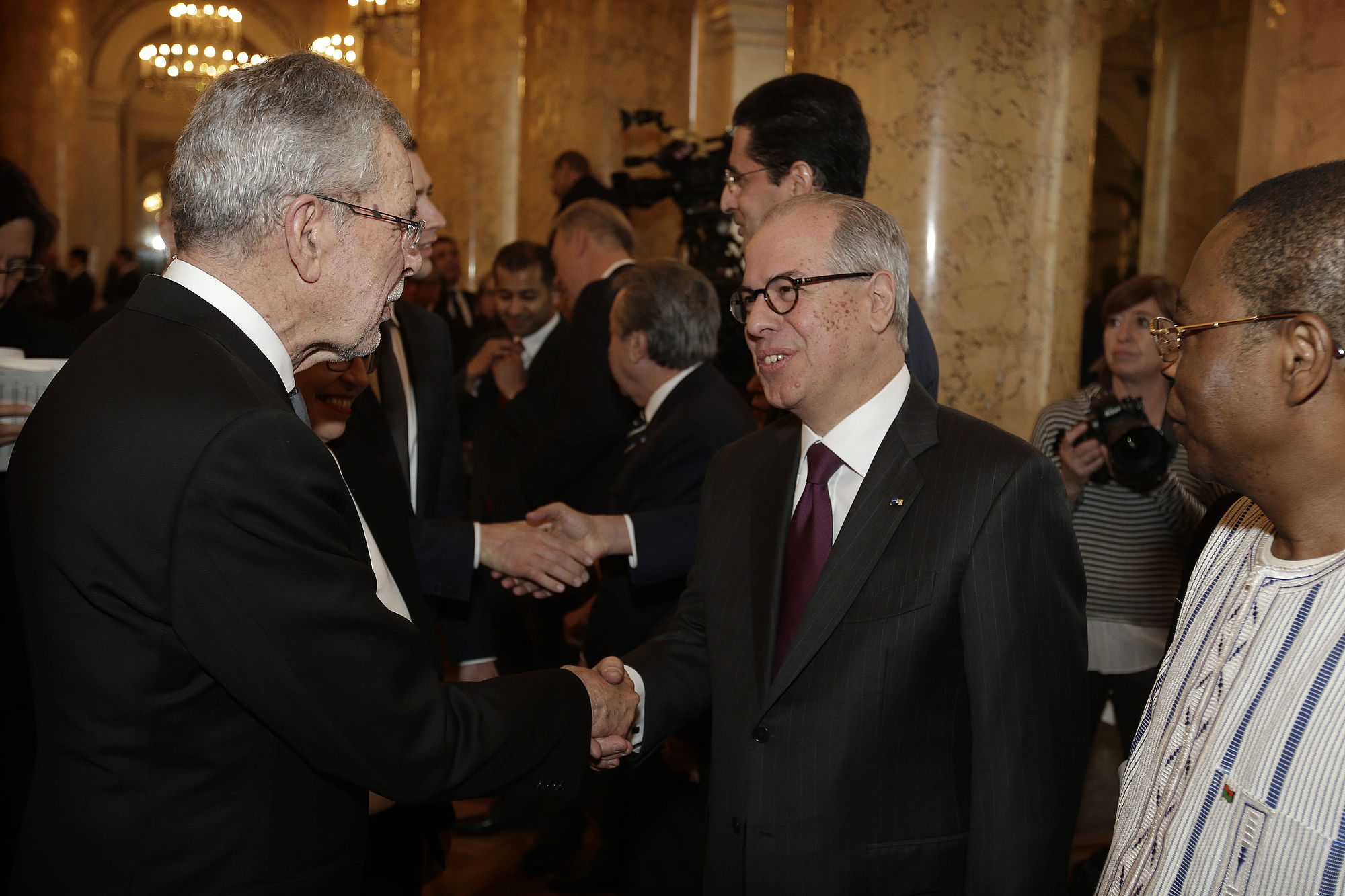
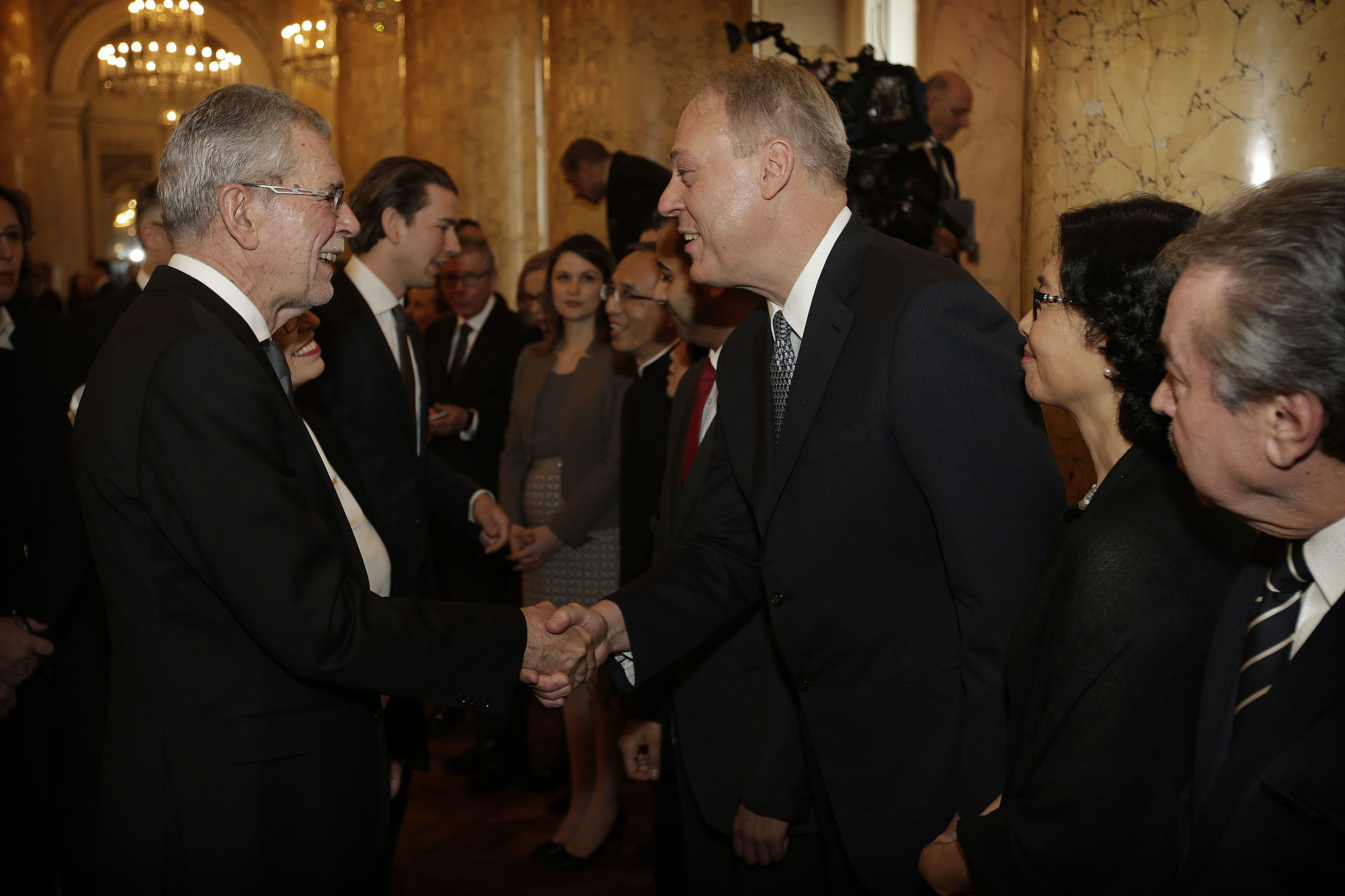
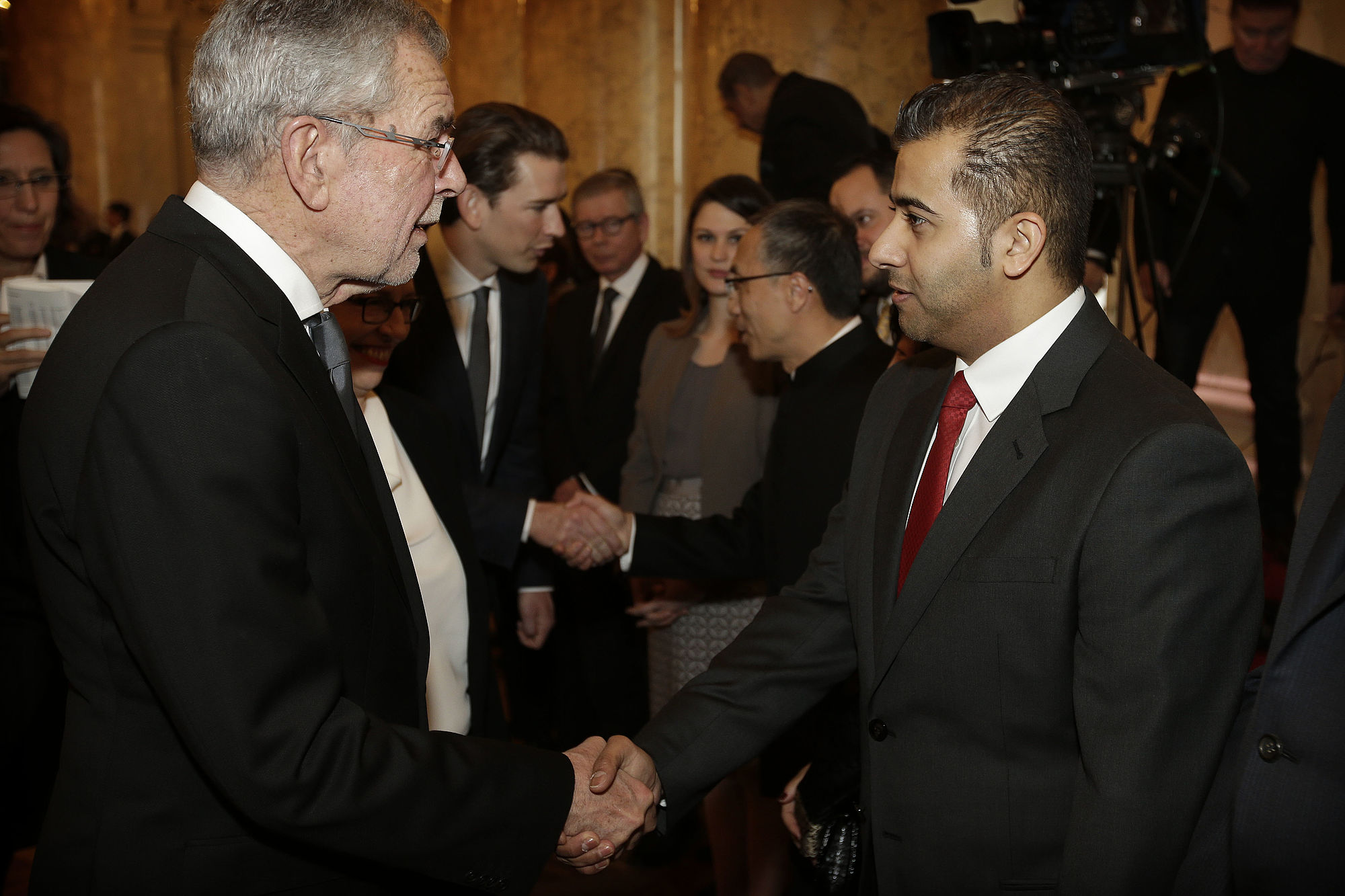
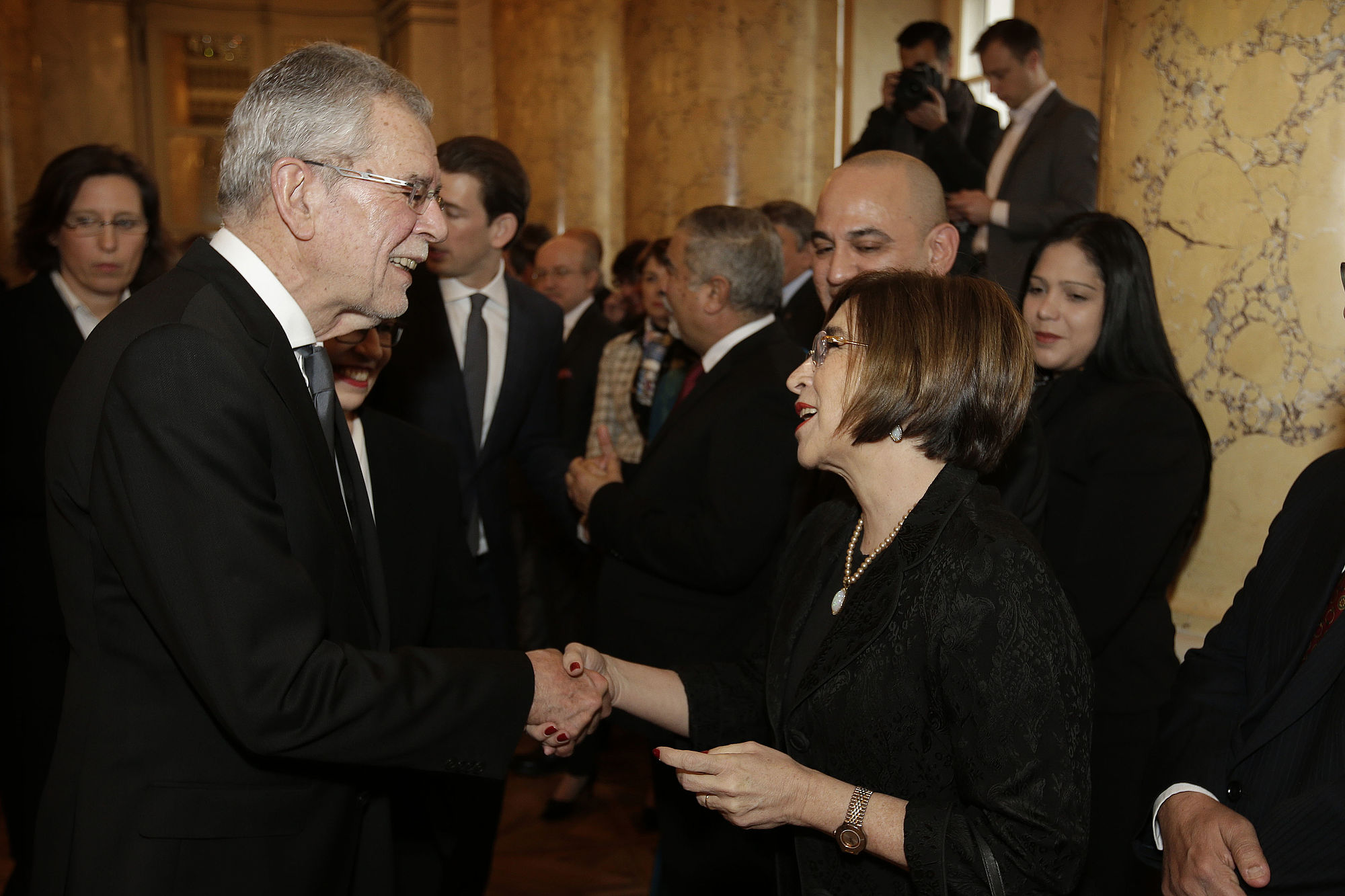
Ich habe heute zum 1. Mal die Ehre das Diplomatische Corps anlässlich des Neujahrsempfanges in der Wiener Hofburg zu begrüßen. Gleichzeitig bedanke ich mich bei Ihnen, hochwürdigster Herr Apostolischer Nuntius, dem Doyen unseres Diplomatischen Corps, für Ihre guten Wünsche.
Ich möchte zu Beginn meiner Rede allen hier Anwesenden, Ihren Familien und den von Ihnen vertretenen Staaten ein erfolgreiches und friedvolles Jahr 2017 wünschen.
Lassen Sie mich nun einige Prioritäten der österreichischen Außenpolitik im Neuen Jahr skizzieren.
Anfang dieses Jahres hat Österreich den Vorsitz in der OSZE übernommen. Als neutrales Land mit einer reichen Erfahrung als Dialogplattform und Brückenbauer haben wir uns für dieses Jahr drei Ziele gesteckt: Erstens wollen wir einen Beitrag leisten zur Entschärfung der existierenden offenen und eingefrorenen Konflikte.
Zweitens wollen wir beitragen zum Kampf gegen Radikalisierung und Extremismus mit einem spezifischen Fokus auf die Jugend. Und drittens wollen wir vertrauensbildende Maßnahmen in allen drei Dimensionen der OSZE.
Wir sind davon überzeugt, dass die OSZE als bewährtes Dialogforum von 57 Mitgliedsstaaten ein geeignetes Instrument ist, um dem Vertrauensverlust, den wir in diesen Tagen auf den verschiedensten Ebenen wahrnehmen, entgegenzusteuern und Hoffnung auf ein neues Miteinander zu vermitteln.
Wenn wir von ungelösten Problemen sprechen, so erfüllen uns natürlich die Entwicklungen in der Ostukraine mit großer Sorge: Es ist sehr bedauerlich, dass bei der Umsetzung der Minsker Vereinbarungen bisher kaum Fortschritte verzeichnet werden konnten und auch der vereinbarte Waffenstillstand häufig verletzt wird. Wir müssen uns daher fragen, welche Anreize wir für die Konfliktparteien schaffen können, um eine friedliche Lösung zu ermöglichen.
Österreich steht auf dem Standpunkt, dass eine Lösung zahlreicher internationaler und regionaler Probleme nur gemeinsam mit Russland möglich ist. Uns ist daher an guten Beziehungen mit der Russischen Föderation gelegen. Das darf uns nicht daran hindern festzustellen, dass durch die illegale Annexion der Krim Völkerrecht verletzt wurde und die Einstellung der Unterstützung der bewaffneten Formationen in der Ostukraine zu fordern. Wir erinnern aber auch die Ukraine daran, ihre Verpflichtungen im Rahmen der Minsker Abkommen zu erfüllen.
Der Nahe Osten wird auch in diesem Jahr ganz oben auf der Tagesordnung der internationalen Diplomatie stehen müssen:
Im syrischen Krieg sind wir in den letzten Wochen Zeugen tief greifender Entwicklungen geworden. Im Zuge der militärischen Auseinandersetzungen um die Kontrolle über Ost-Aleppo wurde nachhaltig deutlich, dass die Konfliktparteien trotz gegenteiliger Lippenbekenntnisse nach wie vor an eine militärische Lösung des Bürgerkriegs glauben. Ich bin überzeugt, dass es eine solche nicht geben kann.
Zum israelisch-palästinensischen Konflikt gab es in Paris vor kurzem eine internationale Konferenz, in der, 50 Jahre nach dem Sechs-Tage-Krieg, erneut nicht Lösungen präsentiert werden konnten, sondern der politische Willen zur Lösung eingemahnt werden musste. Eine verhandelte Friedenslösung auf Basis der Resolutionen der Vereinten Nationen, auf Basis bisheriger Abkommen und auf Basis des Völkerrechts würde einen entscheidenden Beitrag zu Stabilität in der Region leisten. Österreich und die EU werden weiterhin mit allen Kräften die Umsetzung einer Zwei-Staaten-Lösung unterstützen.
Kurz vor dem Jahreswechsel 2016 fand ein Besuch des scheidenden UNO-Generalsekretärs Ban Ki-Moon in Wien statt. Es war dies sein letzter Arbeitsbesuch als Generalsekretär der Vereinten Nationen und ich hatte die Ehre, mit ihm zusammen zu treffen. Österreich hat das Engagement Bans, der eine besondere Freundschaft zu unserem Land pflegt, immer außerordentlich geschätzt und wir wünschen ihm das Beste für seine Zukunft. Im Oktober des Vorjahres wählte die UNO-Generalversammlung den ehemaligen portugiesischen Regierungschef und Hohen Flüchtlingskommissar der Vereinten Nationen, Antonio Guterres, zum nächsten Generalsekretär. Ich freue mich ganz besonders, einen aktiven Menschenrechtsverteidiger an der Spitze der Weltorganisation zu sehen.
Österreich als Sitzstaat der Vereinten Nationen, und ich persönlich werden selbstverständlich weiterhin so eng wie möglich mit der UNO und ihrem Generalsekretär zusammenarbeiten.
Als Sitzstaat von internationalen Organisationen nimmt Österreich eine führende Rolle in der Welt ein, insbesondere als einer der vier Hauptsitze der Vereinten Nationen. Wir sind deshalb zuversichtlich, den neuen UN-Generalsekretär sehr bald hier in Wien begrüßen zu können.
Im Jahr 2015 haben wir uns des 70. Jahrestages der Atombombenabwürfe auf Hiroshima und Nagasaki erinnert. Atomwaffen als die schrecklichsten aller Massenvernichtungswaffen dürfen niemals wieder eingesetzt werden. Die Gefahr eines Atomkriegs zu bannen ist und bleibt eine Überlebensfrage für die gesamte Menschheit.
Als wichtiger Beitrag dazu werden heuer im Rahmen der Vereinten Nationen erstmals Verhandlungen über ein völkerrechtliches Verbot von Atomwaffen geführt werden. Wir sind uns bewusst, dass der angestrebte Vertrag für sich allein keine Abrüstung bewirken wird. Aber, wie die Analogie zu anderen inzwischen verbotenen Waffen zeigt, ist ein Atomwaffenverbots-Vertrag der richtige erste Schritt, um ein Umdenken zu erreichen und einen Prozess zur vollständigen nuklearen Abrüstung in Gang zu setzen.
Mit Spannung blicken wir jetzt auch in die USA, wo vor einigen Tagen Präsident Donald Trump mit einem neuen Team die Regierungsgeschäfte übernommen hat. Angesichts zahlreicher pointierter Aussagen während des Wahlkampfs als auch nach seiner Wahl stellen sich viele die Frage, wie die künftige US-Außenpolitik aussehen wird. Angesichts der zahlreichen Krisen und Konflikte weltweit hoffen wir, dass die US-Außenpolitik auch in Zukunft vom Wunsch nach enger Zusammenarbeit, auch im multilateralen Rahmen, und gegenseitigem Respekt geprägt sein wird.
Die Weiterentwicklung der Zusammenarbeit zwischen der EU und Afrika ist für Österreich ein wichtiges Ziel der Außenpolitik. Wir freuen uns beim EU-Afrika-Gipfel im November 2017 in Abidjan, gemeinsam zu diskutieren, wie die Chancen für die Jugend auf beiden Kontinenten gestärkt werden können.
Sehr oft höre ich jetzt zu Jahresbeginn, dass der Europäischen Union ein gutes 2017 gewünscht wird – dass es der EU besser gehen soll als 2016. Da horche ich auf - das bewegt und ermutigt mich zugleich. Einerseits weil aus diesen Wünschen Sorge heraushörbar ist - Sorge um die EU als etwas Bedeutsames und Liebgewonnenes. Andererseits weil aus dieser Sorge ein Wunsch und ein Auftrag herauszuhören ist: die Zukunft der EU zu sichern.
Die, die sich um die EU sorgen - und dazu zähle ich - blicken zurück auf ein beispiellos schwieriges Jahr. Angesichts von hoher Arbeitslosigkeit in vielen Mitgliedsstaaten, BREXIT, Radikalisierung und Terrorismus hat sich der in den Vorjahren entstandene Vertrauensverlust in die EU noch einmal vertieft.
Doch mir ist wichtig: Der Blick zurück zeigt auch, dass die EU trotz multipler Krisen in allen Bereichen in enorm kurzer Zeit entschlossen reagiert hat und wirksame Instrumente geschaffen und Maßnahmen ergriffen hat. Schwierigkeiten dürfen nicht den Blick verstellen auf das, was erreicht wurde: wir arbeiten einen Aktionsplan im Bereich Migrationspolitik ab, haben einen Treuhandfonds für Afrika geschaffen, ebenso eine europäische Grenz- und Küstenwache, die Einführung eines neuen EU weiten Reise- und Informationssystems (ETIAS) wird verhandelt, das gemeinsame europäische Asylsystem wird reformiert, die europäische Sicherheitsagenda zur Bekämpfung von Terrorismusbedrohungen und ein europäischer Verteidigungsaktionsplan werden abgearbeitet.
Die europäische Debatte wird heute weniger von der Diskussion über institutionelle Reformen, als vielmehr über die Bewältigung der akuten Krisen und drängenden Probleme bestimmt. Die Bürgerinnen und Bürger erwarten Zusammenarbeit und Zusammenhalt sowie bessere Ergebnisse von der EU.
Effiziente Politik zu aktuellen Problemen hat Vorrang und ist eine Vorleistung für künftige tiefgreifende Reformen.
Die Türkei ist und bleibt ein wichtiger Partner für Europa, sei es in den Bereichen Wirtschaft, Migration, Sicherheit oder regionalen Fragen. Eine auf demokratischen Prinzipien basierte Türkei ist daher für uns essentiell - nicht zuletzt um die Stabilität in der Region zu gewährleisten.
Wir haben den Putschversuch unmissverständlich verurteilt und erkennen den Kampf der Türkei gegen den Terrorismus an. Willkürliche Säuberungsaktionen und Beschränkung der Pressefreiheit sind aus unserer Sicht allerdings inakzeptabel. Österreich ist daher sehr beunruhigt über die dramatischen Entwicklungen in den Bereichen Rechtsstaatlichkeit, Demokratie, Menschenrechte und Grundfreiheiten.
Österreichs Engagement für die Länder des Westbalkans nimmt traditionell einen hohen Stellenwert in der österreichischen Außenpolitik ein, und Österreichs Positionen zu den weiteren Schritten der einzelnen Länder im EU-Annäherungsprozess sind bekannt.
Im letzten Jahr hat der EU-Erweiterungsprozess wichtige Fortschritte hervorgebracht, sei es die Weiterleitung des Beitrittsantrags Bosnien und Herzegowinas an die Europäische Kommission, das Inkrafttreten des Stabilisierungs- und Assoziierungsabkommens mit Kosovo oder weitere Kapiteleröffnungen im Beitrittsprozess mit Serbien und Montenegro. Es gibt noch viel zu tun, auch 2017 wird wieder ein wichtiges Jahr für die Region.
Die Pflege der Beziehungen zu den Ländern unserer unmittelbaren und näheren Nachbarschaft zählt zu den konstanten Säulen der österreichischen Außenpolitik.
Im Rahmen der nachbarschaftlichen Kooperation, die viele praktische Vorhaben umfasst, können wir sehr konkret zur Vertiefung der Integration im Herzen Europas beitragen. Ich werde meinen Beitrag dazu leisten, dass diese Politik der guten Nachbarschaft dynamisch fortgeführt und weiterentwickelt wird.
Daher freue ich mich auch besonders auf die die Begegnungen und die Zusammenarbeit mit meinen Amtskolleginnen und -kollegen aus Österreichs Nachbarländern.
Die Leistungen der Kulturschaffenden spielen eine wesentliche Rolle für das Selbstverständnis Österreichs. Vor diesem Hintergrund ist eine aktive internationale Kulturarbeit ein wesentlicher Bestandteil unseres freundschaftlichen internationalen Austauschs und eine tragende Säule der österreichischen Außenpolitik.
Österreich hat sich mit seinem langjährigen aktiven Einsatz zum Schutz der Menschenrechte und der Förderung des interkulturellen Dialogs internationale Anerkennung als Brückenbauer verschafft und wird diesen Weg konsequent weitergehen. Gerade angesichts zahlreicher bewaffneter Konflikte und der schrecklichen Not, der Millionen von Menschen ausgesetzt sind, der Zunahme terroristischer Bedrohungen und der spürbaren Schranken, die zum Teil tief in die Freiräume der Zivilgesellschaft eindringen, wird der Schutz der Menschenrechte und Grundfreiheiten –national wie international- vor schwierige Herausforderungen gestellt.
Mit der Kandidatur Österreichs für den Menschenrechtsrat der Vereinten Nationen für die Periode 2019-2021, die unter dem Motto „Building Bridges for Human Rights“ steht, wollen wir erneut Verantwortung im zentralen Menschenrechtsgremium der Vereinten Nationen übernehmen. Ich darf um Unterstützung Ihrer Regierungen für diese wichtige Kandidatur ersuchen.
Die Rechtsstaatlichkeit auch in den internationalen Beziehungen ist Österreich ein besonderes Anliegen, denn sie bildet die Grundlage für ein friedliches Zusammenleben. Österreich setzt sich daher seit jeher für die Achtung des Völkerrechts, einschließlich der Menschenrechte, und die friedliche Streitbeilegung ein.
Die im Jahre 2016 gestiegene Anzahl der Terroranschläge zeigt uns, wie wichtig der Kampf gegen Radikalisierung und Extremismus ist. In Europa waren besonders Deutschland, Frankreich und die Türkei von dem menschenverachtenden Handeln gegenüber unschuldigen Opfern betroffen. In Österreich wissen wir, dass Terrorismusbekämpfung und der Kampf gegen den gewalttätigen Extremismus weit über rein polizeiliche Maßnahmen hinausgehen. Hier ist ein umfassender Ansatz vonnöten, der die gesamte Gesellschaft miteinbezieht, indem Werte vermittelt werden, die der Radikalisierung den Nährboden entziehen. Dabei kommt der internationalen Zusammenarbeit mit der Europäischen Union, den Vereinten Nationen und auch der OSZE besondere Bedeutung zu.
Lassen Sie mich in diesem Zusammenhang daher ganz besonders betonen, dass mein Mitgefühl den vielen Opfern dieser weltweiten Terroranschläge und vor allem auch ihren Hinterbliebenen gilt, unabhängig von ihrer Rasse, Religion oder Weltanschauung.
Und ich möchte auch hinzufügen, dass ein demokratischer Rechtsstaat nur dann schwach wird, wenn er sich durch Terror dazu hinreißen lässt, seine eigenen Grundsätze der vermeintlichen Bekämpfung des Terrorismus zu opfern – denn nur dann hätten die Terroristen einen Sieg errungen.
Die ungelösten politischen Probleme im Nahen Osten und in Nordafrika sind auch für die vielen Menschen auf der Flucht verantwortlich, die 2015-2016 – abgesehen von der Zeit unmittelbar nach dem 2. Weltkrieg - ein in Europa nie zu vor dagewesenes Ausmaß erreicht haben. Allein aus Syrien, dem Irak und Afghanistan stammen viele Millionen Flüchtlinge, die in der Umgebung ihrer Heimatstaaten Zuflucht gesucht haben. 2015 haben rund 700.000 Flüchtlinge auf ihrer Wanderung nach Mitteleuropa auch österreichisches Territorium betreten, ca. 90.000 haben um Asyl angesucht. Auch 2016 haben, trotz zahlreicher Maßnahmen erneut rund 42.000 Personen um Asyl in Österreich angesucht, wobei in der 2. Jahreshälfte ein deutlicher Rückgang zu verzeichnen war.
Die Asylgewährungsraten in Österreich waren auch im Vorjahr sehr unterschiedlich – sie liegen bei manchen Drittstaaten bei fast 90%, bei anderen Herkunftsländern sind sie deutlich kleiner. Österreich kommt damit weiterhin seiner humanitären Verantwortung nach.
Die in der Geschichte Österreichs immer wieder unter Beweis gestellte Grundhaltung, Menschen in Not zu helfen, ist jedoch im Zusammenhang mit der Gewährung von Asyl auf Dauer nur möglich, wenn gleichzeitig die Ursachen für Migration energisch bekämpft werden und Belastungen, die durch eine menschenrechtskonforme Handhabung des Asylrechtes entstehen, gerecht und fair verteilt werden. Genau das ist auch im Jahr 2017 das Ziel des maltesischen Ratsvorsitzes, das Österreich unterstützt.
Um diesen Herausforderungen gerecht zu werden, werden auch die Mittel für Entwicklungszusammenarbeit erhöht. So werden bis 2021 die bilateralen Mittel der Austrian Development Agency auf 154 Mio. Euro verdoppelt. Der Auslandskatastrophenfonds wurde bereits vervierfacht, somit kann noch mehr Menschen geholfen werden.
Exzellenzen!
Ich wünsche Ihnen und den von Ihnen vertretenen Staaten nochmals alles Gute und danke für Ihre Aufmerksamkeit!
Address by Austrian Federal President Dr. Alexander Van der Bellen on the Occasion of the New Year’s Reception for the Diplomatic Corps
Most Reverend Apostolic Nuncio,
Federal Minister Kurz,
Excellencies,
Ladies and Gentlemen,
Today is the first time that I have the honour of welcoming the Diplomatic Corps on the occasion of the New Year’s reception at the Vienna Hofburg. At this time I also would like to thank you very much, Most Reverend Apostolic Nuncio, as the doyen of our Diplomatic Corps, for your good wishes.
I would like to start my remarks by wishing all guests gathered here, your families, as well as the countries you represent, a prosperous and peaceful 2017!
Allow me to sketch out a few priorities of Austrian foreign policy for this new year.
At the beginning of 2017, Austria assumed the OSCE Chairmanship. As a neutral country with extensive experience in serving as a bridge builder and platform for dialogue, we set three goals for ourselves for this year. Firstly, we would like to contribute to defusing existing open and frozen conflicts. Secondly, we would like to contribute to the fight against radicalisation and extremism by focusing on young people, in particular. And thirdly, we want to see confidence-building measures in all three dimensions of the OSCE.
We are convinced that as a proven forum for dialogue among its 57 member states, the OSCE serves as a suitable instrument to counteract the loss of trust that we perceive on many different levels these days and to convey hope for renewed coexistence.
When we speak of unresolved issues, the developments in eastern Ukraine fill us with great concern, of course. It is highly regrettable that thus far, hardly any progress has been made in implementing the Minsk Agreement and that the agreed ceasefire is violated so frequently. Consequently, we have to ask ourselves what kind of incentives we can create for the parties to this conflict to enable a peaceful solution.
Austria is of the firm opinion that numerous international and regional problems can be resolved only together with Russia. Therefore, we consider good relations with the Russian Federation to be important. This must not prevent us from stating that the illegal annexation of Crimea constitutes a violation of international law and to call for a cessation of the support for armed formations in eastern Ukraine. We also remind Ukraine, however, to fulfil its obligations set forth in the Minsk Agreement.
The Middle East must continue to figure at the very top of the international diplomatic agenda this year:
In recent weeks, we have witnessed far-reaching developments in the war in Syria. Military confrontations over the control of eastern Aleppo have clearly demonstrated that the parties to this conflict still continue to believe in a military solution to this civil war, despite paying lip service to the contrary. I am convinced that a solution cannot be found in this way.
On the Israeli-Palestinian conflict, an international conference took place recently in Paris. Fifty years after the Six-Day War, no solutions could be presented once again; instead, it was necessary to insist on political will to solve this conflict. A peaceful solution, negotiated on the basis of the UN resolutions, past agreements and international law, would make a crucial contribution towards stability in this region. Austria and the EU will continue to make every effort in supporting the implementation of a two-state solution.
As 2016 drew to a close, outgoing UN Secretary-General Ban Ki-moon paid a visit to Vienna. This was his last working visit as the Secretary-General of the United Nations, and I had the honour to meet with him. Austria has always appreciated tremendously the active commitment of Mr. Ban, who maintains a special friendship with our country, and we wish him the very best for his future. Last October, the UN General Assembly appointed the former Portuguese Prime Minister and High-Commissioner for Refugees António Guterres as the next Secretary-General. I am particularly pleased to see an active human rights defender at the top of this international organisation. Austria as a home to UN headquarters and I myself will continue, of course, to work as closely as possible together with the United Nations and its Secretary-General.
Austria plays a leading role in the world as the home of international organisations, especially as one of the four UN headquarters. Therefore, we are confident that we will soon be able to welcome the new UN Secretary General here in Vienna.
In 2015 we marked the 70th commemoration of the atomic bombings of Hiroshima and Nagasaki. Nuclear weapons are the most horrendous weapons of mass destruction and they must never be used again. Averting the threat of a nuclear war remains an issue of survival for all of mankind.
As an important contribution in this respect, negotiations within the United Nations on the prohibition of nuclear weapons under international law will take place for the first time this year. We are aware of the fact that such a treaty by itself will not lead to disarmament. However, the analogy to other already prohibited weapons demonstrates that a treaty on the prohibition of nuclear weapons constitutes the right first step towards achieving a shift in mentality and launching a process towards complete nuclear disarmament.
It is with great interest that we are now looking also upon the United States where President Donald Trump took over government affairs with a new team several days ago. In view of numerous pointed statements during the election campaign as well as after his election, many people wonder what US foreign policy will look like in the future. Given the many crises and conflicts worldwide, we hope that US foreign policy will continue to be characterised by the wish for close cooperation – including on the multilateral level – and mutual respect.
For Austria, it represents an important goal of foreign policy to further develop cooperation between the European Union and Africa. At the EU-Africa Summit in November 2017 in Abidjan, we look forward to joint discussions on improving opportunities for young people on both continents.
As the year begins, I frequently hear the wish for a good year 2017 addressed to the European Union – the wish that the EU may do better than 2016. That’s when I listen up, as this touches and encourages me at the same time. On the one hand, I can hear the concern in these wishes, a concern for the EU as something meaningful and cherished. On the other, a wish and a mandate emanate from this concern: to secure the future of the European Union.
Those who are concerned about the EU – myself included – look back on a year of unprecedented difficulty. In the face of high unemployment in many member states, Brexit, radicalisation and terrorism, the loss of trust in the European Union that developed in previous years has deepened even more.
However, it is important to me that a look back also shows that despite multiple crises, the EU reacted decisively in all areas within an enormously short time, took measures and created effective instruments. Difficulties must not obstruct our view of what has been achieved: we are working through an action plan in the area of migration policy; we created a Trust Fund for Africa, as well as a European Border and Coast Guard; we are negotiating the introduction of a new EU-wide Travel Information and Authorisation System (ETIAS); the Common European Asylum System is being reformed; and we are working through the European Agenda on Security to fight terrorist threats and a European Defence Action Plan.
Today the European debate is determined less by the discussion of institutional reforms and more by how to tackle acute crises and urgent issues. EU citizens expect cooperation, cohesion and better results from the European Union.
Efficient policy-making on current issues takes priority and constitutes an early input for future in-depth reforms.
Turkey is and remains an important partner for Europe, whether in the economy, migration, security or regional issues. Therefore, a Turkey based on democratic principles is essential for us, last but not least in order to ensure stability in this Region.
We unequivocally condemned the attempted coup and recognise Turkey’s fight against terrorism. In our view, however, arbitrary acts of purging, and restricting freedom of the press are not acceptable. Consequently, Austria is very concerned about the dramatic developments in the areas of democracy, the rule of law, human rights and fundamental freedoms.
Traditionally, Austria’s active support of the Western Balkan countries assumes a high level of importance in Austrian foreign policy, and Austria’s positions on the next steps of individual countries in the framework of the rapprochement process with the EU are known.
Last year, the EU enlargement process achieved significant progress – Bosnia and Herzegovina’s application for membership was forwarded to the European Commission, the Stabilisation and Association Agreement with Kosovo entered into force, and further chapters in the accession process with Serbia and Montenegro were opened. Much remains to be done, and 2017 will be another important year for this Region.
Fostering relations with the countries in our close and immediate neighbourhood constitutes one of the constant pillars of Austrian foreign policy.
This neighbourly cooperation encompasses many practical plans and projects and allows us to contribute very concretely to a further deepening of integration in the heart of Europe. I will endeavour to make my contribution to dynamically pursue and further develop this policy of good relations with our neighbours.
Therefore, I very much look forward to the encounters and cooperation with my counterparts from Austria’s neighbouring countries.
The achievements of creative artists play a major role in Austria’s self-image. Against this backdrop, active international cultural work represents an essential element of our friendly international exchanges and a main pillar of Austrian foreign policy.
With its long-standing and proactive commitment to protecting human rights and promoting intercultural dialogue, Austria has gained international recognition as a bridge builder and will firmly continue on this path. The protection of human rights and fundamental freedoms faces complex challenges, both nationally and internationally, especially in view of the high number of armed conflicts and the dire misery faced by millions of people, as well as the rise in terrorist threats and the tangible barriers which, in part, penetrate deep into the free spaces of civil Society.
With Austria’s candidacy for the United Nations Human Rights Council for the 2019–2021 term dedicated to the motto “Building Bridges for Human Rights”, Austria seeks to again assume responsibility within the central human rights body of the United Nations. I would like to ask for the support of your governments for this important candidacy.
The rule of law is also of particular concern to Austria in international relations because it serves as the foundation for peaceful coexistence. Hence, Austria has always advocated for the respect of international law, including human rights, and the peaceful resolution of conflict.
The rise in terrorist attacks in 2016 demonstrates the importance of fighting radicalisation and extremism. In Europe, it was especially Germany, France and Turkey that were affected by these inhumane acts against innocent victims.
In Austria, we know that combating terrorism and violent extremism goes far beyond pure policing. It requires a comprehensive approach that takes all of society into account by imparting values that deprive radicalisation of its breeding ground. Here, international cooperation with the European Union, the United Nations as well as the OSCE is particularly significant.
In this context, I would like to extend my empathy especially to the many victims of these terrorist attacks around the world, and above all also to the bereaved, regardless of their race, religion or world views.
And I would like to add that a democratic constitutional state becomes weak only when it lets terror lead to sacrificing its own principles for the sake of allegedly combating terrorism – only then would terrorists have gained a victory.
The unresolved political issues in the Middle East and North Africa are also the reason many people are fleeing the region. Apart from the time right after World War II, their numbers reached unprecedented levels in Europe during 2015 and 2016. From Syria, Iraq and Afghanistan alone, there are several million refugees seeking refuge in the vicinity of their home countries. In 2015, about 700,000 refugees also entered Austrian territory on their migration towards Central Europe; around 90,000 sought asylum here. Despite numerous measures, roughly 42,000 more people sought asylum in Austria in 2016, with a significant decrease during the second half of the year.
In Austria, the rates of granting asylum varied considerably last year as well; for some third countries, they amount to nearly 90%; for some other countries of origin they are distinctly lower. Thus, Austria continues to fulfil its humanitarian responsibility.
The fundamental mindset to help people in need has been proven time and again in Austrian history. In the context of granting asylum, however, maintaining this mindset in the long run requires fighting the causes of migration vigorously, and at the same time ensuring a fair and just distribution of the burden that results from handling the right to asylum in ways that comply with human rights. For 2017, too, this is precisely the Maltese Council Presidency’s goal, which Austria Supports.
In order to meet these challenges, the funds for development cooperation will be increased. By 2021, the bilateral funds of the Austrian Development Agency will be doubled to 154 million euros. The funds of the Foreign Disaster Relief Fund have already been quadrupled to be able to help an even larger number of People.
Excellencies,
I would again like to wish you and the countries you represent all the best and thank you very much for your attention.
Discours du Président fédéral Alexander Van der Bellen à l’occasion de la réception du Nouvel An offerte au Corps diplomatique
Très révérend Nonce apostolique,
Monsieur le Ministre fédéral Kurz,
Excellences,
Mesdames et Messieurs,
Aujourd’hui c’est la première fois que j’ai l’honneur de m’adresser au Corps diplomatique à l’occasion de la réception du Nouvel An à la Hofburg de Vienne. J’en profite pour vous remercier, très révérend Nonce apostolique et doyen de notre Corps diplomatique, des bons vœux que vous avez bien voulu exprimer.
Je commencerai mes propos en souhaitant à toutes les personnes ici présentes, à leurs familles et aux États que vous représentez une année 2017 pleine de succès et de paix.
Permettez-moi maintenant d’esquisser quelques priorités de la politique étrangère autrichienne pour cette année qui commence.
Depuis le début de l’année, l’Autriche assure la présidence de l’OSCE. En tant que pays neutre qui possède une riche expérience comme plate-forme du dialogue et médiateur, nous nous sommes proposé trois objectifs pour cette année : Premièrement, nous souhaitons apporter une contribution en vue de désamorcer les conflits, qu’ils soient actuels, non résolus ou gelés. Deuxièmement, nous voulons contribuer à la lutte contre la radicalisation et l’extrémisme en nous concentrant surtout sur les jeunes. Et troisièmement, nous allons encourager les mesures de confiance dans les trois dimensions de l’OSCE.
Nous sommes convaincus que l’OSCE, un forum du dialogue de 57 États membres qui a fait ses preuves, est l’instrument approprié pour contrer la perte de confiance que nous observons ces jours-ci à différents niveaux et pour nourrir l’espoir d’une nouvelle entente.
Lorsque nous parlons de problèmes irrésolus, il est évident que la situation en Ukraine orientale nous préoccupe beaucoup : Il est tout à fait regrettable qu’il y ait eu jusqu’à présent si peu de progrès dans l’application des accords de Minsk et que le cessez-le-feu négocié soit souvent violé. Nous devons donc nous demander comment nous pouvons inciter les parties au conflit à faire en sorte qu’une solution pacifique devienne possible.
L’Autriche est de l’avis que la solution de nombreux problèmes internationaux et régionaux n’est possible que de concert avec la Russie. Nous tenons donc à entretenir de bonnes relations avec la Fédération de Russie. Cela ne doit pas nous empêcher cependant de constater que l’annexion illicite de la Crimée est contraire au droit international, et de demander que la Russie arrête de soutenir les formations armées dans l’est de l’Ukraine. Cependant, nous rappelons aussi à l’Ukraine qu’elle doit respecter ses engagements pris dans le cadre des accords de Minsk.
Le Moyen-Orient continuera cette année encore d’avoir une priorité élevée sur l’agenda de la diplomatie internationale.
En ce qui concerne la guerre en Syrie, nous avons assisté ces dernières semaines à des évolutions profondes de la situation. Dans le cadre des confrontations militaires autour du contrôle de l’est d’Alep, il s’est avéré clairement que les parties au conflit qui ont beau professer le contraire, continuent de croire à une solution militaire de la guerre civile. Je suis persuadé qu’une telle n’est pas possible.
Le conflit israélo-palestinien a fait l’objet récemment d’une conférence internationale à Paris : 50 ans après la guerre des Six Jours, on n’y a toujours pas pu présenter de solutions, et il a fallu insister sur la volonté politique nécessaire pour arriver à une solution. Une paix négociée sur la base des résolutions des Nations Unies, sur la base des accords conclus jusqu’à présent et sur la base du droit international fournirait une contribution décisive à la stabilité dans la région. L’Autriche et l’UE continueront de soutenir de toutes leurs forces la réalisation d’une solution à deux États.
Peu avant la fin de l’année 2016, M. Ban Ki-Moon, Secrétaire général sortant de l’ONU, a visité Vienne. C’était sa dernière visite de travail en tant que Secrétaire général des Nations Unies, et j’ai eu l’honneur de le rencontrer à cette occasion. L’Autriche a toujours beaucoup apprécié l’engagement de M. Ban Ki-Moon qui entretient une amitié particulière avec notre pays, et nous lui exprimons nos meilleurs vœux pour l’avenir. Au mois d’octobre de l’année dernière, l’Assemblée générale de l’ONU a élu comme prochain Secrétaire général M. Antonio Guterres, ancien premier ministre du Portugal et haut commissaire aux réfugiés des Nations Unies. Je me félicite tout particulièrement de voir à la tête de cette organisation internationale un défenseur actif des droits de l’homme. Il va sans dire que l’Autriche qui héberge un siège des Nations Unies et moi personnellement, nous allons continuer de collaborer aussi étroitement que possible avec l’ONU et son Secrétaire général.
En tant qu’État où se trouvent les sièges de plusieurs organisations internationales, l’Autriche joue un rôle éminent dans le monde, notamment en tant que pays qui héberge l’un des quatre sièges principaux des Nations Unies. Pour cette raison, nous sommes confiants que nous pourrons bientôt accueillir à Vienne le nouveau Secrétaire général de l’ONU.
En 2015 nous avons commémoré le 70ème anniversaire du bombardement nucléaire d’Hiroshima et de Nagasaki. Les armes nucléaires sont les plus terribles parmi les armes de destruction massive, et en tant que telles elles ne devront plus jamais être utilisées. Bannir le danger d’une guerre nucléaire est et reste une question de survie pour l’humanité entière.
Une contribution importante y sera apportée cette année dans le cadre des Nations Unies : pour la première fois, des négociations seront entamées sur un instrument de droit international qui interdirait les armes nucléaires. Nous sommes conscients que le traité envisagé ne déclenchera pas à lui seul le désarmement, mais comme le montre par analogie le sort d’autres armes qui ont été interdites jusqu’à présent, le traité prohibant les armes nucléaires serait un premier pas dans la bonne direction pour en arriver à une approche différente et pour mettre en route un processus dont le but ultime serait le désarmement nucléaire complet.
C’est dans un esprit d’attente que nous nous tournons maintenant vers les Etats-Unis où, il y a quelques jours seulement, le président Trump a pris ses fonctions à la tête de l’administration, aux côtés d’une nouvelle équipe. Au vu de ses nombreux messages politiques insolites exprimés pendant la campagne électorale et aussi après son élection, il y a beaucoup de personnes qui se demandent quelle sera la politique étrangère future des Etats-Unis. Face aux nombreux conflits et crises dans le monde entier, nous espérons que la politique étrangère des Etats-Unis continuera aussi à l’avenir d’être caractérisée par le souhait d’une coopération étroite dans le cadre multilatéral et par le respect mutuel.
Pour l’Autriche, le développement continu de la coopération entre l’UE et l’Afrique est un objectif important de la politique étrangère. Nous nous réjouissons du débat que nous pourrons mener à l’occasion du sommet UE-Afrique en novembre 2017 à Abidjan, pour discuter ensemble de la manière dont les chances peuvent être améliorées pour les jeunes des deux continents.
En ce début d’année, j’entends souvent dire qu’on souhaite à l’Union européenne une bonne année 2017 – en tout cas une année qui soit meilleure que l’année 2016. Cela m’interpelle – cela m’émeut et m’encourage en même temps. D’un côté parce que ce souhait est sous-tendu par un souci – le souci relatif au sort de l’UE qui est considérée comme une entité importante et devenue chère. D’un autre côté, parce que ce souci est l’expression d’un souhait et d’un mandat : celui d’assurer l’avenir de l’UE.
Ceux qui se préoccupent de l’UE – et j’en fais partie - constatent que l’année dernière a été extrêmement difficile. Le taux de chômage élevé enregistré dans un grand nombre d’États membres, le BREXIT, la radicalisation et le terrorisme sont des phénomènes qui ont encore aggravé la perte de confiance dans l’UE qui s’était déjà manifestée pendant les années antérieures.
Seulement il y a une chose qui me paraît importante : le regard rétrospectif montre aussi que l’UE, en dépit des multiples crises, a réagi dans tous les domaines avec détermination et extrêmement rapidement, et elle a créé des instruments efficaces et pris diverses mesures. Les difficultés ne doivent pas nous cacher ce qui a été réalisé : Nous mettons en œuvre un plan d’action en matière d’immigration, nous avons créé un Fonds fiduciaire d’urgence pour l’Afrique, tout comme une Agence européenne de gardes-frontières et de gardes-côtes ; un nouveau Système européen d’autorisation et d’information concernant les voyages (ETIAS) est négocié, le régime d’asile européen commun sera réformé, le Programme européen en matière de sécurité pour lutter contre le terrorisme et un Plan d’action européen de la défense sont mis en œuvre.
Aujourd’hui le débat européen est moins caractérisé par la discussion sur les réformes institutionnelles, et beaucoup plus par la question de la capacité de maîtriser les crises actuelles et les problèmes les plus cuisants. Les citoyennes et les citoyens attendent de l’UE plus de coopération et de cohésion ainsi que des résultats meilleurs.
Une politique efficace face aux problèmes d’actualité est prioritaire et elle doit jeter les bases pour des réformes futures plus profondes.
La Turquie est et reste un partenaire important de l’Europe, que ce soit dans les domaines de l’économie, de la migration, de la sécurité ou des questions régionales. Une Turquie basée sur les principes de la démocratie est donc essentielle pour nous – ne serait-ce que pour assurer la stabilité dans la région.
Nous avons condamné sans équivoque la tentative de coup d’État et nous rendons hommage à la lutte de la Turquie contre le terrorisme. À notre avis cependant, les purges arbitraires et la restriction de la liberté de la presse sont inacceptables. L’Autriche est donc très préoccupée en ce qui concerne les développements dramatiques dans les domaines de l’État de droit, de la démocratie, des droits de l’homme et des libertés fondamentales.
L’engagement de l’Autriche en faveur des pays des Balkans occidentaux occupe traditionnellement une place importante dans la politique étrangère du pays, et les positions de l’Autriche au sujet des étapes futures du processus de rapprochement des différents pays avec l’UE sont connues.
L’année dernière, le processus d’élargissement de l’UE a connu des progrès importants, que ce soit la remise de la demande d’adhésion de la Bosnie-Herzégovine à la Commission européenne, l’entrée en vigueur de l’accord de stabilisation et d’association avec le Kosovo ou l’ouverture de nouveaux chapitres dans le cadre du processus d’adhésion de la Serbie et du Monténégro. Il reste encore beaucoup à faire et l’année 2017 sera à nouveau une année importante pour la région.
L’entretien de bonnes relations avec les pays de notre voisinage immédiat et proche compte parmi les piliers constants de la politique étrangère de l’Autriche.
Dans le cadre de la coopération avec les pays voisins qui présente un grand nombre d’avantages pratiques, nous pouvons contribuer très concrètement à l’approfondissement de l’intégration au cœur de l’Europe. Je m’emploierai personnellement à ce que cette politique du bon voisinage soit poursuivie et développée de manière dynamique.
Pour cette raison, j’anticipe avec grand plaisir les rencontres et la coopération avec mes homologues des pays voisins de l’Autriche.
Les réalisations des créateurs culturels jouent un rôle essentiel pour la perception que l’Autriche a d’elle-même. Devant cette toile de fond, une activité culturelle internationale dynamique est un élément essentiel de nos échanges internationaux amicaux et un pilier porteur de la politique étrangère de l’Autriche.
Au fil de son engagement actif de longue date en faveur de la protection des droits de l’homme et de la promotion du dialogue interculturel, l’Autriche a acquis une renommée internationale comme médiateur, et elle continuera imperturbablement sur ce chemin. C’est justement face aux nombreux conflits armés et à la terrible misère à laquelle des millions de personnes sont exposées, à la multiplication des menaces terroristes et aux restrictions tangibles qui empiètent profondément sur l’espace de liberté de la société civile que la protection des droits de l’homme et des libertés fondamentales est confrontée – tant au nouveau national qu’international – à des défis majeurs.
En posant sa candidature au Conseil des droits de l’homme des Nations Unies pour la période 2019-2021 placée sous la devise « Construire des ponts pour les droits de l’homme », l’Autriche souhaite assumer à nouveau une responsabilité dans cette enceinte centrale des droits de l’homme de l’ONU. Je me permets de demander le soutien de vos gouvernements pour cette candidature importante.
Le principe de l’État de droit tient beaucoup à cœur à l’Autriche, également dans les relations internationales, puisqu’il constitue la base de la coexistence pacifique. C’est pourquoi l’Autriche s’est toujours engagée en faveur du respect du droit international, y compris celui des droits de l’homme et du règlement pacifique des conflits.
Le nombre accru d’attentats terroristes qui ont été perpétrés en 2016 nous montre à quel point la lutte contre la radicalisation et l’extrémisme est importante. En Europe, c’étaient surtout l’Allemagne, la France et la Turquie qui ont été touchées par ces actes commis, au mépris de la dignité humaine, à l’encontre de victimes innocentes.
En Autriche nous savons que la lutte contre le terrorisme et le combat contre l’extrémisme violent vont bien au-delà des seules mesures policières. En l’occurrence, il faut adopter une démarche globale qui implique l’ensemble de la société, en transmettant des valeurs qui empêchent que le terreau de la radicalisation ne soit alimenté. Dans ce contexte, la coopération internationale avec l’Union européenne, les Nations Unies et aussi l’OSCE revêt une importance primordiale.
Dans cet ordre d’idées, je tiens à exprimer ma compassion profonde pour les nombreuses victimes de ces attaques terroristes commises dans le monde entier, et aussi pour leurs parents survivants, indépendamment de leur race, religion ou conception du monde.
Et j’ajouterai encore qu’un État de droit démocratique ne faiblit que s’il se laisse tenter par le terrorisme à sacrifier ses propres principes à la lutte présumée contre le terrorisme – c’est alors seulement que les terroristes auraient eu gain de cause.
Les nombreux problèmes politiques irrésolus au Moyen-Orient et en Afrique du Nord sont responsables du grand nombre de personnes en fuite, qui a atteint en 2015-2016 – abstraction faite de la période au lendemain de la Seconde Guerre mondiale – une envergure inédite auparavant en Europe. Des millions de personnes qui ont cherché refuge dans le voisinage de leurs pays d’origine sont originaires de la Syrie, de l’Irak et de l’Afghanistan. Dans le courant de leur migration vers l’Europe centrale en 2015, environ 700 000 réfugiés sont entrés sur le territoire autrichien, et environ 90 000 ont demandé l’asile. Encore en 2016, et ce malgré les nombreuses mesures qui ont été prises, environ 42 000 personnes ont demandé l’asile en Autriche, la deuxième moitié de l’année ayant été marquée par un recul sensible.
L’année dernière encore, les taux d’octroi de l’asile en Autriche étaient très variés – ils se sont situés à près de 90% pour certains États tiers alors qu’ils sont bien inférieurs pour d’autres pays d’origine. Ainsi, l’Autriche continue d’assumer sa responsabilité humanitaire.
Au cours de son histoire, l’Autriche a prouvé à maintes reprises sa disposition fondamentale à aider les personnes en détresse, mais face à l’octroi de l’asile, cette position ne pourra être maintenue sur la durée que dans la mesure où, parallèlement, les causes du mouvement migratoire sont combattues énergiquement et que les charges occasionnées par une gestion du droit d’asile qui est conforme au respect des droits de l’homme soient réparties de manière juste et équitable. C’est d’ailleurs exactement l’objectif poursuivi en 2017 par la présidence maltaise du Conseil de l’UE, un objectif que l’Autriche soutient.
Pour être à la hauteur de ces défis, les fonds consacrés à la coopération pour le développement seront accrus. C’est ainsi que, à l’horizon 2021, le budget de l’Agence autrichienne pour le Développement (ADA) consacré aux actions bilatérales sera doublé pour passer à 154 millions d’euros. Le Fonds de secours aux catastrophes à l’étranger a déjà été quadruplé, ce qui permet de venir en aide à un nombre encore plus grand de personnes.
Excellences,
Pour terminer, je réitère mes meilleurs vœux à votre égard et à l’égard des États que vous représentez et je vous remercie de votre attention!